Hubble vs James Webb
Webb is often called Hubble's replacement, but the two see different universes. Hubble observes mostly ultraviolet and visible light from low Earth orbit; Webb observes infrared from deep space, which lets it reach the earliest galaxies and see inside dust clouds that block Hubble's view.
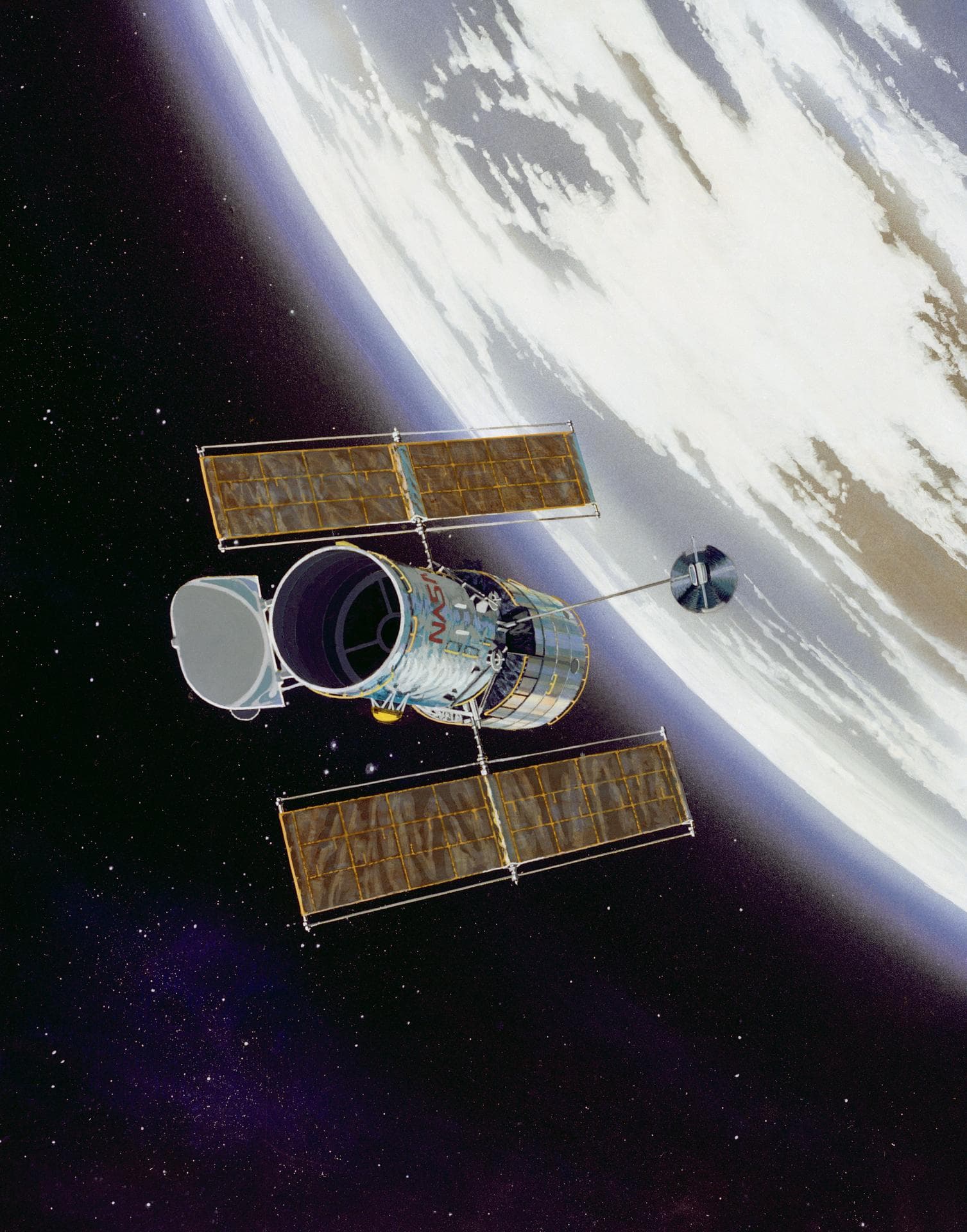
Missions12 min
Hubble Space Telescope
The Hubble Space Telescope, launched April 24, 1990, has made more than 1.7 million observations and still operates in one-gyroscope mode after 36 years.
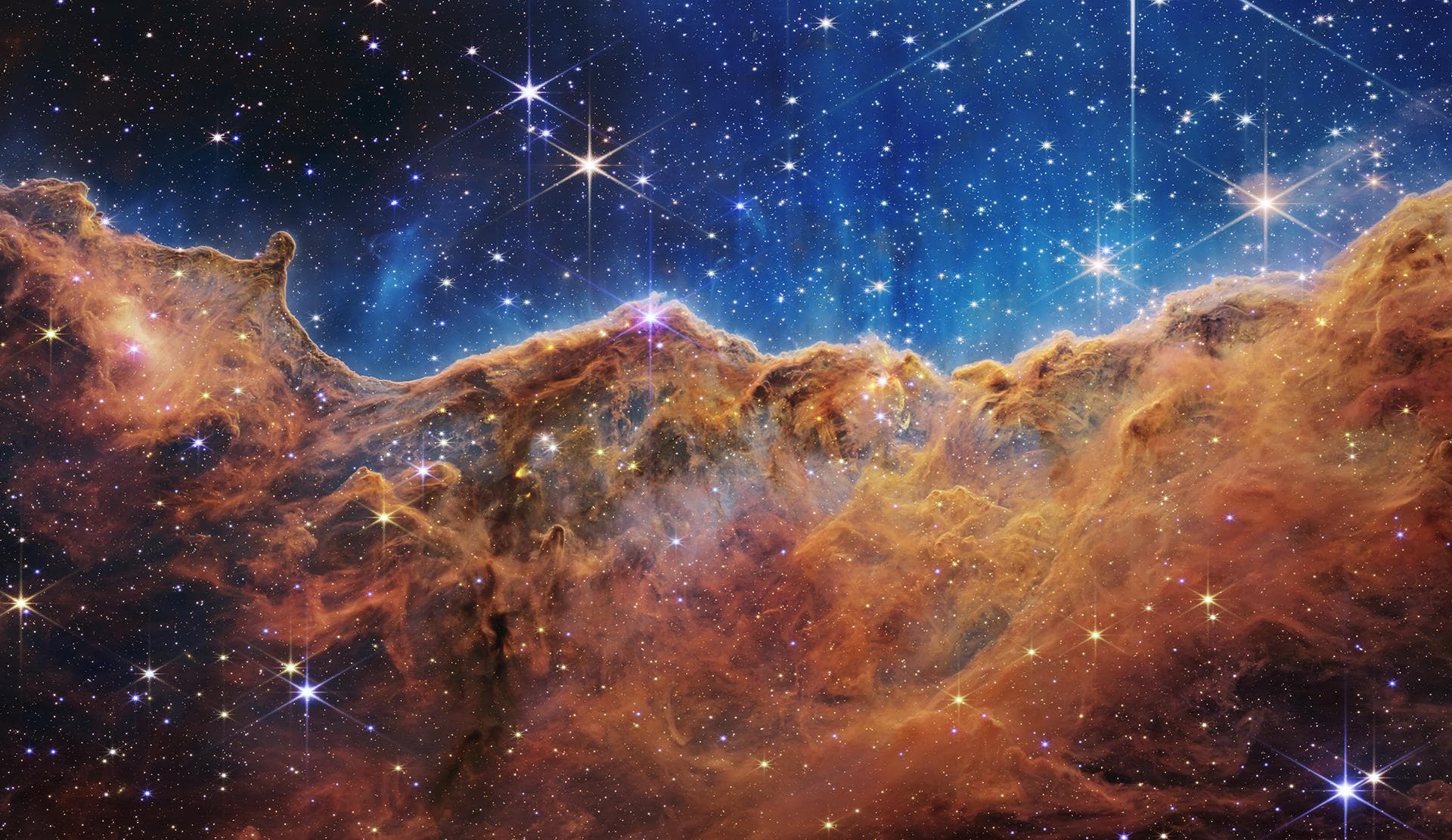
Missions12 min
James Webb Space Telescope
The James Webb Space Telescope is a 6.5-meter infrared observatory launched December 25, 2021. It observes the earliest galaxies and exoplanet atmospheres.
Key differences
- Wavelengths: Hubble covers ultraviolet through near-infrared; Webb is optimized for 0.6 to 28 microns, where the most distant and most redshifted objects are brightest.
- Mirror: Webb's segmented 6.5 m mirror, made of 18 gold-coated beryllium hexagons, has about six times the collecting area of Hubble's single 2.4 m mirror.
- Location and servicing: Hubble orbits about 480 km up, low enough that five shuttle crews repaired and upgraded it between 1993 and 2009. Webb sits about 1.5 million km away at Sun-Earth L2, beyond the reach of any crewed vehicle.
- Complementarity: the two often observe the same targets in different bands, which is why NASA runs both. Hubble is the more fragile of the pair at 36 years old: it has worked on a single gyroscope since June 2024, and atmospheric drag is pulling its orbit down with no reboost mission funded as of August 2026.
Side-by-side specifications
| Hubble Space Telescope | James Webb Space Telescope | |
|---|---|---|
| Operators | NASA and ESA | - |
| Launch date | April 24, 1990 | December 25, 2021 |
| Launch vehicle | Space Shuttle Discovery, STS-31 | Ariane 5 ECA |
| Orbit | Low Earth orbit, about 480 km | Halo orbit around Sun-Earth L2, about 1.5 million km from Earth |
| Primary mirror | 2.4 m | 6.5 m, 18 gold-coated beryllium segments |
| Servicing missions | Five (1993, 1997, 1999, 2002, 2009) | - |
| Instruments | ACS, COS, STIS, WFC3, three fine guidance sensors | NIRCam, NIRSpec, MIRI, FGS/NIRISS |
| Observations | More than 1.7 million as of April 2026 | - |
| Status | Operational in one-gyroscope mode | Operational; Cycle 5 science began July 1, 2026 |
| Operator | - | NASA with ESA and CSA |
| Sunshield | - | 21.2 m x 14.2 m, five layers |
| Development cost | - | About $10 billion (NASA share) |
Figures come from each article's infobox; see the articles for sources and context.
Sources
- Hubble Space Telescope mission page - NASA
- James Webb Space Telescope mission page - NASA
- The James Webb Space Telescope Mission, Gardner et al. - arXiv
- Missions to Hubble - NASA
- Operating Hubble with only one gyroscope - NASA
- Hubble restarts science in new pointing mode - Space Telescope Science Institute
- NASA interested in Hubble reboost if costs can be reduced - SpaceNews
- Hubble could re-enter atmosphere as early as 2028 - The Register