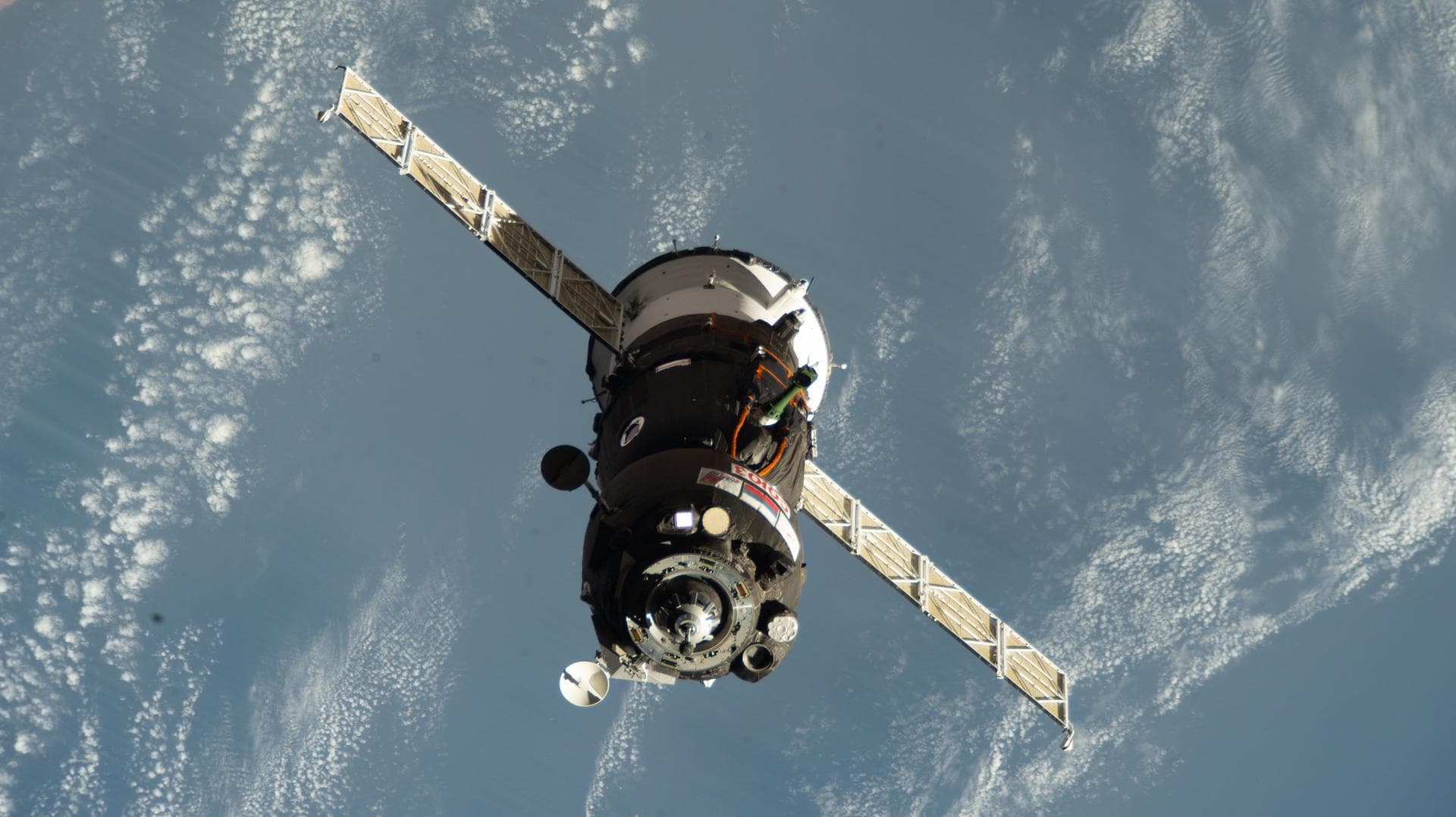
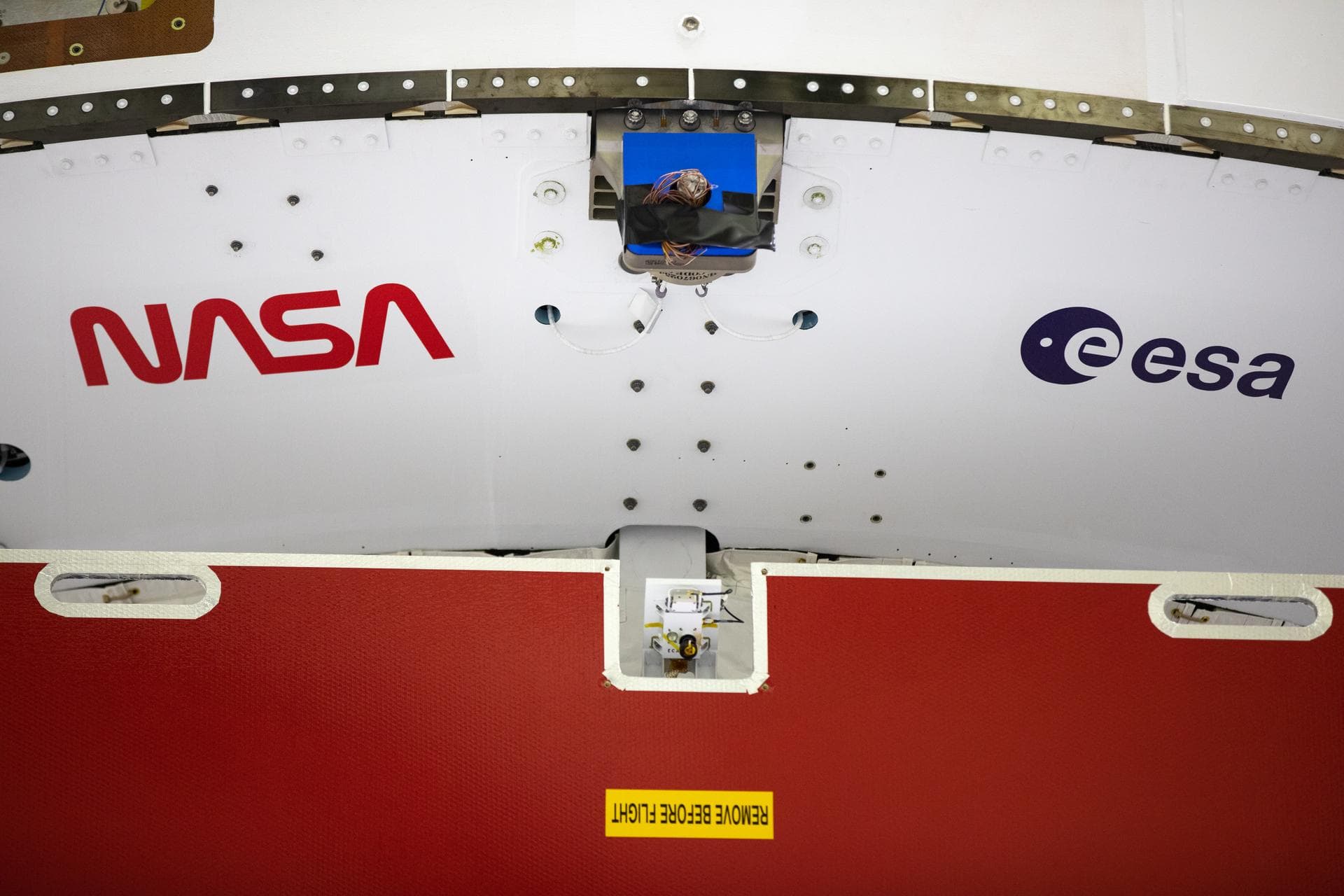
NASA (National Aeronautics and Space Administration) is an independent agency of the United States government responsible for the country's civil aeronautics and space activities. Created from the National Advisory Committee for Aeronautics, or NACA, by the National Aeronautics and Space Act, NASA began operations on October 1, 1958, during the early Space Race.[1][2] In 2026 the agency had about 14,000 civil servants[34] and a $24.44 billion annual appropriation.[38][44]
The Space Act assigned NASA a peaceful civil mission distinct from military space work.[1][2] The agency conducts human spaceflight, space and Earth science, aeronautics research, and technology development. Its work has included the Apollo program, the Space Shuttle, robotic exploration of the Solar System, and international operation of the International Space Station. As of August 12, 2026, NASA was also operating the Artemis program, preparing scientific spacecraft, and reorganizing its research and human-spaceflight directorates.[6][9]
Guide to NASA topics
This article covers NASA as an institution. More detailed articles follow the agency's major programs, spacecraft, partners, and people.
| Area | Related articles |
|---|---|
| Moon exploration | The Moon, Apollo 11, Space Launch System, and Artemis.[6][14] |
| Low Earth orbit | International Space Station and Commercial Crew, plus SpaceX and its Falcon 9 launch vehicle.[7][18] |
| Space science | James Webb Space Telescope, Hubble Space Telescope, Voyager program, Mars, and Europa Clipper.[20][23][27] |
| People | Katherine Johnson, Neil Armstrong, Buzz Aldrin, and Sally Ride.[6] |
| International partners | European Space Agency, JAXA, Roscosmos, and the Canadian Space Agency.[7][14] |
History
NACA origins and NASA's creation
Congress established the National Advisory Committee for Aeronautics (NACA) on March 3, 1915, to coordinate and conduct research on flight.[3] NACA built the Langley Aeronautical Laboratory in Virginia, added Ames Aeronautical Laboratory in California in 1940 and the Aircraft Engine Research Laboratory in Ohio in 1941, and began rocket launches from Wallops Island in 1945.[3] Its work included wind-tunnel testing, high-speed flight research, and the blunt-body reentry concept that influenced early crewed spacecraft.[3]
The Soviet Union's launch of Sputnik 1 in October 1957 intensified pressure for a coordinated United States space program.[1] President Dwight D. Eisenhower asked Congress in April 1958 to establish a civilian space agency, and he signed the National Aeronautics and Space Act on July 29.[1] NASA opened on October 1 with NACA's laboratories, about 8,000 employees, and an annual budget of roughly $100 million.[1][4] T. Keith Glennan became the first administrator and NACA director Hugh Dryden became deputy administrator.[1]
The new agency soon absorbed or gained responsibility for projects and organizations that had begun elsewhere in the federal government, including the Jet Propulsion Laboratory and the Army team developing large launch vehicles at Huntsville.[4] These transfers gave NASA capabilities in robotic spacecraft, launch vehicles, tracking, and human spaceflight while the former NACA laboratories continued aeronautics research.[4]
Mercury, Gemini, and Apollo
NASA's Project Mercury tested whether people could survive and work in space.[5] Alan Shepard made the first United States crewed spaceflight in May 1961, and John Glenn became the first American to orbit Earth in February 1962.[5] Project Gemini then demonstrated longer missions, extravehicular activity, rendezvous, and docking, all required for a crewed lunar mission.[5]
President John F. Kennedy committed the United States in 1961 to landing a person on the Moon and returning that person safely before the decade ended.[6] Apollo suffered a major setback on January 27, 1967, when a cabin fire during a ground test killed astronauts Virgil Grissom, Edward White, and Roger Chaffee.[6] NASA and its contractors redesigned the spacecraft and changed testing and management practices before crewed Apollo flights resumed.[6]
On July 20, 1969, Armstrong and Aldrin landed with Apollo 11 while Michael Collins remained in lunar orbit.[6] Five later Apollo crews also landed, and the final astronauts left the lunar surface in December 1972.[6] The program returned samples, deployed instruments, and established techniques for crewed operations beyond Earth orbit, but it also depended on the unusually high federal spending of the Apollo buildup.[6][33][37]
Stations, the Space Shuttle, and international operations
NASA's Skylab station, assembled from Apollo-era hardware, hosted three crews in 1973 and 1974.[6] The 1975 Apollo-Soyuz Test Project joined American and Soviet spacecraft in orbit and marked the first international crewed spaceflight partnership between the two countries.[6]
NASA flew 135 Space Shuttle missions from 1981 through 2011.[6] The reusable orbiters launched and repaired satellites, carried laboratories, deployed Hubble in 1990, and assembled much of the International Space Station.[6] The Challenger accident in 1986 and Columbia accident in 2003 each killed seven astronauts and led to lengthy investigations and changes in NASA's safety and management practices.[6]
Station assembly began in 1998, and rotating crews have lived aboard continuously since November 2000.[7] NASA operates the station with the space agencies of Canada, Europe, Japan, and Russia under an intergovernmental framework and related agreements.[7] Shuttle-Mir missions during the 1990s provided operational experience for that partnership.[6]
Commercial services and a return to the Moon
After the Space Shuttle retired in 2011, NASA increasingly bought transportation as a service instead of owning every spacecraft used in low Earth orbit.[6][17][18] Commercial cargo demonstration missions reached the station in 2012.[17] SpaceX's Demo-2 mission in May 2020 then restored crewed orbital launches from the United States, and operational Commercial Crew rotations began later that year.[18]
The uncrewed Artemis I mission tested the Space Launch System rocket and Orion spacecraft around the Moon in 2022.[14] Artemis II carried four astronauts around the Moon from April 1 to April 10, 2026, completing the first crewed lunar flight since Apollo 17 and setting a new crewed distance record from Earth.[13] Later Artemis missions remain development programs, and their sequence has changed as spacecraft, landers, budgets, and policy have changed.[14][15]
Mandate, leadership, and organization
The National Aeronautics and Space Act directs NASA to plan and conduct aeronautical and space activities for peaceful purposes, expand knowledge, develop and operate vehicles, preserve the United States' role in aeronautics and space science, cooperate internationally when appropriate, and disseminate information about its work.[2] National-security space activities are assigned primarily to the Department of Defense, although the law allows civil and military agencies to exchange information and cooperate.[2]
The administrator is appointed from civilian life by the president with the advice and consent of the Senate.[8] The administrator directs NASA under the president's supervision, while Congress establishes authorities and controls funding through legislation and appropriations.[2][8] Jared Isaacman was sworn in as NASA's 15th administrator on December 18, 2025, after Senate confirmation.[10] Matt Anderson served as deputy administrator and Amit Kshatriya as associate administrator and chief engineer as of August 2026.[9]
NASA announced a major headquarters realignment in May 2026.[11] It combined the former exploration and space-operations organizations into a Human Spaceflight Mission Directorate and combined the former aeronautics and space-technology organizations into a Research and Technology Mission Directorate.[11] The Science Mission Directorate remained separate, and mission-support offices continued to provide functions such as finance, procurement, legal services, information technology, safety, and human resources.[9][11]
| Organization | Principal responsibilities as of August 2026 |
|---|---|
| Human Spaceflight Mission Directorate | Artemis, lunar surface development, crew and cargo transportation, and low Earth orbit operations.[11][12] |
| Science Mission Directorate | Earth science, planetary science, heliophysics, astrophysics, and biological and physical sciences.[20] |
| Research and Technology Mission Directorate | Aeronautics, advanced space technology, nuclear power and propulsion, and space communications and navigation.[11][24] |
| Mission Support Directorate | Shared institutional and business services that support programs and centers.[9] |
Headquarters sets agency policy and integrates programs, while field centers supply specialized engineering, scientific, operational, and test capabilities.[9][12] Program authority can cross center boundaries, and many missions are performed by teams drawn from several centers, contractors, universities, international partners, and other federal agencies.[9][12]
Human spaceflight and lunar exploration
Artemis mission matrix
NASA changed the sequence of its near-term Artemis missions in February 2026. The dates and profiles below reflect the agency architecture current on August 12, 2026, rather than a guarantee that later missions will fly on schedule.[14]
| Mission | Flight status or target | Role in the program |
|---|---|---|
| Artemis I | Completed November 16 to December 11, 2022 | Uncrewed integrated test of Space Launch System and Orion on a lunar trajectory.[14] |
| Artemis II | Completed April 1 to April 10, 2026 | Crewed lunar flyby and return. Reid Wiseman, Victor Glover, Christina Koch, and Jeremy Hansen traveled farther from Earth than any previous crew.[13] |
| Artemis III | Planned for 2027 | Crewed test mission in low Earth orbit. NASA said its objectives could include rendezvous and docking with one or both commercial lunar-lander test vehicles under development by SpaceX and Blue Origin.[14] |
| Artemis IV | Planned for 2028 | First crewed lunar landing in the revised sequence, targeted for the lunar south polar region.[14] |
| Later missions | Planned after Artemis IV | NASA's February 2026 architecture called for at least one surface mission in each subsequent year, but vehicles, contracts, funding, and schedules were still under development.[14][15] |
Orion carries the crew, the Space Launch System launches it, and the European Space Agency supplies Orion's service module.[14] Separate commercial contracts cover lunar landers, spacesuits, cargo delivery, communications, and surface systems.[14] These interdependent elements make the schedule sensitive to development progress outside the core rocket and capsule programs.[15]
The Government Accountability Office reported in July 2026 that NASA had revised Artemis III through Artemis V and paused three projects, including the Gateway lunar-orbit station, while reassessing its architecture. NASA placed greater emphasis on surface infrastructure through a planned Moon Base near the lunar south pole.[12][15][16] Gateway work and Moon Base concepts were still being redefined, so descriptions of a finished base, fixed construction cost, or guaranteed landing cadence would go beyond the agency's approved achievements as of August 12, 2026.[12][15][16]
GAO's 2026 review also illustrates the broader delivery risk.[15] Across NASA's portfolio of major projects, three projects reported annual cost increases totaling $501.4 million, two reported annual schedule delays, and cumulative overruns and delays reached $4.7 billion and 14 years.[15] Orion accounted for more than half of the annual cost growth and about three quarters of cumulative cost growth in that portfolio.[15] Those figures apply to the reviewed portfolio, not to the Artemis program alone.[15]
Low Earth orbit and commercial stations
NASA and its partners plan to operate the International Space Station through 2030, subject to safe operation and partner decisions.[19] NASA's transition policy is to purchase research, crew time, and other services aboard commercially owned stations rather than replace the ISS with another wholly government-owned outpost.[19]
NASA selected SpaceX in 2024 to develop the United States Deorbit Vehicle, which is intended to make the station's final reentry controlled after operations end.[21] The development contract has a potential value of $843 million; NASA plans to procure the launch service separately.[21] The transition depends on both a safe deorbit system and commercial stations being ready soon enough to avoid a long interruption in United States access to an orbital laboratory.[19]
Commercial Crew and cargo services continue to support the station during this transition.[17][18] NASA defines requirements, certifies systems for its missions, and buys flights, while the providers own and operate their transportation systems.[18] This arrangement differs from Apollo, Shuttle, Orion, and the Space Launch System, for which NASA has retained greater direct program control and ownership.[6][14][18]
| Model | Example programs | Vehicle ownership | NASA's role |
|---|---|---|---|
| Government-owned | Apollo, Space Shuttle, Orion, Space Launch System | NASA owns the spacecraft and launch vehicles | Direct control of design, development, and operations.[6][14] |
| Commercial services | Commercial Crew and commercial cargo | Providers own and operate their transportation systems | Defines requirements, certifies systems for its missions, and buys flights.[17][18] |
Science
NASA's Science Mission Directorate organizes its work into Earth science, planetary science, heliophysics, astrophysics, and biological and physical sciences.[20] Its missions use spacecraft, instruments hosted on other platforms, sounding rockets, aircraft, balloons, ground networks, and research aboard the space station.[20][22]
| Research area | Selected work and status |
|---|---|
| Earth science | NASA observes the atmosphere, land, oceans, ice, and the solid Earth. Its Earth-observation program combines satellite records with airborne, field, and modeling research.[22] |
| Planetary science | Curiosity and Perseverance were operating on Mars in 2026. Europa Clipper, launched in October 2024, is scheduled to reach Jupiter in 2030 and make 49 close flybys of Europa to investigate whether the moon has conditions suitable for life.[23][41] |
| Astrophysics | Hubble and Webb serve as general observatories across complementary wavelengths.[42] The Nancy Grace Roman Space Telescope, designed for wide-field infrared surveys, was fueled for a launch targeted no earlier than August 30, 2026, as of July 27.[25] |
| Heliophysics | Missions study the Sun, the solar wind, and their interaction with Earth and the rest of the Solar System.[20] |
| Biological and physical sciences | Research in reduced gravity examines living systems, materials, fluids, combustion, and other physical processes, much of it using the space station.[43] |
NASA also operates the Planetary Defense Coordination Office, which coordinates detection and tracking of near-Earth objects and supports work on possible impact hazards.[26] The Double Asteroid Redirection Test demonstrated a change to an asteroid moonlet's orbit in 2022, while NEO Surveyor was in development as a dedicated infrared survey mission.[26]
Long-lived missions can remain scientifically useful through repeated engineering changes. The two Voyager spacecraft, launched in 1977, were still returning data from interstellar space in 2026, although NASA had turned off instruments to conserve their declining power.[27] By contrast, new missions move through design, launch, commissioning, and operations, and dates published before launch remain targets rather than completed milestones. Roman's August 2026 target is one example.[25]
Aeronautics and space technology
Aeronautics has remained part of NASA's statutory mission since the agency inherited NACA's people and laboratories in 1958.[2][3] In the 2026 organization, aeronautics sits inside the Research and Technology Mission Directorate alongside space technology, communications and navigation, and nuclear power and propulsion work.[11][24]
NASA aeronautics research addresses aircraft efficiency, propulsion, flight safety, air-traffic operations, high-speed flight, and new vehicle configurations.[28] Much of the work is precompetitive: NASA conducts experiments, develops models and test methods, publishes results, and supplies data that manufacturers or regulators can evaluate.[2][28]
The X-59 research aircraft is the flight demonstrator for the Quesst mission, which studies whether shaped sonic signatures can enable acceptable overland supersonic flight. On June 5, 2026, NASA flew the X-59 supersonically for the first time, reaching about Mach 1.1 at 43,400 feet. NASA plans to use later flights to measure the aircraft's sound and community response and provide data to aviation regulators.[29]
NASA also works with industry on lower-emission propulsion. In July 2026, NASA and GE Aerospace reported a flight demonstration of a megawatt-class hybrid-electric propulsion system on a modified Saab 340B aircraft. The aircraft climbed above 30,000 feet during the demonstration.[30] Such demonstrations establish test results; they do not by themselves mean that a technology is ready for routine airline service.
Space technology programs develop and demonstrate capabilities that individual science or exploration missions may later use.[24] The 2026 directorate includes work on in-space propulsion, power, robotics, entry systems, communications, navigation, and space nuclear systems.[24] Development ranges from early laboratory research to flight demonstrations, and a successful demonstration does not guarantee adoption by an operational program.[24]
Centers and facilities
NASA has nine civil-service field centers. The Jet Propulsion Laboratory is listed with them in agency organization charts but is legally and operationally distinct as NASA's federally funded research and development center, managed by the California Institute of Technology.[9][31] NASA Headquarters in Washington, D.C., and several component facilities provide additional policy, research, test, and operational functions.[31][32]
| Center | Location | Primary roles |
|---|---|---|
| Ames Research Center | Moffett Field, California | Advanced computing, intelligent systems, air-traffic research, entry systems, astrobiology, and small-spacecraft research.[32] |
| Armstrong Flight Research Center | Edwards, California | Atmospheric flight research, experimental-aircraft operations, and flight testing.[32] |
| Glenn Research Center | Cleveland, Ohio | Aircraft and spacecraft propulsion, power, communications, materials, and testing for space environments.[32] |
| Goddard Space Flight Center | Greenbelt, Maryland | Earth and space science missions, spacecraft and instrument development, and scientific data operations.[32] |
| Johnson Space Center | Houston, Texas | Human-spaceflight program work, astronaut training, Mission Control, and spacecraft and life-support expertise.[32] |
| Kennedy Space Center | Merritt Island, Florida | Launch-site operations, spacecraft processing, ground systems, and commercial-spaceport partnerships.[32] |
| Langley Research Center | Hampton, Virginia | Aeronautics, atmospheric research, structures, and atmospheric-entry technologies.[32] |
| Marshall Space Flight Center | Huntsville, Alabama | Launch vehicles, propulsion, large space systems, and science and exploration program management.[32] |
| Stennis Space Center | Mississippi | Large rocket-propulsion testing and operation of a shared federal and commercial test site.[32] |
| Jet Propulsion Laboratory | Pasadena, California | Caltech-managed robotic spacecraft, deep-space missions, mission operations, and related science and engineering.[31] |
Other major NASA locations include Wallops Flight Facility in Virginia, which provides launch and range services; the White Sands Test Facility in New Mexico, which tests spacecraft systems and propulsion; the Michoud Assembly Facility in Louisiana, which manufactures large flight structures; the Goddard Institute for Space Studies in New York; and the Independent Verification and Validation Facility in West Virginia.[31] These sites are components of larger NASA organizations rather than additional field centers.
Workforce and institutional capacity
NASA's civil-service workforce grew from about 8,000 people at the agency's opening to 36,200 in fiscal year 1967 during the Apollo buildup.[4][33] Contractors supplied a much larger temporary industrial workforce during Apollo, so civil-service counts alone do not represent everyone working on NASA programs.[33]
NASA reported about 14,000 civil servants across more than 150 occupations in 2026.[34] Agency leadership also reported more than 40,000 contractors in May 2026.[12] The distinction matters because civil servants retain governmental authority for requirements, safety, procurement, and oversight even when companies or universities perform much of the engineering, operations, and research.[2][12]
The civil workforce contracted sharply in 2025.[15] GAO reported that about 4,000 employees, nearly 22 percent of NASA's civil service, left through deferred-resignation and related workforce actions.[15] Twenty-five of the 36 major projects in GAO's 2026 assessment reported effects, including loss of expertise, slower work, or increased reliance on contractor personnel.[15] NASA said in 2026 that it planned to resume hiring and convert some contractor positions to civil-service roles as it rebuilt priority capabilities.[12][15]
Workforce, facilities, and technology are linked institutional risks. A congressionally requested National Academies study concluded in 2024 that NASA needed a sustained strategy to renew its workforce, infrastructure, and technology base rather than manage each problem separately.[35] NASA's Office of Inspector General reported in 2025 that 83 percent of the agency's facilities were beyond their original design life and that deferred maintenance exceeded $4.1 billion.[36] These findings concern the agency as a whole and do not mean every old facility is unsafe or every project is affected equally.
Budget and long-run context
NASA receives funding through federal appropriations and, at times, supplemental laws.[38][39][44] Its budget grew rapidly during Apollo, then fell as a share of federal spending after the landing goal was achieved.[33][37] NASA's Office of Inspector General calculated that the agency's share of the federal budget peaked at 4.4 percent in fiscal year 1966 and was about 0.5 percent in fiscal year 2015.[37]
| Fiscal year | Funding context |
|---|---|
| 1959 | NASA received $330.9 million in its first fiscal-year appropriation.[33] |
| 1965 | The appropriation reached $5.25 billion in nominal dollars during the Apollo buildup.[33] |
| 1966 | NASA received $5.175 billion, equivalent to the agency's peak 4.4 percent share of the federal budget.[33][37] |
| 2026 | The enacted annual appropriation was $24.44 billion, including $7.25 billion for science.[38][44] |
Nominal dollar figures across decades are not directly comparable because of inflation and changes in federal accounting.[33][37] Budget authority also differs from actual outlays, and money available in one year can include balances enacted earlier.[39] For example, the 2025 reconciliation law provided $9.995 billion for selected NASA programs with differing multiyear periods of availability.[39] It should not be treated as an additional $9.995 billion annual appropriation for fiscal year 2026.[39]
The administration's fiscal year 2027 request proposed $18.8 billion for NASA, about 23 percent below the fiscal year 2026 enacted level.[40] That figure was a proposal pending congressional action as of August 12, 2026, not NASA's enacted fiscal year 2027 appropriation.[40] Comparisons of NASA funding should therefore identify whether a number is a presidential request, a congressional appropriation, a multiyear supplemental amount, or actual spending.[38][39][40]
References
- 65 Years Ago: The National Aeronautics and Space Act of 1958 Creates NASA - NASA, July 27, 2023.
- National Aeronautics and Space Act of 1958, Unamended - NASA History.
- The National Advisory Committee for Aeronautics - NASA.
- Orders of Magnitude: A History of NACA and NASA, 1915-1990 - NASA History Office, NASA SP-4406, 1989.
- 60 Years and Counting: Human Spaceflight - NASA.
- Explore NASA's History - NASA.
- International Space Station Facts and Figures - NASA.
- 51 U.S.C. Section 20111: Administration of National Aeronautics and Space Administration - Office of the Law Revision Counsel, U.S. House of Representatives, current through July 15, 2026.
- NASA Organization - NASA, updated July 23, 2026.
- NASA Welcomes 15th Administrator Jared Isaacman - NASA, December 18, 2025.
- NASA Announces Realignment to Accelerate Mission Delivery - NASA, May 22, 2026.
- A Message from Administrator Jared Isaacman - NASA, May 22, 2026.
- NASA Welcomes Record-Setting Artemis II Moonfarers Back to Earth - NASA, April 10, 2026.
- NASA Adds Mission to Artemis Lunar Program, Updates Architecture - NASA, February 27, 2026.
- NASA: Assessments of Major Projects - U.S. Government Accountability Office, July 23, 2026.
- NASA Moon Base - NASA.
- NASA's Commercial Partners Deliver Cargo and Crew for Station Science - NASA, May 28, 2020.
- Commercial Crew Program Press Kit - NASA, updated February 13, 2026.
- Commercial Space Stations - NASA.
- NASA Science Mission Directorate Vision - NASA Science.
- NASA Selects International Space Station U.S. Deorbit Vehicle - NASA, June 26, 2024.
- Earth Science Missions - NASA Science.
- Europa Clipper - NASA Science.
- Research and Technology Mission Directorate - NASA.
- NASA Fuels Roman Space Telescope for Late August Launch - NASA Science, July 27, 2026.
- Planetary Defense at NASA - NASA Science.
- Where Are Voyager 1 and Voyager 2 Now? - NASA Science, updated April 17, 2026.
- NASA Aeronautics - NASA.
- NASA's X-59 Aircraft Flies Supersonic for First Time - NASA, June 5, 2026.
- NASA, GE Aerospace Work Enables Hybrid-Electric Flight Demonstration - NASA, July 20, 2026.
- NASA Centers and Facilities - NASA.
- NASA Locations, Capabilities, and Points of Contact - NASA.
- NASA Historical Data Book, Volume I: NASA Resources, 1958-1968 - NASA History Office, NASA SP-4012, 1976.
- Careers at NASA - NASA.
- NASA at a Crossroads: Maintaining Workforce, Infrastructure, and Technology Preeminence in the Coming Decades - National Academies of Sciences, Engineering, and Medicine, 2024.
- NASA's Approach to Infrastructure and Operational Resilience - NASA Office of Inspector General, Report IG-25-008, August 4, 2025.
- NASA's International Partnerships: Capabilities, Benefits, and Challenges - NASA Office of Inspector General, Report IG-16-020, May 5, 2016.
- Bill Summary: Commerce, Justice, Science, and Related Agencies Fiscal Year 2026 Appropriations Bill - U.S. Senate Committee on Appropriations, January 2026.
- NASA Appropriations and Authorizations: At a Glance - Congressional Research Service, updated August 6, 2025.
- Fiscal Year 2027 Budget Request - NASA, April 2026.
- Planetary Science - NASA Science.
- Universe - NASA Science.
- Biological and Physical Sciences - NASA Science.
- H.R. 6938: Commerce, Justice, Science; Energy and Water Development; and Interior and Environment Appropriations Act, 2026 - Congress.gov, became Public Law 119-74 on January 23, 2026.