Peggy Annette Whitson (born February 9, 1960) is an American biochemist and astronaut who has spent more time in space than any other American, and more than any other woman in the world: 695 days, 7 hours, and 4 minutes across five missions.[3][4] She was the first woman to command the International Space Station, on Expedition 16 in 2007, and the first to command it twice, and her ten spacewalks are the most performed by a woman.[1][2][11]
Whitson came to NASA's Johnson Space Center in 1986 as a biochemistry researcher and spent a decade in its medical sciences organization, including three years as project scientist of the Shuttle-Mir program, before the agency selected her as an astronaut candidate in April 1996, after rejecting four earlier applications.[1][5] She flew three long tours aboard the station: Expedition 5 in 2002, when NASA named her its first science officer; Expedition 16, which she commanded; and Expedition 50/51/52 in 2016-2017, a 289-day flight during which she passed the American record for cumulative time in space.[1][6][8] Between flights she ran the astronaut corps from 2009 to 2012, its first female and first non-military chief, and she retired from NASA in June 2018 with 665 days in orbit.[1][2]
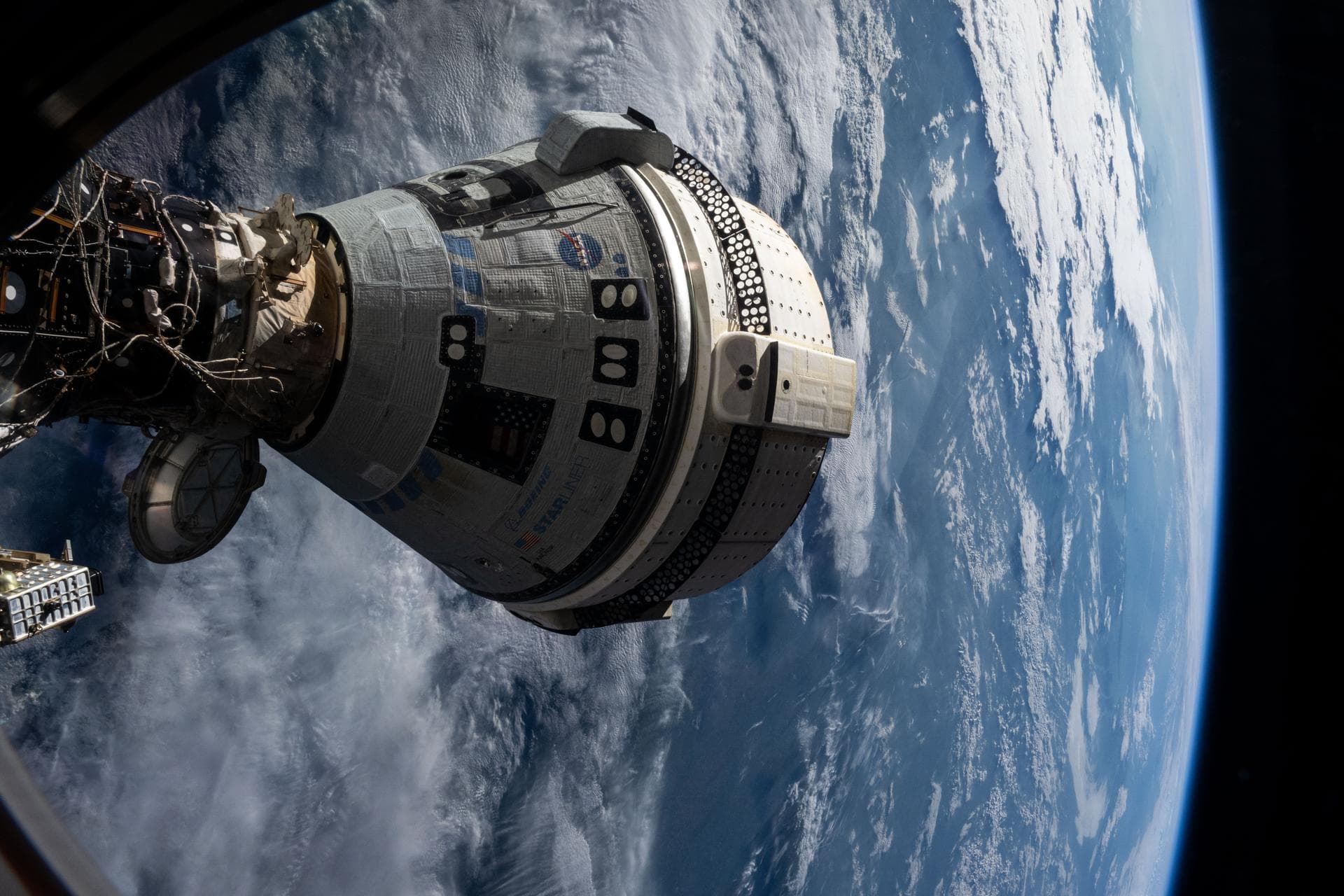
Her flying career continued at Axiom Space. She commanded Axiom Mission 2 in May 2023, becoming the first woman to command a private space mission, and Axiom Mission 4 in 2025, which raised her career total to 695 days.[13][15][16] As of August 2026 she is the company's senior vice president of human spaceflight training.[3]
Early life and education
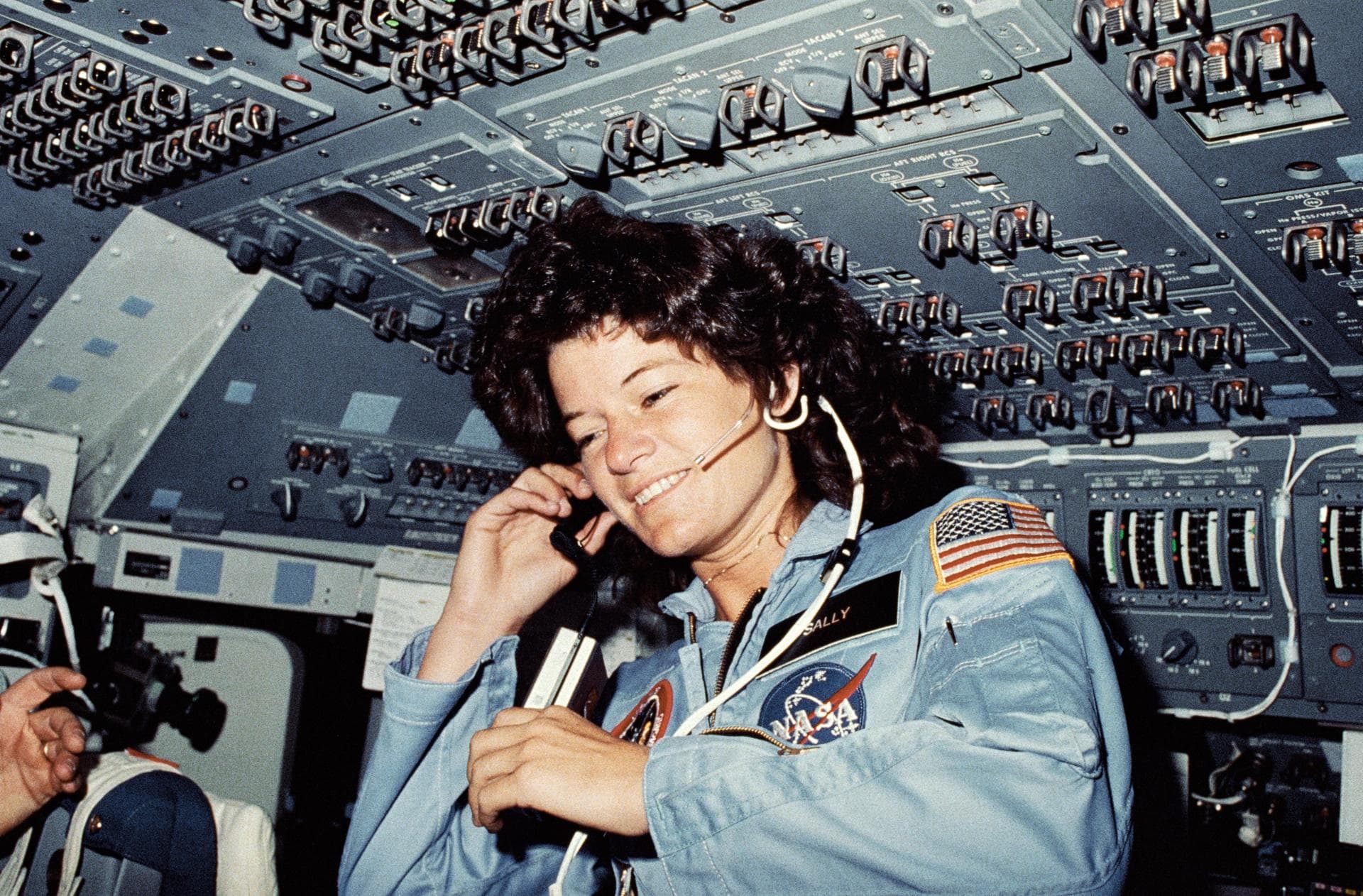
Peggy Whitson was born on February 9, 1960, in Mount Ayr, Iowa, and grew up on a farm outside the nearby town of Beaconsfield, where her parents farmed.[1][3] She was nine years old when she watched the Apollo 11 Moon landing on television in July 1969. "I thought, 'Cool job,'" she recalled, adding that she told nobody "because it seemed so unreal to me."[5] In 1978, the year she graduated from Mount Ayr Community High School, NASA selected its first astronaut class to include women, and Whitson later said that was when the ambition started to look reachable: "I'm like, 'Maybe this is possible for me to become an astronaut.' Luckily, I had no idea how hard it would be, but I set my mind to it."[1][5] She has also called Sally Ride's 1983 flight, the first by an American woman, "very meaningful" to her.[5]
Whitson earned a Bachelor of Science in biology and chemistry from Iowa Wesleyan College in 1981, graduating summa cum laude, then a doctorate in biochemistry from Rice University in Houston in 1985 as a Robert A. Welch predoctoral fellow. She stayed at Rice on a Welch postdoctoral fellowship until October 1986.[1]
NASA research and selection
Whitson began at NASA's Johnson Space Center in 1986 as a National Research Council resident research associate.[1] From April 1988 to September 1989 she supervised the biochemistry research group at KRUG International, a medical sciences contractor at the center, and from 1989 to 1993 she worked as a research biochemist in NASA's Biomedical Operations and Research Branch.[1] Her assignments widened through the early 1990s. She developed a bone cell experiment flown on shuttle mission STS-47, sat on the US-USSR joint working group in space medicine and biology, and in 1992 was named project scientist of the Shuttle-Mir program, the joint flights with Russia's Mir station, a role she held until the program's first phase ended in 1995.[1] She was also deputy chief of the center's Medical Sciences Division from 1993 to 1996 and co-chaired the US-Russian Mission Science Working Group from 1995 to 1996, while holding adjunct teaching appointments at the University of Texas Medical Branch and at Rice.[1]
The astronaut corps took longer to reach. Whitson applied after finishing her doctorate and was rejected four times over eight years before NASA selected her as an astronaut candidate in April 1996; training began that August.[1][5] Her early assignments included technical duties in the Astronaut Office Operations Planning Branch and leading the crew test support team in Russia from 1998 to 1999. In 2003 she commanded the fifth NASA Extreme Environment Mission Operations (NEEMO) mission, the agency's underwater analog for spaceflight.[1]
ISS expeditions
Whitson's first spaceflight, Expedition 5, launched aboard shuttle mission STS-111 on June 5, 2002, and docked with the International Space Station two days later.[1] During her six-month stay she used the station's robotic arm to install the Mobile Base System and the S1 and P1 truss segments, and made a 4-hour, 25-minute spacewalk in a Russian Orlan suit to fit micrometeoroid shielding on the Zvezda service module.[1] Mid-mission, NASA named her the station's first science officer, and she carried out 21 investigations in human life sciences and microgravity sciences along with commercial payloads.[1][2] She returned aboard STS-113 on December 7, 2002, after 184 days, 22 hours, and 14 minutes in space.[1]
Expedition 16 made her the first woman to command the station. Whitson launched with cosmonaut Yuri Malenchenko aboard Soyuz TMA-11 on October 10, 2007, docking two days later; the third crew seat rotated among Clayton Anderson, Dan Tani, Leopold Eyharts, and Garrett Reisman, who came and went on shuttle flights.[1] As commander she oversaw the first expansion of the station's living and working space in more than six years, as visiting crews added the Harmony connecting node, the European Space Agency's Columbus laboratory, the Kibo logistics pressurized module, and the Canadian robot Dextre.[1] She made five spacewalks during the expedition and landed with Malenchenko aboard the same Soyuz on April 19, 2008, after 192 days in space.[1]
Her third and longest flight, Expedition 50/51/52, ran from November 17, 2016, to September 3, 2017.[1] The mission was extended by about three months when a seat opened on the Soyuz MS-04 return craft, and its 289 days stand as the fifth longest single spaceflight by an American.[8][9] Whitson took command of Expedition 51 in April 2017, becoming the first woman to command the station twice, and contributed to hundreds of experiments in biology, biotechnology, physical science, and Earth science.[1][2] On April 24, 2017, at 1:27 a.m. EDT, she passed Jeff Williams' American record for cumulative time in space, 534 days, 2 hours, and 48 minutes, and took a congratulatory call from President Donald Trump aboard the station later that day.[6][7] She landed near Dzhezkazgan, Kazakhstan, aboard Soyuz MS-04 with Jack Fischer and Fyodor Yurchikhin, her NASA career total standing at 665 days.[1][9]
Astronaut Office leadership
Whitson's ground assignments between flights ran up through the Astronaut Office's management chain. She served as deputy chief of the office from November 2003 to March 2005, then as chief of its station operations branch from March to November 2005, trained as backup commander for Expedition 14, sat on the 2004 astronaut selection board, and chaired the 2009 board.[1]
From October 2009 to July 2012 she was chief of the Astronaut Corps, the first woman and the first non-military chief in the office's history.[1][2] The job made her responsible for mission preparation and on-orbit support for every ISS crew, and for organizing crew interface support for the heavy-lift rockets and commercially provided transport vehicles NASA was then developing, the latter under the early Commercial Crew Program.[1] She retired from NASA on June 15, 2018.[2]
Records and spacewalks
Whitson's ten career spacewalks total 60 hours and 21 minutes: one during Expedition 5, five during Expedition 16, and four during her 2016-2017 mission.[1] The eighth, on March 30, 2017, with Shane Kimbrough, broke the record for cumulative spacewalking time by a woman, previously held by Sunita Williams.[10] Williams took that time record back on January 30, 2025, when her ninth spacewalk brought her to 62 hours and 6 minutes, but Whitson's ten excursions remain the most spacewalks by a woman.[11]
Her cumulative total of 695 days, 7 hours, and 4 minutes is the most time in space for any American and for any woman worldwide.[4][16] The NASA portion, 665 days, was the agency record at her 2018 retirement, and her two Axiom flights added roughly 30 more.[2][12][16]
| Mission | Dates | Role | Duration | Notes |
|---|---|---|---|---|
| Expedition 5 | June 5 - December 7, 2002 | Flight engineer, science officer | 184 days | First NASA science officer; one spacewalk[1] |
| Expedition 16 | October 10, 2007 - April 19, 2008 | Commander | 192 days | First woman to command the ISS; five spacewalks[1][2] |
| Expedition 50/51/52 | November 17, 2016 - September 3, 2017 | Flight engineer; Expedition 51 commander | 289 days | Passed the US cumulative record; four spacewalks[1][6][8] |
| Ax-2 | May 21-30, 2023 | Commander | 10 days | First private mission commanded by a woman[12][13] |
| Ax-4 | June 25 - July 15, 2025 | Commander | 20 days | First flight of Dragon capsule Grace; career total reached 695 days[14][16] |
Axiom missions
After leaving NASA, Whitson joined Axiom Space, the Houston company that flies private astronaut missions to the International Space Station aboard SpaceX Crew Dragon capsules, first as a consultant and then as its director of human spaceflight.[3][16] Axiom's flights carry a mix of government-sponsored national astronauts and paying private crew members, part of the commercial human spaceflight market that also includes free-flying space tourism missions, and NASA requires each one to be commanded by a former astronaut with station experience.[13][17]
Whitson commanded Axiom Mission 2, which launched on May 21, 2023, with pilot John Shoffner and Saudi mission specialists Ali Alqarni and Rayyanah Barnawi, the first Saudi woman to fly in space.[12] The ten-day flight made her the first woman to command a private space mission, and the crew worked through 26 research projects, much of them in life sciences, before splashing down on May 30.[12][13]
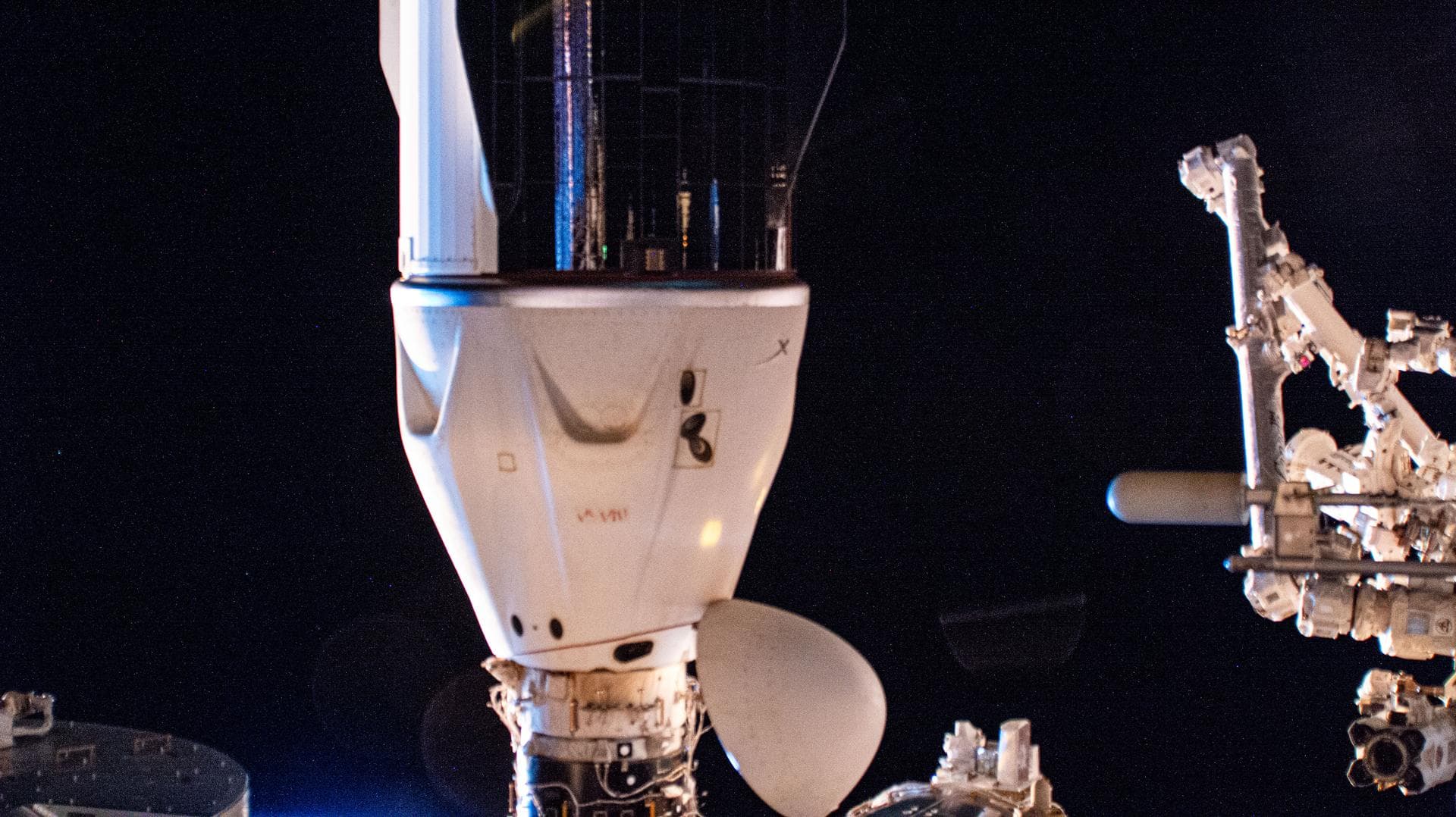
Two years later she commanded Axiom Mission 4, the first flight of the Dragon capsule Grace, which launched from Kennedy Space Center on June 25, 2025.[14][16] Her crew, pilot Shubhanshu Shukla of India and mission specialists Slawosz Uznanski-Wisniewski of Poland and Tibor Kapu of Hungary, were the first astronauts from their countries to live and work aboard the station.[14][15] The mission spent 18 days docked, ran about 60 experiments and research activities, the most on any Axiom flight to that point, and ended with a Pacific splashdown off San Diego on July 15, 2025.[14][15][16] It was Whitson's fifth spaceflight and lifted her career total to 695 days.[16]
NASA ordered a fifth Axiom mission on January 30, 2026, targeted for no earlier than January 2027, but its crew had not been announced as of August 2026.[17]
Current role and honors
As of August 2026, Axiom Space lists Whitson as an astronaut and its senior vice president of human spaceflight training, overseeing crew training and mission preparation.[3] In January 2026 she opened the AIAA SciTech Forum with a talk on the 25 years of the ISS partnership and the transition to commercial space stations.[20]
Her NASA honors include Space Flight Medals for her 2002 and 2008 missions, the Outstanding Leadership Medal in 2006, and Exceptional Service Medals in 1995, 2003, 2006, and 2008.[1] She was inducted into the Iowa Aviation Hall of Fame in 2011, the same year Russia awarded her its Medal of Merit for Space, and her hometown school district dedicated the Peggy Whitson Science Center at Mount Ayr's elementary school in 2008.[1] Time magazine named her among its 100 most influential people in 2018.[4] The National Air and Space Museum awarded her its 2024 Michael Collins Trophy for lifetime achievement, and she entered the U.S. Astronaut Hall of Fame with its 2025 class, inducted at Kennedy Space Center on May 31, 2025.[18][19]
References
- Peggy A. Whitson (Ph.D.), NASA Astronaut, biographical data - NASA Lyndon B. Johnson Space Center, December 2022.
- Record-Setting NASA Astronaut Peggy Whitson Retires - NASA, June 15, 2018.
- Peggy Whitson, Astronaut, Senior Vice President of Human Spaceflight Training - Axiom Space, accessed August 22, 2026.
- Peggy Whitson, Axiom Space astronaut - Axiom Space, accessed August 22, 2026.
- How Apollo 11 inspired record-breaking NASA astronaut Peggy Whitson (exclusive) - Space.com, July 20, 2023.
- NASA Astronaut Peggy Whitson Sets Spaceflight Record - NASA, April 24, 2017.
- NASA Astronaut Peggy Whitson Breaks Record For Most Time In Space By American - CBS News, April 24, 2017.
- International Space Station Astronaut Record Holders - NASA.
- Record-breaking astronaut Peggy Whitson returns to Earth - Phys.org, September 3, 2017.
- Peggy Whitson Breaks Spacewalking Record - NASA space station blog, March 30, 2017.
- NASA astronaut Suni Williams sets new record on 5.5-hour spacewalk outside ISS - Space.com, January 30, 2025.
- Axiom Mission 2 - Axiom Space.
- Axiom Space Mission Overview and Science on the Mission for Ax-2 - Axiom Space, May 2023.
- Axiom Mission 4 - Axiom Space.
- Ax-4 Crew Splashes Down Completing First Mission to the International Space Station for India, Poland, and Hungary - Axiom Space, July 15, 2025.
- 4 astronauts splashdown on SpaceX capsule to end Axiom Space's private Ax-4 mission - NPR, July 15, 2025.
- NASA Selects Axiom Space for Fifth Private Mission to Space Station - NASA, January 30, 2026.
- U.S. Astronaut Hall of Fame at Kennedy Space Center Visitor Complex to Welcome Veteran NASA Astronauts Bernard Harris and Peggy Whitson to the 2025 Class of Honorees - Kennedy Space Center Visitor Complex, January 28, 2025.
- National Air and Space Museum's 2024 Michael Collins Trophy Awarded to Astronaut Peggy Whitson and the Double Asteroid Redirection Test Team - Smithsonian National Air and Space Museum.
- Peggy Whitson Opens AIAA SciTech Forum, Celebrating ISS Era and the Transition to Commercial Space Stations - Aerospace America, January 12, 2026.