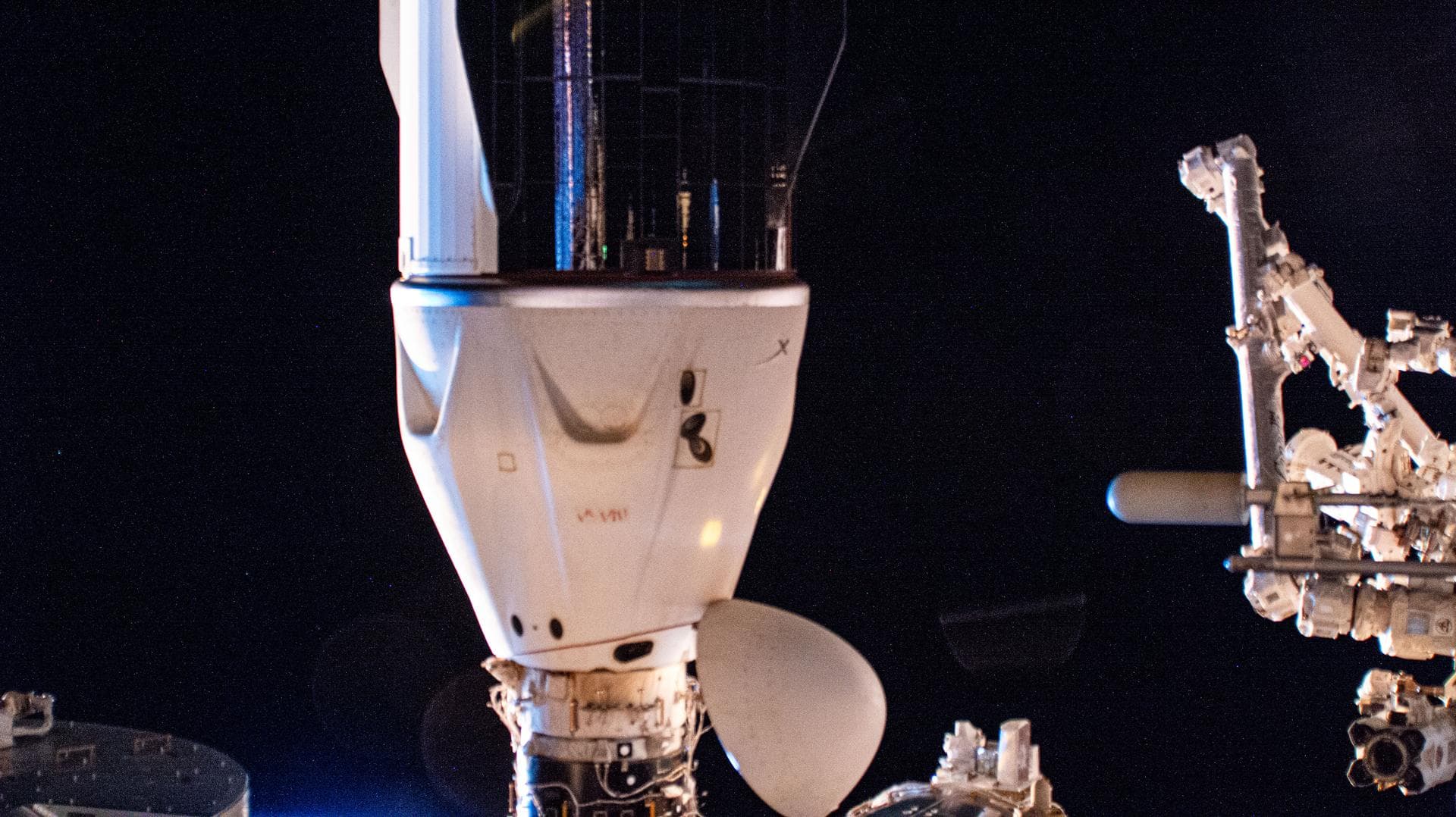
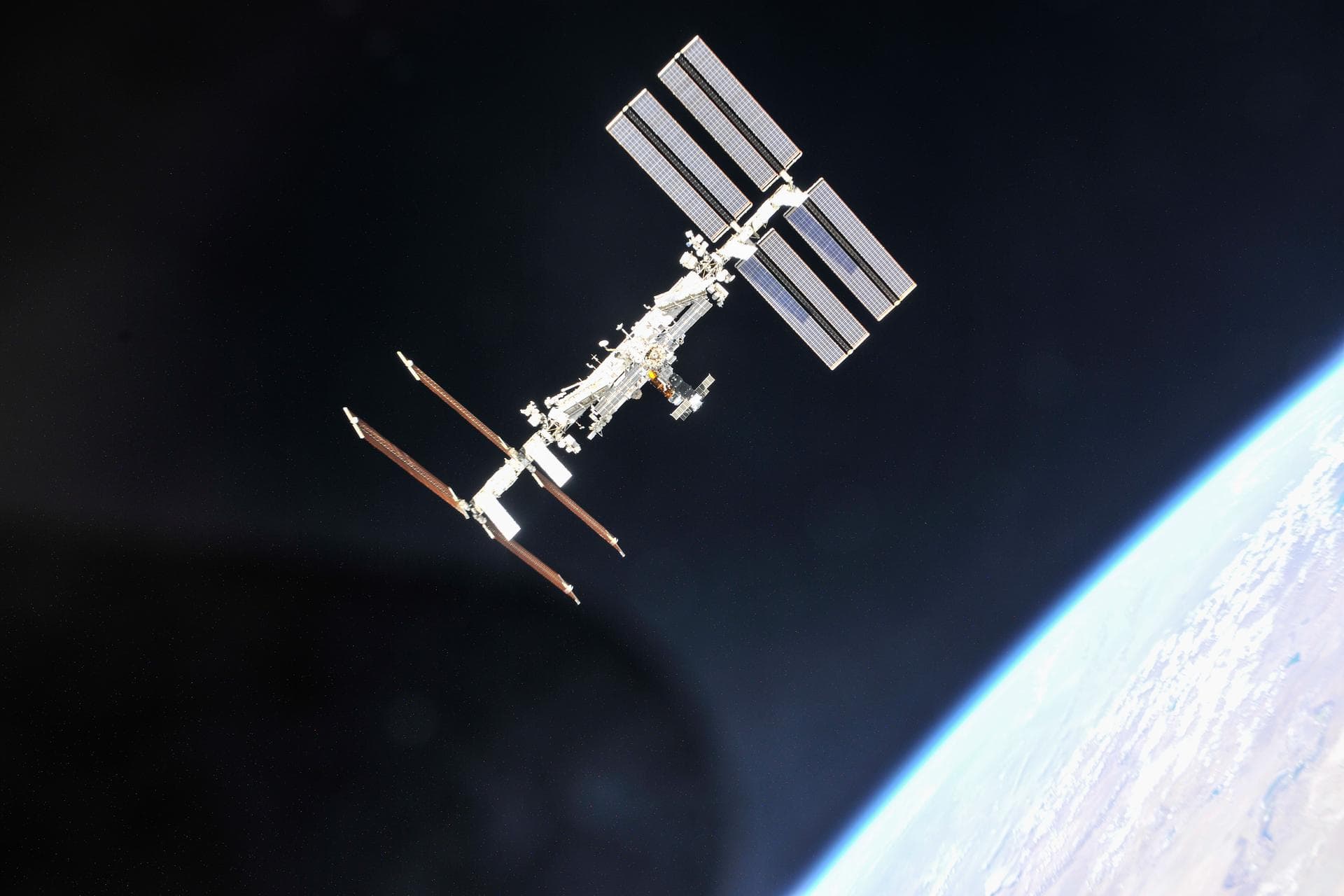
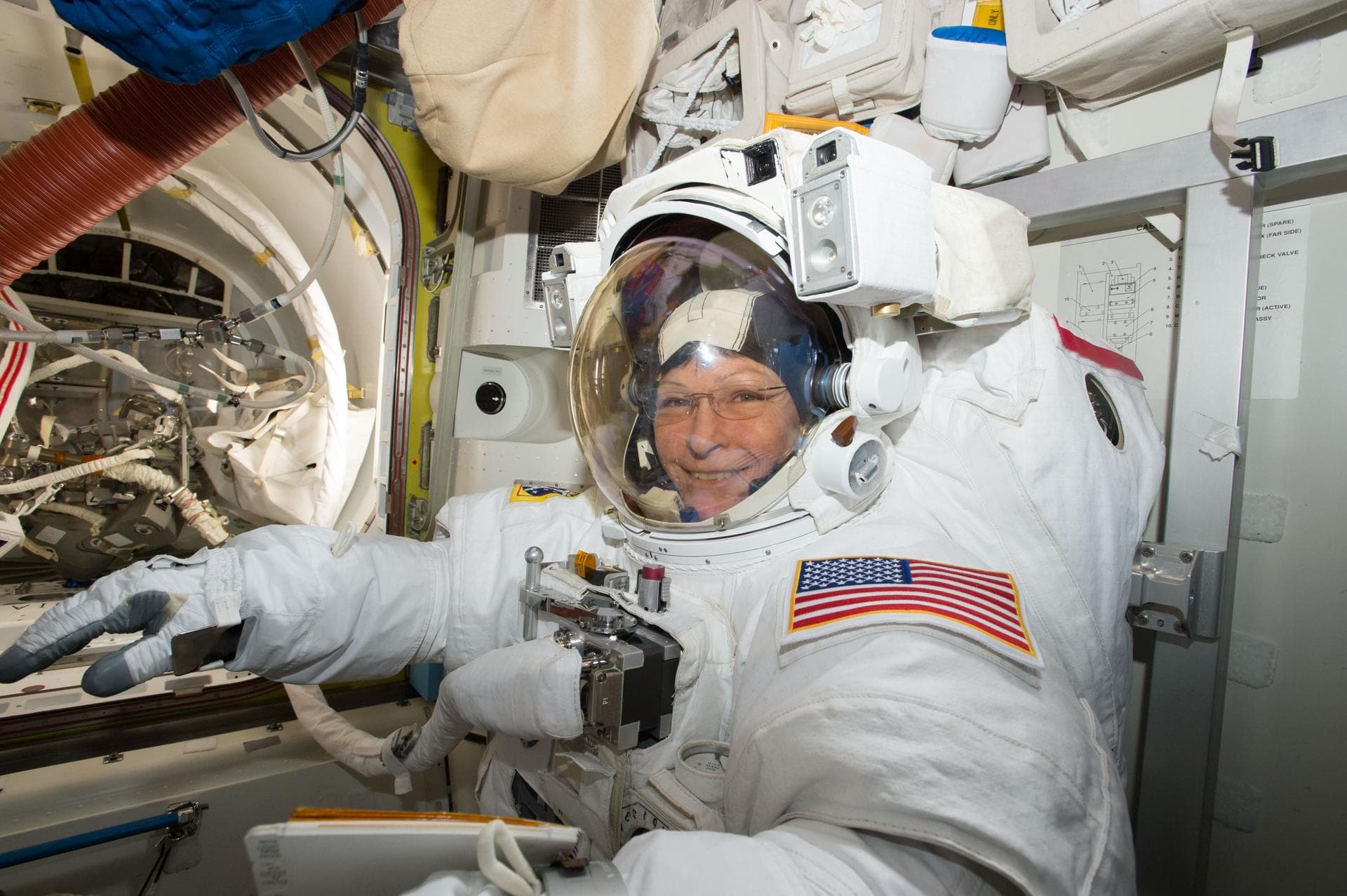
The Commercial Crew Program (CCP) is NASA's acquisition program for end-to-end astronaut transportation to and from the International Space Station. NASA awarded fixed-price Commercial Crew Transportation Capability contracts in 2014 with maximum values of 2.6 billion dollars for SpaceX and 4.2 billion dollars for Boeing. The companies developed and operate their own systems, while NASA certifies them and buys missions as a service.[1][2][3]
As of August 13, 2026, Crew Dragon has launched 13 CCP flights with astronauts: the Demo-2 test flight and 12 certified crew-rotation missions, Crew-1 through Crew-12. Crew-12 remains in progress. Boeing's CST-100 Starliner has launched one crewed test, but the capsule returned without its crew and the system has not been certified for operational rotations.[1][4]
Status as of August 2026
Crew-12 is the active rotation on August 13, 2026. Jessica Meir, Jack Hathaway, Sophie Adenot, and Andrey Fedyaev launched on February 13 and docked on February 14; Meir now commands Expedition 75.[4][5][23] NASA targets Crew-13 for no earlier than September 12 with Jessica Watkins, Luke Delaney, Joshua Kutryk, and Sergey Teteryatnikov, while the contracted Crew-14 has no public launch date.[6][21] Starliner remains uncertified. NASA lists the uncrewed Starliner-1 cargo flight as under review, while Boeing told investors that it expected the mission no earlier than the fourth quarter of 2026. Boeing's date is a company forecast, not a NASA launch commitment.[8][9][10] NASA classified the 2024 Crew Flight Test as a Type A mishap in February 2026, and technical root-cause and corrective work remains open.[1][7] A May procurement notice proposed adding as many as six Dragon rotations beyond Crew-14 and ordering up to three initially; the notice was not itself a contract award.[11]
What is operational now?
The Commercial Crew Program has one NASA-certified transportation system. Crew Dragon is in routine service, while Starliner remains in testing and certification work.[1]
| Measure | Crew Dragon and Falcon 9 | CST-100 Starliner and Atlas V |
|---|---|---|
| NASA crew certification | Achieved in November 2020; certification must be maintained as hardware and reuse plans change.[1][15] | Not achieved. NASA has not closed the propulsion, helium-system, parachute, and flight-test work required for certification.[1] |
| Crewed flight test | Demo-2 carried Doug Hurley and Bob Behnken to the station and returned them safely in 2020.[14] | CFT carried Butch Wilmore and Suni Williams to the station in 2024; Starliner returned without them.[7][17] |
| Post-certification crew rotations | 12 launched, Crew-1 through Crew-12; Crew-12 is active.[4] | None. |
| Current safety work | NASA reviews flight readiness and changes that affect the certified design.[1] | Technical investigations, corrective actions, and an uncrewed validation flight remain open.[1][7] |
| Next mission | Crew-13, targeted for no earlier than September 12, 2026.[6] | Starliner-1, an uncrewed cargo and validation flight. NASA's date is under review; Boeing expects no earlier than the fourth quarter of 2026.[8][9] |
| Ordered mission scope | 14 post-certification rotations through Crew-14.[1][21] | Four definitive mission slots: Starliner-1 uncrewed, then up to three crew rotations after a successful flight and certification. Two more remain options.[19] |
The distinction between a crewed test and certified service matters. Starliner demonstrated that it could launch astronauts and dock, but CFT did not complete the planned crewed return. It therefore did not establish operational crew-rotation capability.[1][7]
How did NASA get here?
The Space Shuttle retired in July 2011. Until Crew Dragon's Demo-2 launch in May 2020, NASA depended on Russia's Soyuz for crew access to the station. NASA's Office of Inspector General reported in 2019 that a Soyuz seat cost 21.3 million dollars in 2006, while seats purchased for flights after 2017 averaged 79.7 million dollars. The final seat in that audit's purchase schedule cost 90.3 million dollars.[20]
NASA began competitive commercial crew development awards in 2010 and followed them with progressively larger design and testing rounds. The September 2014 contracts funded certification work, test flights, and an initial order of operational missions. Rather than specifying and owning a government spacecraft, NASA set safety and performance requirements, reviewed the designs, and paid providers against contract milestones.[1][2][3]
The fixed-price structure shifted much development risk to the providers, but it did not freeze every NASA cost. Changes in mission orders and additional agency requirements produced contract modifications, and NASA separately funded testing facilities, certification work, and flight-readiness activities that it determined were outside the original contract requirements.[1]
Which Crew Dragon missions have flown?
SpaceX completed the uncrewed Demo-1 orbital test in March 2019 and an in-flight abort test in January 2020. Demo-2 launched Hurley and Behnken on May 30, 2020, and returned them on August 2. NASA certified the Crew Dragon and Falcon 9 system that November, before Crew-1 began post-certification service.[12][13][14][15]
NASA's Commercial Crew press kit and individual mission pages give the following flight record.[4][6][12][16][18][21][23]
| Mission | Launch | Status and program role |
|---|---|---|
| Demo-1 | March 2, 2019 | Complete; uncrewed orbital test |
| Demo-2 | May 30, 2020 | Complete; crewed certification flight |
| Crew-1 | November 15, 2020 | Complete; first post-certification rotation |
| Crew-2 | April 23, 2021 | Complete |
| Crew-3 | November 10, 2021 | Complete |
| Crew-4 | April 27, 2022 | Complete |
| Crew-5 | October 5, 2022 | Complete |
| Crew-6 | March 2, 2023 | Complete |
| Crew-7 | August 26, 2023 | Complete |
| Crew-8 | March 3, 2024 | Complete |
| Crew-9 | September 28, 2024 | Complete; launched two astronauts and returned four, including the Starliner CFT crew |
| Crew-10 | March 14, 2025 | Complete |
| Crew-11 | August 1, 2025 | Complete; returned early on January 15, 2026 |
| Crew-12 | February 13, 2026 | Active; docked February 14 |
| Crew-13 | No earlier than September 12, 2026 | Target, not a committed launch date |
| Crew-14 | No public launch date | Contracted |
Crew-11 carried NASA astronauts Zena Cardman and Mike Fincke, JAXA astronaut Kimiya Yui, and Roscosmos cosmonaut Oleg Platonov. NASA ended the mission about a month early because of a medical concern involving one crew member, whom the agency described as stable. The capsule splashed down off California on January 15, 2026, after 167 days in space.[16]
Crew-12 launched Meir, Hathaway, ESA astronaut Adenot, and Fedyaev on February 13, 2026. The spacecraft docked at 3:15 p.m. EST the next day, and the four joined the station's long-duration crew. Meir became commander when Expedition 75 began in July.[4][5][23]
Crew-13 is NASA's next announced rotation. Watkins is commander, Delaney is pilot, and Kutryk and Teteryatnikov are mission specialists. NASA describes September 12 as a no-earlier-than target and expects the crew to return in 2027.[6]
Why is Starliner still uncertified?
Starliner's first uncrewed Orbital Flight Test, OFT-1, launched in December 2019 but did not reach the station after timing and software failures. OFT-2 docked successfully in May 2022, although that flight also produced technical findings that required follow-up. CFT launched Wilmore and Williams on June 5, 2024, for a test planned to last eight to 14 days.[1][7][12]
During CFT rendezvous, five service-module maneuvering thrusters stopped responding after overheating. Four recovered after about 1 hour and 14 minutes of troubleshooting, but the interruption caused a temporary loss of the spacecraft's full maneuvering capability. Helium leaked from several propulsion-system seals, and one crew-module thruster later failed during the uncrewed return. The OIG found that service-module thruster failures had occurred on all three Starliner orbital flights.[1]
NASA decided on August 24, 2024, that Starliner would return without Wilmore and Williams because the agency lacked enough certainty about the propulsion system to accept a crewed return. The capsule landed at White Sands on September 7. Wilmore and Williams remained on the station and returned aboard Crew-9 on March 18, 2025, after 286 days in space.[17][18]
NASA released its CFT Program Investigation Team report on February 19, 2026, and formally classified the event as a Type A mishap. The classification reflected the temporary loss of maneuverability and financial-damage threshold; no one was injured. The report did not close the vehicle's technical investigations.[7] In its June 2026 audit, the OIG said Boeing had logged about 100 in-flight anomalies and observations from CFT. As of March, helium leaks and propulsion failures remained unresolved, damaged parachute attachment rings still required monitoring, and completed technical investigations had not yet identified root causes for the main failures.[1]
What must happen before Starliner carries a rotation crew?
NASA and Boeing changed the flight plan and contract in November 2025. Starliner-1 will carry cargo without crew and test the modified integrated system in orbit. Only after a successful Starliner-1 flight, completion of certification, and a flight-readiness process can Boeing fly a crew on a later rotation.[1][19]
| Flight | Flight type | Status as of August 13, 2026 |
|---|---|---|
| OFT-1 | Uncrewed orbital test | Complete, December 2019; did not dock with the station |
| OFT-2 | Uncrewed orbital test | Complete, May 2022; docked with the station |
| CFT | Crewed flight test outbound; uncrewed return | Complete, June to September 2024; crew returned separately in March 2025 |
| Starliner-1 | Uncrewed cargo and in-flight validation | NASA date under review; Boeing expects no earlier than fourth-quarter 2026 |
| Starliner-2 through Starliner-4 | Up to three crew rotations | Conditional on Starliner-1 and NASA certification; no public launch dates |
| Two additional missions | Contract options | Not definitive orders |
NASA's May 2026 station flight plan said launch opportunities for Starliner-1 remained under review while technical work and investigation actions continued and NASA assessed station traffic.[10] Boeing's July 2026 quarterly filing set out the company's no-earlier-than fourth-quarter expectation and said the timing and requirements for later flights were uncertain.[9]
Starliner-1 occupies a contract mission slot valued by the OIG at more than 300 million dollars, but an uncrewed cargo flight cannot validate crewed undocking and return. The OIG therefore found that some certification work will remain after the mission. Its audit judged a fall 2026 certification unrealistic and said certification may move into 2027. That is an oversight assessment, not a NASA target date.[1]
How much has the program cost?
NASA had invested more than 9.8 billion dollars in commercial crew since 2014 as of April 2026, according to the OIG. About 8.7 billion dollars was in the two CCtCap contracts and 1.1 billion dollars paid for related certification, facilities, testing, and flight-readiness work outside those contracts. SpaceX's current contract value was about 4.9 billion dollars after NASA added eight rotations, for 14 in all. Boeing's value had fallen to about 3.7 billion dollars after two mission orders were removed.[1]
Fixed-price contracting limited some government exposure and required both companies to invest their own money. It did not eliminate cost growth. Beyond added mission orders, OIG found that design, development, test, and evaluation changes for added NASA requirements increased SpaceX's estimated work by 126.8 million dollars, or about 11 percent, and Boeing's by 269.4 million dollars, or about 14 percent. NASA also paid SpaceX 17 million dollars to accelerate two flights when Boeing could not meet the rotation schedule.[1]
Seat prices require historical context. A 2019 OIG estimate put the average cost at about 55 million dollars per Crew Dragon seat and 90 million dollars per Starliner seat, assuming four NASA-sponsored seats on a mission and the contract values then available.[20] Those figures are program estimates from 2019, not current ticket prices. NASA priced its 2022 award by mission, so dividing the total modification value by a nominal seat count does not produce a comparable per-seat figure.[21]
How many more flights does NASA need?
NASA's 2022 SpaceX order covers Crew-10 through Crew-14. The OIG said Crew-13 and Crew-14 would maintain contracted transportation through October 2027. Its illustrative schedule reached spring 2029 only by assuming the three conditional Boeing crew rotations would fly at six-month intervals. Because Starliner-1 no longer rotates a crew, the audit concluded that NASA must procure at least three additional missions to keep the station fully staffed through its planned deorbit near the end of 2030.[1][21]
The May 2026 federal notice proposed a sole-source SpaceX modification for as many as six additional post-certification missions, with up to three ordered at first. It identified SpaceX as the only certified US provider. The notice expressed NASA's procurement intent; it did not make all six flights firm orders.[11]
NASA plans to replace the International Space Station with services from commercially owned stations rather than another NASA-owned low Earth orbit laboratory. Transportation acquisitions for those destinations will be separate decisions, but commercial crew established the service-purchase model NASA expects to use.[22] Until Starliner completes its remaining work, the original goal of two dissimilar certified US crew systems remains unmet.[1]
References
- NASA's Management of Its Commercial Crew Program (IG-26-011) - NASA Office of Inspector General, June 30, 2026.
- Commercial Crew Program - Essentials - NASA.
- NASA Chooses American Companies to Transport U.S. Astronauts to International Space Station - NASA, September 16, 2014.
- NASA's SpaceX Crew-12 - NASA.
- Expedition 75 - NASA.
- NASA's SpaceX Crew-13 - NASA, updated August 5, 2026.
- NASA Releases Report on Starliner Crewed Flight Test Investigation - NASA, February 19, 2026.
- NASA's Boeing Starliner-1 - NASA, updated May 1, 2026.
- The Boeing Company Form 10-Q for the Quarter Ended June 30, 2026 - U.S. Securities and Exchange Commission, July 28, 2026.
- NASA, Partners Update International Space Station 2026 Flight Plan - NASA, May 1, 2026.
- Commercial Crew Transportation Capabilities Contract Notice - NASA procurement notice on SAM.gov, May 18, 2026.
- Commercial Crew Program Press Kit - NASA.
- NASA, SpaceX Complete Final Major Flight Test of Crew Spacecraft - NASA, January 19, 2020.
- NASA Astronauts Launch from America in Historic Test Flight of SpaceX Crew Dragon - NASA, May 30, 2020.
- NASA Certifies First Commercial Human Spaceflight System - NASA, November 10, 2020.
- NASA's SpaceX Crew-11 Mission Returns, Splashes Down off California - NASA, January 15, 2026.
- NASA Decides to Bring Starliner Spacecraft Back to Earth Without Crew - NASA, August 24, 2024.
- Back to Earth, Forward to the Future: NASA's SpaceX Crew-9 Returns - NASA, March 18, 2025.
- NASA, Boeing Modify Commercial Crew Contract - NASA, November 24, 2025.
- NASA's Management of Crew Transportation to the International Space Station (IG-20-005) - NASA Office of Inspector General, November 14, 2019.
- NASA Awards SpaceX More Crew Flights to Space Station - NASA, August 31, 2022.
- Commercial Space Stations - NASA.
- SpaceX Crew-12 Docks to Station Beginning Long-Duration Mission - NASA, February 14, 2026.