Falcon 9 vs Falcon Heavy
Falcon Heavy is built from three Falcon 9 first stages joined together, which roughly triples liftoff thrust. Successive Falcon 9 upgrades made the single-core rocket capable enough for almost every payload, so Falcon 9 flies constantly while Falcon Heavy stays a specialist that launches once or twice a year.
Rockets22 min
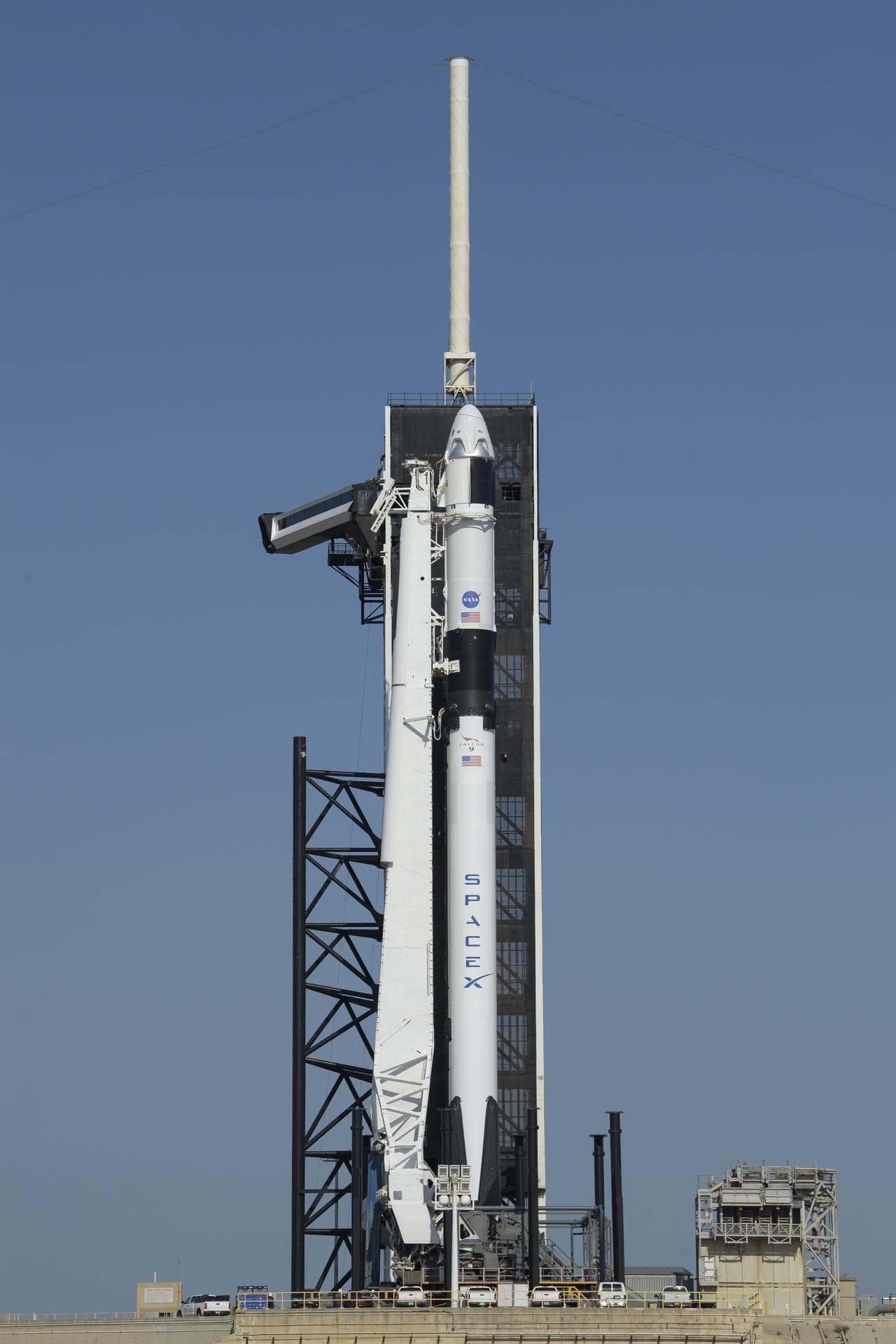
Falcon 9
Falcon 9 is SpaceX's two-stage rocket, with a reusable first stage, 676 liftoffs through August 12, 2026, and crew, science, and Starlink roles.
Rockets10 min
Falcon Heavy
Falcon Heavy is SpaceX's three-core heavy-lift rocket, flown 12 times since its 2018 debut with launches including Psyche, Europa Clipper, and GOES-U.
Key differences
- Launch rate: Falcon 9 had made 676 physical liftoffs through August 12, 2026, including 94 in 2026. Falcon Heavy has flown 12 times since 2018, most recently ViaSat-3 F3 in April 2026, with NASA's Roman Space Telescope targeted for August 30, 2026.
- Payload: SpaceX publishes 63,800 kg to low Earth orbit for a fully expendable Falcon Heavy, against 22,000 to 22,800 kg for a fully expendable Falcon 9. SpaceX does not publish one current Falcon 9 limit for recovery missions because the available performance depends on the trajectory. The Heavy margin matters for high-energy missions such as Europa Clipper.
- Recovery: Falcon Heavy's two side boosters land in tandem and have succeeded on all 20 attempts. The center core is harder: it has been recovered once, in 2019, and never reached port, so SpaceX now expends it.
- Price: SpaceX's current price sheet quotes only Falcon 9, at 74 million dollars through 2026. The last published Falcon Heavy list price, 97 million dollars set in a 2022 inflation adjustment, was about 45 percent above the 67 million Falcon 9 then cost. Government awards that bundle mission services run much higher, such as about 178 million dollars for Europa Clipper.
Side-by-side specifications
| Falcon 9 | Falcon Heavy | |
|---|---|---|
| Manufacturer | SpaceX | SpaceX |
| Country | United States | United States |
| First flight | June 4, 2010 | February 6, 2018 |
| Height | 70 m with standard fairing | 70 m |
| Diameter | 3.7 m | - |
| Liftoff mass | 549,054 kg on SpaceX's vehicle page | - |
| Published LEO payload | 22,000-22,800 kg, fully expendable | - |
| Stages | 2 | 2, plus 2 side boosters |
| Status | Active | Active |
| Physical liftoffs | 676 through August 12, 2026 | - |
| Successful first-stage landings | 627 through August 12, 2026 | - |
| Width | - | 12.2 m |
| Mass | - | 1,420,788 kg |
| Payload to LEO | - | 63,800 kg (expendable) |
| Total launches | - | 12 (as of August 2026) |
Figures come from each article's infobox; see the articles for sources and context.
Sources
- Falcon 9 launch catalog - Jonathan McDowell, GCAT
- Falcon Heavy vehicle page - SpaceX
- Capabilities and Services price sheet - SpaceX
- SpaceX launches ViaSat-3 F3 on Falcon Heavy - Spaceflight Now
- NASA sets launch date for Roman Space Telescope - SpacePolicyOnline
- Falcon Heavy center core toppled after landing - SpaceNews
- SpaceX raises Starlink and launch prices - SpaceNews
- Europa Clipper launch services contract - NASA