Saturn V vs SLS
The Space Launch System is often described as Saturn V's successor, and the two are close in size and job description: throw a crewed spacecraft at the Moon. The differences are generational, from propellants and heritage hardware to how often each rocket flies.
Rockets19 min
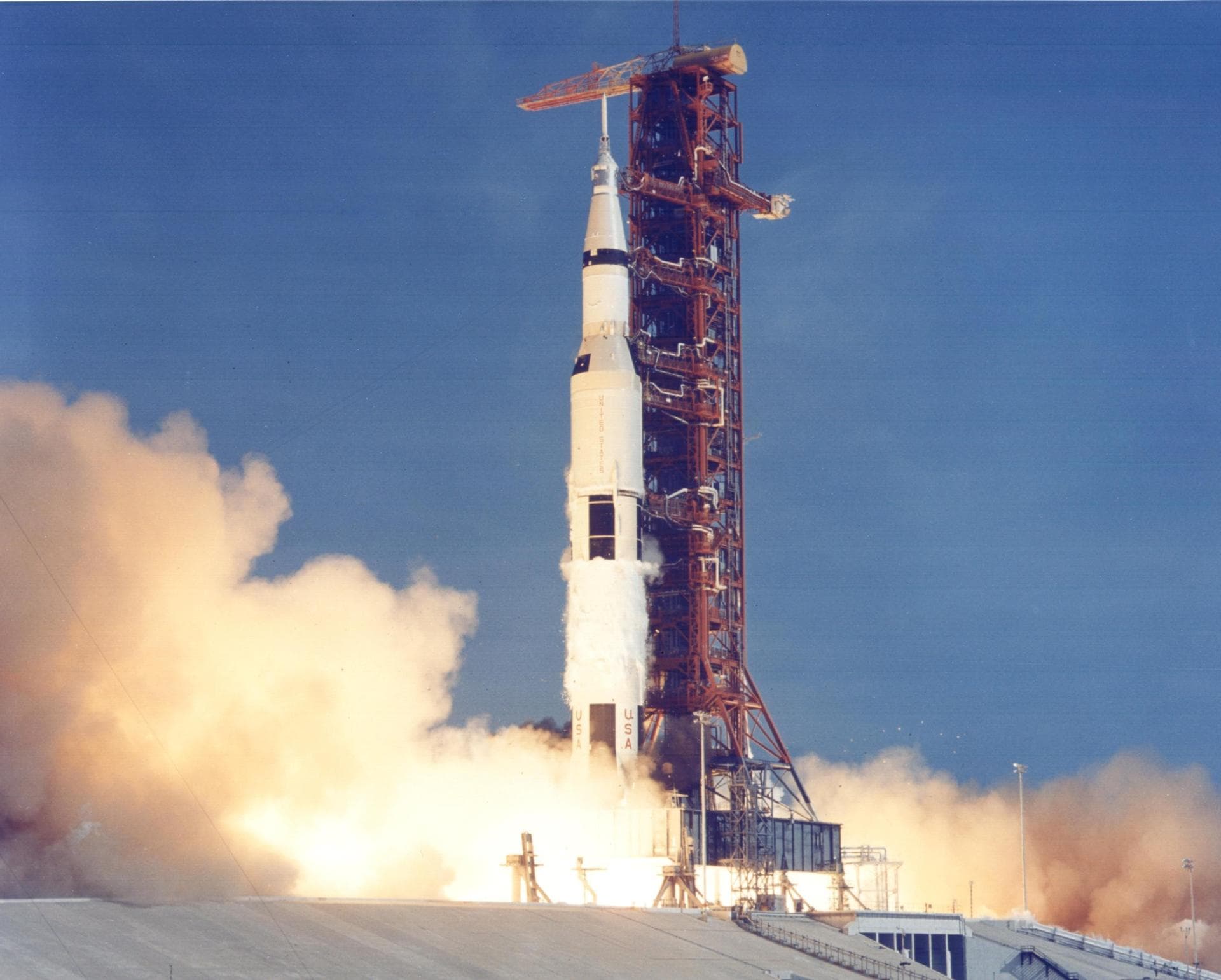
Saturn V
Saturn V was the NASA rocket that launched the Apollo Moon missions and Skylab, flying 13 times from 1967 to 1973 without losing a crew or payload.
Rockets13 min
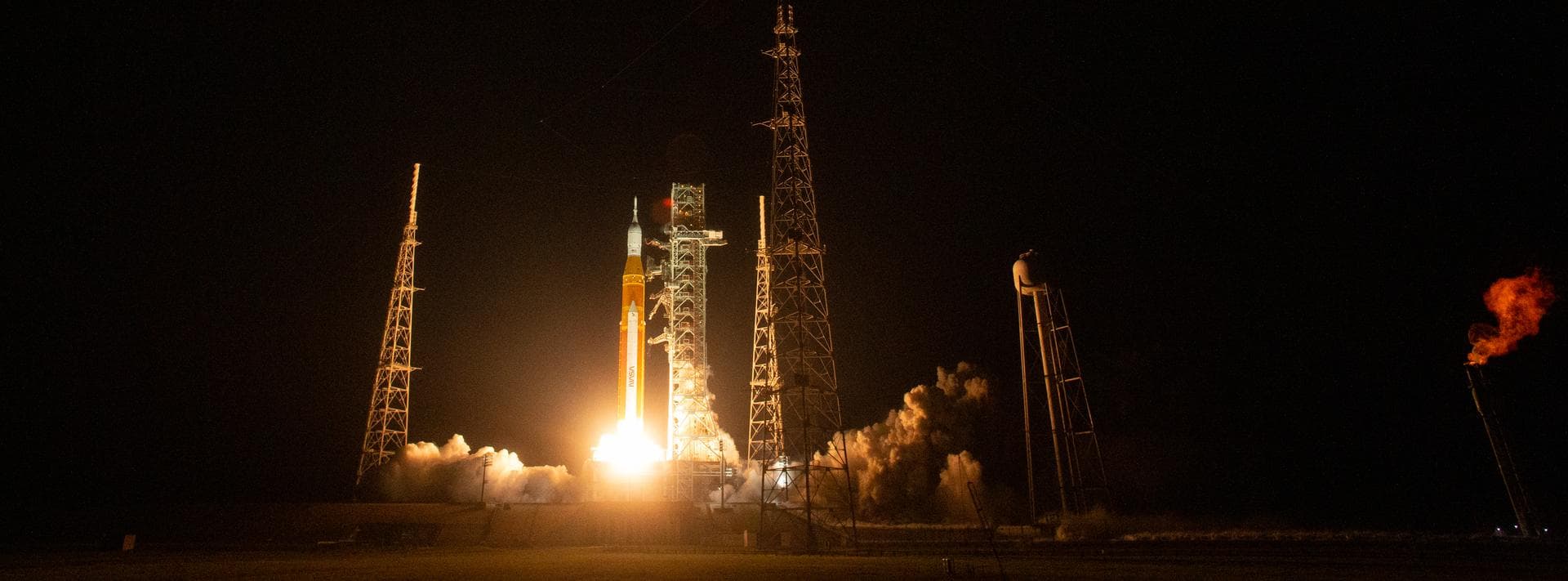
Space Launch System
The Space Launch System is NASA's super-heavy Artemis Moon rocket. It flew uncrewed in 2022 and carried the Artemis II crew around the Moon in April 2026.
Key differences
- Thrust and height: Saturn V stood 110.6 m and produced 34.1 MN (7.67 million lbf) on Apollo 17. SLS Block 1 is shorter at 98 m but makes 39.1 MN (8.8 million lbf), about 15 percent more, because two large solid boosters do much of the work at liftoff.
- Cadence: Saturn V flew 13 times in five and a half years, four of them in 1969 alone. SLS has flown twice in the three and a half years since November 2022, a rate NASA itself called unsustainable when it restructured the program in February 2026.
- Heritage: Saturn V was clean-sheet 1960s engineering. SLS reuses Space Shuttle RS-25 engines, booster segments, and tooling, an approach Congress wrote into the 2010 law that created the program.
- Payload to the Moon: Saturn V sent Apollo spacecraft of 45,700 to 48,600 kg toward the Moon, against NASA's rounded summary figure of about 43,500 kg. SLS Block 1 sends more than 27,000 kg, which is why Artemis splits crew transport and the lander across separate launches.
Side-by-side specifications
| Saturn V | Space Launch System | |
|---|---|---|
| Manufacturer | Boeing, North American, Douglas, IBM (for NASA) | Boeing, Northrop Grumman, L3Harris (for NASA) |
| Country | United States | United States |
| First flight | November 9, 1967 (Apollo 4) | November 16, 2022 (Artemis I) |
| Last flight | May 14, 1973 (Skylab 1) | - |
| Height | 110.6 m (363 ft) | 98 m (Block 1) |
| Diameter | 10.1 m | 8.4 m (core stage) |
| Mass | 2,822,000 to 2,965,000 kg at ignition | About 2,610,000 kg |
| Payload to LEO | About 118,000 kg | 95,000 kg (Block 1) |
| Payload to the Moon | 45,700 to 48,600 kg | - |
| Stages | 3 | 2, plus 2 solid boosters |
| Status | Retired (1973) | Active |
| Total launches | 13 (no failures) | 2 (as of August 2026) |
Figures come from each article's infobox; see the articles for sources and context.
Sources
- Apollo 17 press kit - NASA
- What Was the Saturn V? - NASA
- Apollo by the Numbers, SP-2000-4029 - NASA History Division
- SLS fact sheet, December 2025 - NASA
- NASA adds mission to Artemis lunar program, updates architecture - NASA
- NASA revises Artemis plans, cancels SLS upgrades - SpaceNews
- NASA Authorization Act of 2010 - Congress.gov
- Artemis II crew returns to Earth - NASA