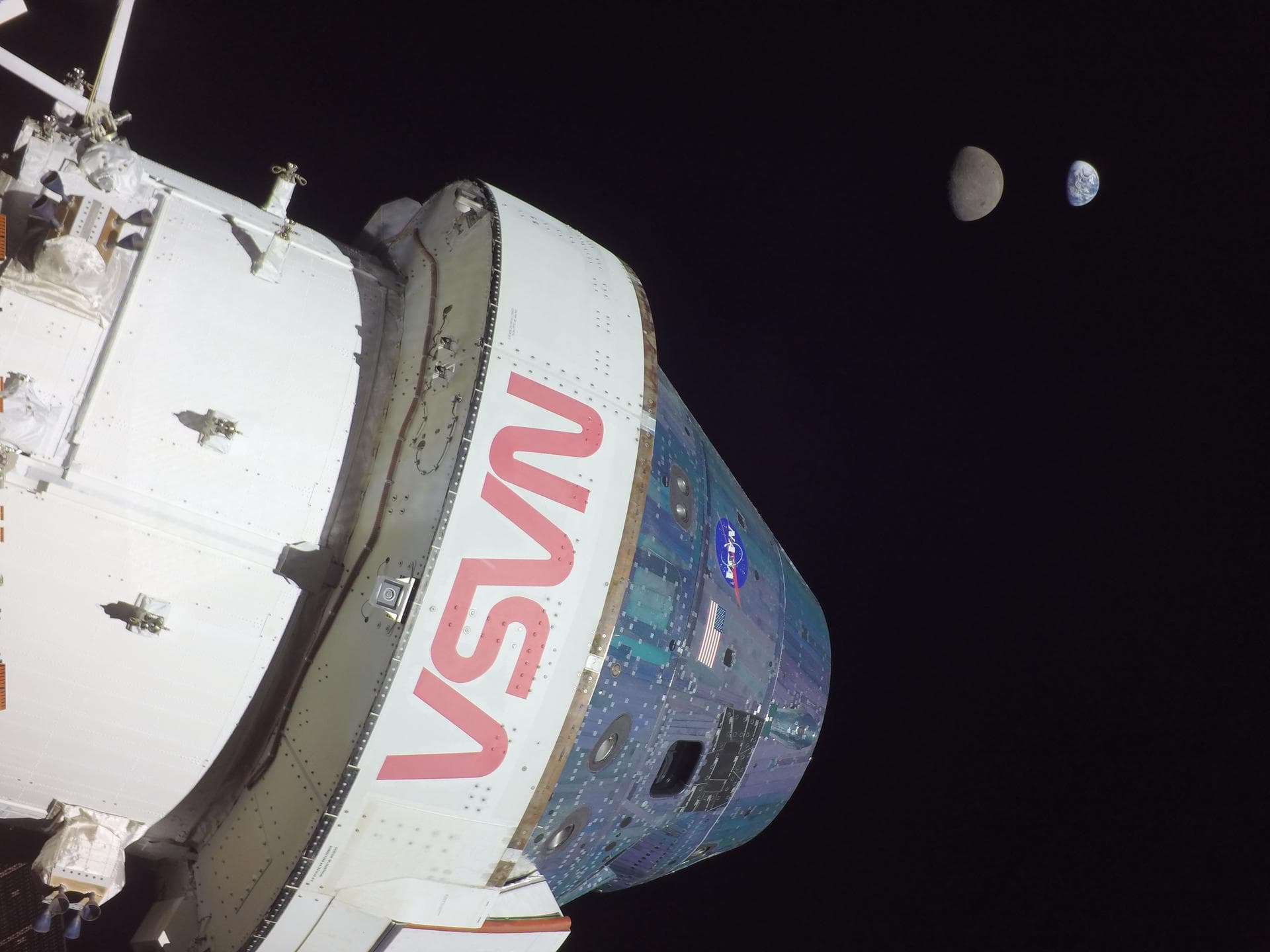
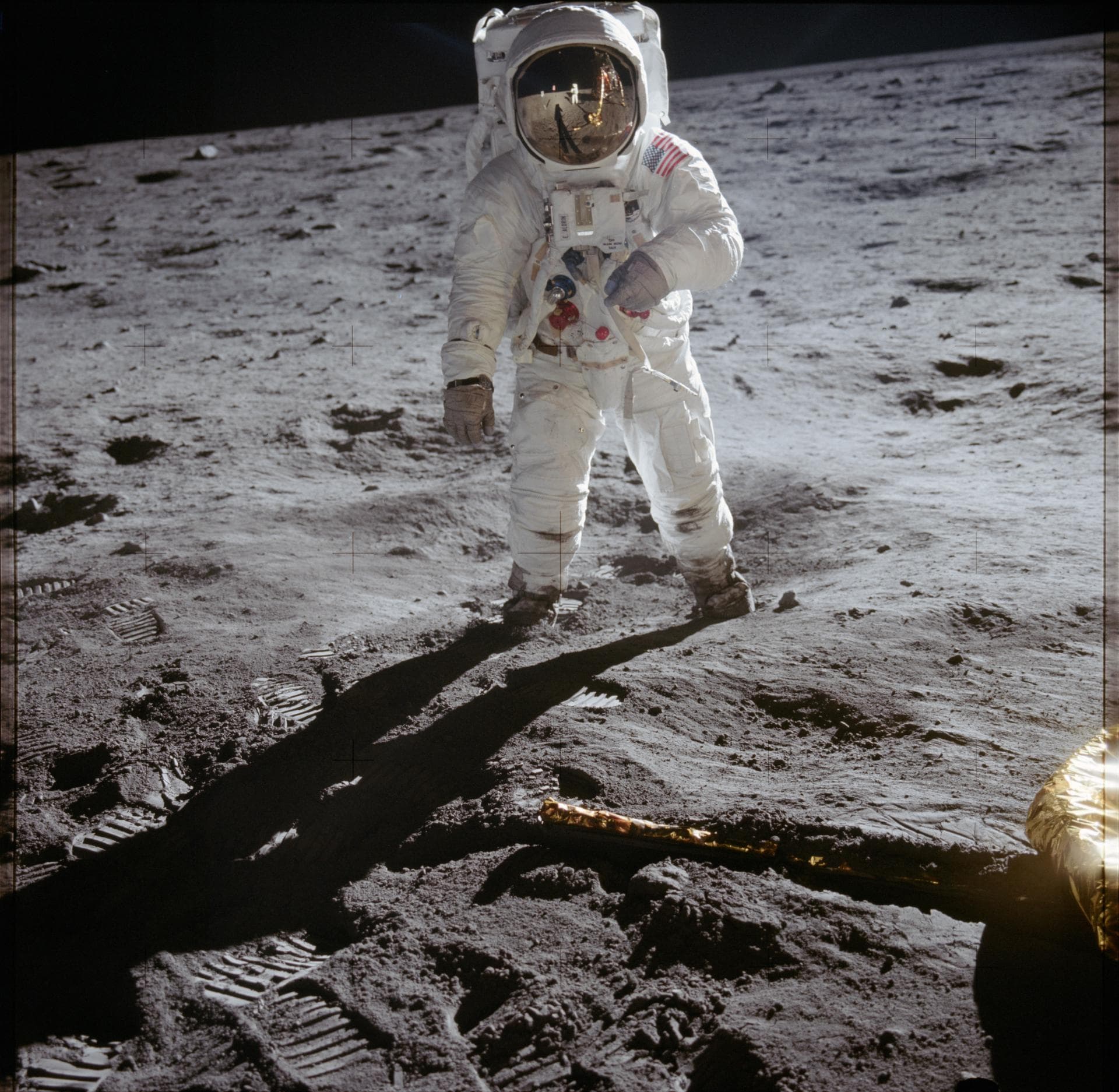
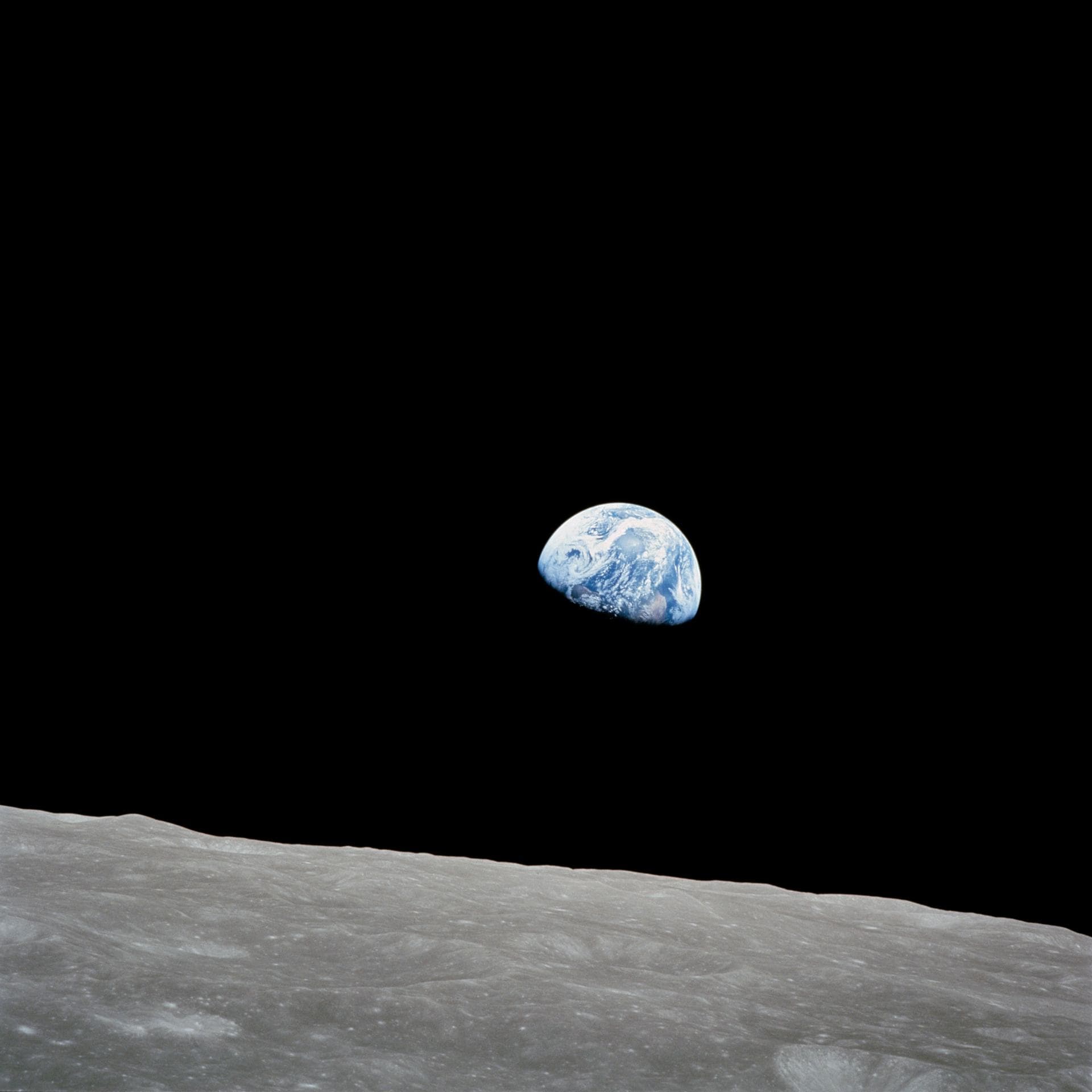
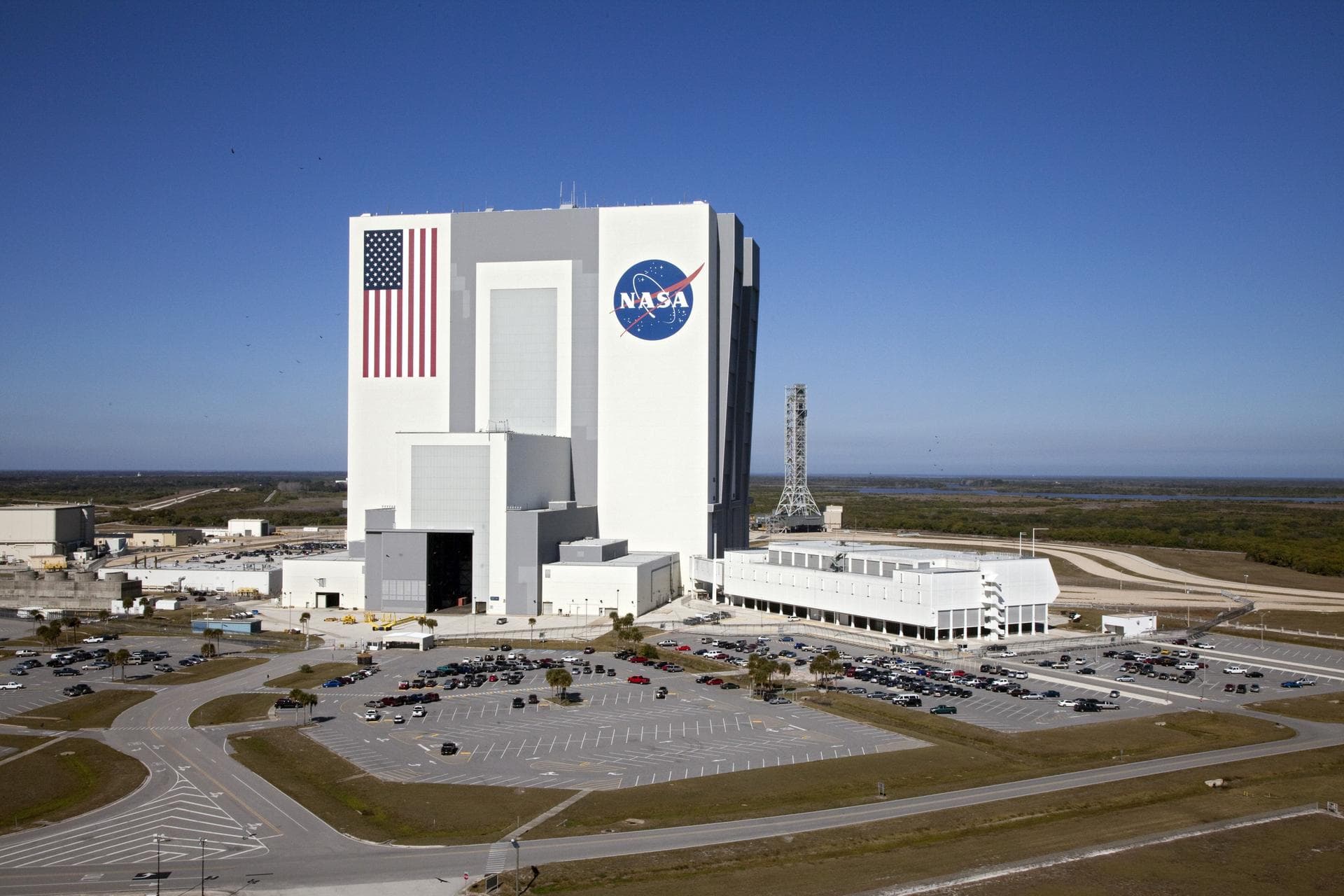
The Artemis program is NASA's campaign to return astronauts to the Moon, build repeatable lunar operations, and use those operations to prepare technologies and crews for missions to Mars. Established in 2017 and named in 2019,[4][5] it has flown two missions: the uncrewed Artemis I in 2022 and the crewed Artemis II lunar flyby in April 2026.[10][12] NASA targets the program's first crewed landing, on Artemis IV, for early 2028.[1][2]
Artemis combines the government-owned Space Launch System and Orion with commercially developed lunar landers, spacesuits, robotic deliveries, and contributions from international partners. NASA's architecture has changed repeatedly, so Artemis is better understood as an evolving campaign than as one fixed sequence of vehicles and dates.[1]
Status as of August 2026
As of August 13, 2026, the Artemis program has completed two flights and is preparing its third. Artemis I flew an uncrewed lunar test flight in late 2022, and Artemis II carried four astronauts around the Moon from April 1 to April 10, 2026.[10][12] NASA's plan of record, set by its March 2026 architecture update, makes Artemis III a roughly two-week low Earth orbit demonstration in 2027, during which Orion is to dock with lander test articles from Blue Origin and SpaceX without landing on the Moon.[1][14] Artemis IV, targeted for early 2028, is planned as the first crewed lunar landing since Apollo 17; NASA has not assigned either lander to that mission and says readiness will decide between them.[1][2] Gateway has been paused in its current form since March 2026, and Northrop Grumman is adapting its Habitation and Logistics Outpost hardware for surface demonstrations under the Moon Base plan.[23][24]
| Program element | Verified status |
|---|---|
| Artemis I | Completed its uncrewed SLS-Orion test flight from November 16 to December 11, 2022.[10] |
| Artemis II | Completed a nearly ten-day crewed lunar flyby from April 1 to April 10, 2026.[12] |
| Artemis III | NASA targets 2027 for a low Earth orbit test with four astronauts, Orion, and test articles supplied by Blue Origin and SpaceX. The flight does not include a lunar landing.[14][15] |
| Artemis IV | NASA targets early 2028 for the first crewed lunar landing. The agency says lander readiness will determine whether Blue Origin or SpaceX flies the landing.[1][2] |
| Artemis V | NASA targets late 2028 for another surface mission and additional work in its proposed Moon Base buildout.[1][23] |
| Gateway | NASA announced in March 2026 that it would pause the lunar-orbiting station in its existing form and assess how to repurpose applicable hardware.[23] |
| Moon Base | NASA described Phase 1 as underway through 2029 and planned more than 20 robotic landings during that phase. Those landings are a campaign plan, not a completed total.[24] |
GAO reported in July 2026 that NASA was still revising acquisition plans, cost estimates, and project baselines after the February and March architecture changes. The mission dates above therefore describe NASA's plan on the article's update date, not an independent forecast of when each flight will occur.[2]
Origins and objectives
Artemis uses hardware with roots in the NASA Authorization Act of 2010. That law directed NASA to develop a heavy-lift launch vehicle, which became SLS, and continue development of the Orion multipurpose crew vehicle.[3] In December 2017, Space Policy Directive 1 ordered a United States-led program with commercial and international partners for human return to the Moon, followed by missions to Mars and other destinations.[4]
NASA gave the campaign its current name in May 2019. Artemis, the Greek goddess associated with the Moon, was the twin sister of Apollo. At that time NASA aimed for a crewed south-polar landing in 2024 and a sustained presence by 2028; later budgets, technical problems, and architecture decisions displaced that schedule.[5][2]
The campaign's published Moon to Mars objectives cover science, infrastructure, transportation, habitation, operations, and the effects of deep-space missions on people. NASA updates the architecture through a recurring analysis cycle rather than treating one design as permanent.[6] The 2025 Architecture Definition Document, a NASA technical publication with a permanent DOI, describes that objective-led process and the trade studies used to connect lunar exploration with later Mars capabilities. It predates the 2026 redesign and should be read as the technical baseline for that cycle, not as a current flight manifest.[7]
Lunar science is one reason for concentrating surface work near the south pole. A NASA science definition team identified polar volatiles, the Moon's impact history, interior, and geologic processes as high-priority investigations. Permanently shadowed terrain can preserve water ice and other compounds, while nearby illuminated areas may support longer surface operations. The abundance, distribution, physical form, and origin of those volatiles remain scientific questions rather than established resource reserves.[8]
Artemis also has a diplomatic framework. NASA and the U.S. Department of State established the Artemis Accords with seven other founding countries in 2020. The nonbinding principles address peaceful use, transparency, emergency assistance, release of scientific data, preservation of heritage, and avoidance of harmful interference. Mauritius became the 70th signatory in July 2026; signing the Accords does not by itself supply hardware or a seat on an Artemis mission.[9]
Mission record and current plan
Artemis mission numbering no longer maps neatly to the profiles NASA described before 2026. In particular, the current Artemis III is an Earth-orbit test, while the first planned landing moved to Artemis IV.[1]
| Mission | Flight date or NASA target | Status and profile | Durable result or principal dependency |
|---|---|---|---|
| Artemis I | November 16 to December 11, 2022 | Complete. An uncrewed Orion flew to distant retrograde lunar orbit and returned after 25.5 days.[10] | First integrated flight of SLS, Orion, and the ground systems. The return also exposed unexpected heat-shield material loss.[10][11] |
| Artemis II | April 1 to April 10, 2026 | Complete. Four astronauts flew around the Moon and returned to the Pacific Ocean.[12] | First crewed Orion mission and first people sent toward the Moon since Apollo 17. The crew exercised life support, navigation, communications, and manual handling.[12] |
| Artemis III | 2027 | Planned low Earth orbit demonstration lasting about two weeks. Orion is to dock separately with Blue Origin and SpaceX lander test articles.[14][15] | Depends on SLS-Orion readiness and both companies delivering compatible test articles. It will not test a lunar descent, ascent, or surface operation.[14] |
| Artemis IV | Early 2028 | NASA's planned first crewed south-polar landing.[1][2] | Depends on a flight-ready lander, lunar spacesuits, SLS-Orion, ground systems, and completion of the selected provider's required demonstrations. The provider is undecided.[2][19][20] |
| Artemis V | Late 2028 | NASA's planned second surface mission and further Moon Base construction work.[1][23] | Depends on a new SLS upper-stage arrangement and on surface mobility, logistics, and infrastructure that remain in development.[2][23][24] |
| Later missions | No firm manifest | NASA described roughly annual landings after Artemis V in its February plan, then set an initial objective of landings about every six months as Moon Base capabilities mature.[1][23] | These are planning goals. NASA has not published a complete, funded flight manifest that achieves that cadence.[2] |
Artemis I
Artemis I launched from Kennedy Space Center on November 16, 2022. Orion passed the Moon, entered distant retrograde orbit, came within about 80 miles of the lunar surface on a later flyby, and splashed down on December 11. The flight tested the integrated launch system and recovered Orion after a high-energy lunar return.[10]
Inspectors found more cracking and loss of charred Avcoat material on Orion's heat shield than models had predicted. NASA concluded that gases generated within the heat shield could not vent quickly enough during the planned skip-entry trajectory; pressure then cracked and released pieces of char. For Artemis II, NASA changed the entry trajectory to reduce the relevant heating and pressure conditions. It also began incorporating manufacturing and design changes into later Orion heat shields.[11]
Artemis II
Artemis II launched Reid Wiseman, Victor Glover, Christina Koch, and Canadian Space Agency astronaut Jeremy Hansen on April 1, 2026. They splashed down off San Diego on April 10 after traveling 695,081 miles. NASA measured their greatest distance from Earth at 252,756 miles, farther than any previous crewed mission, and reported a closest approach of 4,067 miles above the Moon.[12]
The mission tested Orion with people aboard, including life support, manual control, navigation, communications, and recovery operations. The crew returned more than 7,000 images. An experimental optical terminal transmitted 484 gigabytes and reached a peak downlink rate of 260 megabits per second, demonstrating a higher-capacity path for imagery alongside Orion's operational radio links.[12][13]
Artemis III
NASA named the Artemis III crew in June 2026: Randy Bresnik as commander, European Space Agency astronaut Luca Parmitano as pilot, and Frank Rubio and Andre Douglas as mission specialists. Bob Hines is the backup. Parmitano is the first ESA astronaut assigned to an Artemis mission.[15]
The current plan calls for three launches in a short campaign. Blue Origin's test article would launch first and could wait in orbit for as long as 30 days. SLS would then launch Orion and its crew. After Orion docks with the Blue Origin vehicle for about two days, a SpaceX Starship test article would launch and dock for about one day. Orion would act as the approaching vehicle at both dockings.[14][15]
The demonstrations are deliberately different. The Blue Origin article is based on the Mark 2 crew cabin and is intended to test avionics, software, controls, and side docking. Up to two Orion-suited astronauts could enter it, and it would carry an instrumented mass simulator representing a lunar spacesuit. The Starship article would test nose-to-nose docking, but the crew would not enter it. Neither vehicle would travel to the Moon on Artemis III.[14]
In May 2026, NASA said Artemis III would replace the Interim Cryogenic Propulsion Stage with a nonpropulsive spacer; Orion's European Service Module would finish circularizing the initial orbit. By July, technicians had started stacking the twin solid rocket boosters at Kennedy. NASA also reported that the Artemis III crew module uses a redesigned heat shield made from 186 molded Avcoat blocks.[16][17]
Program architecture
SLS, Orion, and launch systems
The Space Launch System provides the high-energy launch for Artemis missions, while Orion carries the crew through launch, deep space, reentry, and recovery. The European Service Module supplies Orion with propulsion, electrical power, thermal control, water, oxygen, and nitrogen. ESA leads the module, with industrial contributions distributed across Europe.[18]
The 2026 architecture ended the plan to introduce the Exploration Upper Stage and Mobile Launcher 2. Artemis III is to use the spacer described above, and GAO reported that Artemis IV would use the final Interim Cryogenic Propulsion Stage. NASA was pursuing a modified United Launch Alliance Centaur V for Artemis V and later missions, but launcher interfaces, procurement decisions, and Mobile Launcher 1 changes were still being worked in 2026.[2][16]
This approach keeps the core SLS-Orion system while changing how the upper-stage function is provided from mission to mission. It also transfers schedule pressure to work that was not part of the earlier Block 1B plan. GAO found that the responsible projects were reassessing cost and schedule baselines after the redesign.[2]
Human landing systems
NASA is buying Artemis lunar landings as a service through firm-fixed-price milestone contracts. The contractors retain ownership of their systems, while NASA pays for development milestones, demonstrations, and mission services. SpaceX and Blue Origin must both solve a much broader transportation problem than the final descent vehicle alone.[19]
| Provider | NASA design | Contract scope reported by NASA OIG | Key dependencies |
|---|---|---|---|
| SpaceX | Starship Human Landing System | The Appendix H task orders began with a potential value of about $4.3 billion; changes had added about $253 million by December 2025.[19] | Multiple Starship launches, an orbital propellant depot, tanker flights, large-scale cryogenic propellant transfer, lunar flight, and an uncrewed demonstration.[19] |
| Blue Origin | Blue Moon Mark 2 | The Appendix P task orders began with a potential value of about $3.1 billion; changes had added about $13 million by December 2025.[19] | A Mark 2 lander, a low Earth orbit transporter and depot, refueling launches, long-duration liquid hydrogen and oxygen storage and transfer, lunar flight, and an uncrewed demonstration.[19] |
Those figures describe potential values within defined task orders, not estimates of each company's total investment or the full cost of a landing. NASA has not assigned either provider to Artemis IV. Under the current plan, readiness and the results of development and demonstrations are supposed to determine which system attempts the first landing.[1][2][19]
Lunar spacesuits
NASA procures the Artemis lunar spacesuit as a service under the Exploration Extravehicular Activity Services contract. NASA selected Axiom Space and Collins Aerospace in 2022 under a contract structure with a combined maximum ordering value of $3.1 billion. NASA removed the Collins task orders in 2024, leaving Axiom as the only active lunar-suit provider.[20]
The NASA Inspector General reported in April 2026 that both the lunar-surface demonstration and a separate space-station demonstration were at least 18 months behind their original schedules. The audit identified design maturity, integrated testing, and dependence on a single provider as risks to suit availability for a 2028 landing. The Artemis III Blue Origin test article will carry a suit mass simulator, not a suited lunar-surface test by an astronaut.[20][14]
Robotic deliveries and surface systems
Commercial Lunar Payload Services, or CLPS, buys end-to-end robotic delivery services from companies rather than NASA owning each lander. As of July 2026, NASA reported 17 delivery awards to five vendors, more than 60 NASA payloads assigned, and 13 companies eligible to compete under contracts with a combined ceiling of $2.6 billion through November 2028.[21]
CLPS accepts higher mission risk in exchange for commercial competition and a faster flight rhythm. Its record includes both losses and successful deliveries. Firefly Aerospace's Blue Ghost Mission 1 landed upright in March 2025 and delivered ten NASA science and technology instruments, demonstrating that the model can place a useful payload suite on the surface without making every delivery successful.[21][22]
From Gateway to the Moon Base plan
For years, NASA organized later Artemis missions around Gateway, a small station intended for lunar orbit. In March 2026, the agency said it would pause Gateway in its current form, assess how completed or partly completed systems could be reused, and concentrate near-term architecture on surface infrastructure. The announcement did not establish that all Gateway hardware had been canceled or that every component already had a funded replacement use.[23][25]
NASA divided its proposed Moon Base into three phases. Phase 1 uses CLPS landers, autonomous systems, unpressurized rovers, and the Lunar Terrain Vehicle. Phase 2 would add semi-habitable infrastructure, regular logistics, and a pressurized rover contribution led by Japan. Phase 3 would add cargo versions of the commercial landers and heavier infrastructure, including planned Italian and Canadian surface contributions. These phases are NASA's 2026 planning architecture; they are not completed facilities or a fully appropriated construction schedule.[23]
In August, NASA described Phase 1 as already underway through 2029 and said its plan included more than 20 robotic landings. It also said Northrop Grumman was adapting power and avionics hardware developed for Gateway's Habitation and Logistics Outpost into three planned surface demonstrations for lunar-night survival and shared power. Neither the landing count nor those demonstrations had been completed at the time of the announcement.[24]
The change left substantial work in transition. The Inspector General reported that NASA was terminating or repurposing the Exploration Upper Stage, Universal Stage Adapter, Mobile Launcher 2, and Gateway's Habitation and Logistics Outpost project. Across those four efforts, estimated contract value had risen from about $2.8 billion to $5.9 billion and deliveries had slipped by as much as seven years before the 2026 decisions. Contract value is not the same as money spent, but the figures show the scale of obligations NASA had to unwind or redirect.[25]
Costs and oversight
There is no single current number that represents the full cost of Artemis. NASA develops the campaign through many projects and mission directorates, and public estimates use different time periods and include different hardware. Adding those figures together would double-count some work.[2][26]
In 2021, the NASA Inspector General projected about $93 billion in Artemis-related obligations from fiscal years 2012 through 2025. The same audit estimated roughly $4.1 billion in production and operations cost for each of the first four SLS-Orion launches, including ground systems. Those were scoped, pre-2026 estimates, not a current lifecycle estimate for the revised campaign.[26]
The 2026 lander audit found that NASA had obligated $6.9 billion to Human Landing System work since 2019 and estimated $18.3 billion in HLS obligations through fiscal year 2030. That figure covers the lander program, not SLS, Orion, spacesuits, launch facilities, science payloads, or the Moon Base plan.[19]
GAO reported a current Orion lifecycle estimate of about $14.8 billion and an initial HLS estimate of about $4.9 billion in its January 2026 project data. The HLS baseline was under review after the mission changes. More importantly, GAO said NASA still had not produced a lifecycle cost estimate for the first crewed Artemis landing as of May 2026.[2]
Congress separately appropriated $4.1 billion in 2025 for SLS vehicles for Artemis IV and V, with minimum annual amounts specified for fiscal years 2026 through 2029. That statutory funding supports two launch vehicles, but it does not fund every element required for either mission and does not establish that the flights will meet NASA's target dates.[27][2]
Technical and schedule risks
The Artemis program's largest risks are linked rather than isolated. A late lander affects astronaut training, suit integration, Orion docking tests, launch planning, and the landing date. A change to one mission can also shift which upper stage, launcher, ground system, or surface asset the next mission needs.[2]
| Risk | Verified basis | Why it matters |
|---|---|---|
| Cryogenic propellant transfer and storage | Both landers require orbital refueling and long-duration management of very cold propellants. The OIG said neither provider had yet demonstrated all required vehicle-to-vehicle transfer capability at the necessary scale.[19] | Landing cannot occur until a provider can aggregate, store, and deliver enough propellant before the crew arrives. |
| Launch cadence | SpaceX's architecture requires numerous tanker launches; Blue Origin's requires lander, transporter, depot, and refueling launches. Exact counts and sequences were still changing with the architecture.[19][2] | Delays or a failed launch can extend the aggregation campaign and consume schedule margin. |
| Test completeness | The OIG found that planned uncrewed lander demonstrations would omit or substitute some crew systems and would not reproduce every crewed configuration or operating condition.[19] | NASA must decide how much residual risk is acceptable before placing astronauts aboard a lander. |
| Crew access and survival | The OIG identified concerns including Starship's surface elevator and lack of alternate surface access, gaps in both providers' crew-survival analyses, and the absence of a rescue capability for either lander.[19] | A vehicle can meet propulsion goals while still lacking sufficient evidence for crew survival in off-nominal cases. |
| Spacesuit maturity | The lunar suit demonstrations were at least 18 months late, and Axiom was the sole active provider in the 2026 audit.[20] | A landing requires certified suits integrated with the lander, life support, tools, and surface tasks. |
| Upper-stage transition | NASA stopped Block 1B development and was defining a Centaur V-based approach while changing interfaces and ground hardware.[2][25] | Artemis V depends on a transportation configuration that had not completed its acquisition and integration work in 2026. |
| Unsettled baselines | GAO found that several projects lacked updated cost and schedule baselines after the 2026 redesign.[2] | Public target dates cannot be compared with stable project commitments until NASA completes those baselines. |
Artemis has already produced two completed deep-space missions and a tested crew spacecraft. The next phase is harder to forecast because it depends on commercial landers, suit certification, repeated orbital refueling, a new upper-stage approach, and a surface architecture announced only months before this update. The most accurate way to follow the program is to separate completed flight results from NASA's dated plan and from contractor development targets.[2][19][20]
References
- NASA Strengthens Artemis: Adds Mission, Refines Overall Architecture - NASA, March 3, 2026.
- NASA: Assessments of Major Projects - U.S. Government Accountability Office, July 23, 2026.
- National Aeronautics and Space Administration Authorization Act of 2010 - U.S. Congress, October 11, 2010.
- New Space Policy Directive Calls for Human Expansion Across Solar System - NASA, December 11, 2017.
- NASA's Moon to Mars Plans: Artemis Lunar Program Gets Fast Tracked in 2019 - NASA, May 14, 2019.
- Moon to Mars Architecture: Strategy and Objectives - NASA, accessed August 12, 2026.
- Moon to Mars Architecture Definition Document, Revision C - NASA Technical Reports Server, December 12, 2025.
- Artemis III Science Definition Team Report - NASA, December 2020.
- NASA Welcomes Mauritius as 70th Artemis Accords Signatory - NASA, July 17, 2026.
- Artemis I Reference - NASA, accessed August 12, 2026.
- NASA Identifies Cause of Artemis I Orion Heat Shield Char Loss - NASA, December 5, 2024.
- NASA Welcomes Record-Setting Artemis II Moonfarers Back to Earth - NASA, April 10, 2026.
- NASA Laser Terminal Enhances Views During Artemis II Mission - NASA, April 28, 2026.
- How NASA's Artemis III Lander Test Will Pave Way for Moon Landings - NASA, July 15, 2026.
- NASA Marches Toward Artemis III Mission in 2027, Names Crew Members - NASA, June 9, 2026.
- NASA Outlines Preliminary Artemis III Mission Plans - NASA, May 13, 2026.
- NASA's Artemis III Flight Hardware Stacks Up at Kennedy - NASA, July 13, 2026.
- European Service Module - European Space Agency, accessed August 12, 2026.
- NASA's Management of the Human Landing System Contracts - NASA Office of Inspector General, March 10, 2026.
- NASA's Acquisition of Next-Generation Spacesuit Services - NASA Office of Inspector General, April 20, 2026.
- Commercial Lunar Payload Services - NASA, updated July 6, 2026.
- Touchdown: Carrying NASA Science, Firefly's Blue Ghost Lands on Moon - NASA, March 2, 2025.
- NASA Unveils Initiatives to Achieve America's National Space Policy - NASA, March 24, 2026.
- NASA Provides Updates on Moon Base Cargo Landers, Tech Demonstrations - NASA, August 4, 2026.
- Canceled or Repurposed Artemis Campaign Systems - NASA Office of Inspector General, June 24, 2026.
- NASA's Management of the Artemis Missions - NASA Office of Inspector General, November 15, 2021.
- Public Law 119-21 - U.S. Congress, July 4, 2025.