Starship vs Saturn V
Saturn V held the title of most powerful rocket ever flown for half a century. Starship took it in 2023 with roughly twice the liftoff thrust, but the two vehicles were built on opposite premises: Saturn V was expendable, flew 13 times, and never lost a crew or a payload, while Starship is designed for full reuse and is still in flight testing, with 13 test flights through July 2026 and no orbital mission yet.
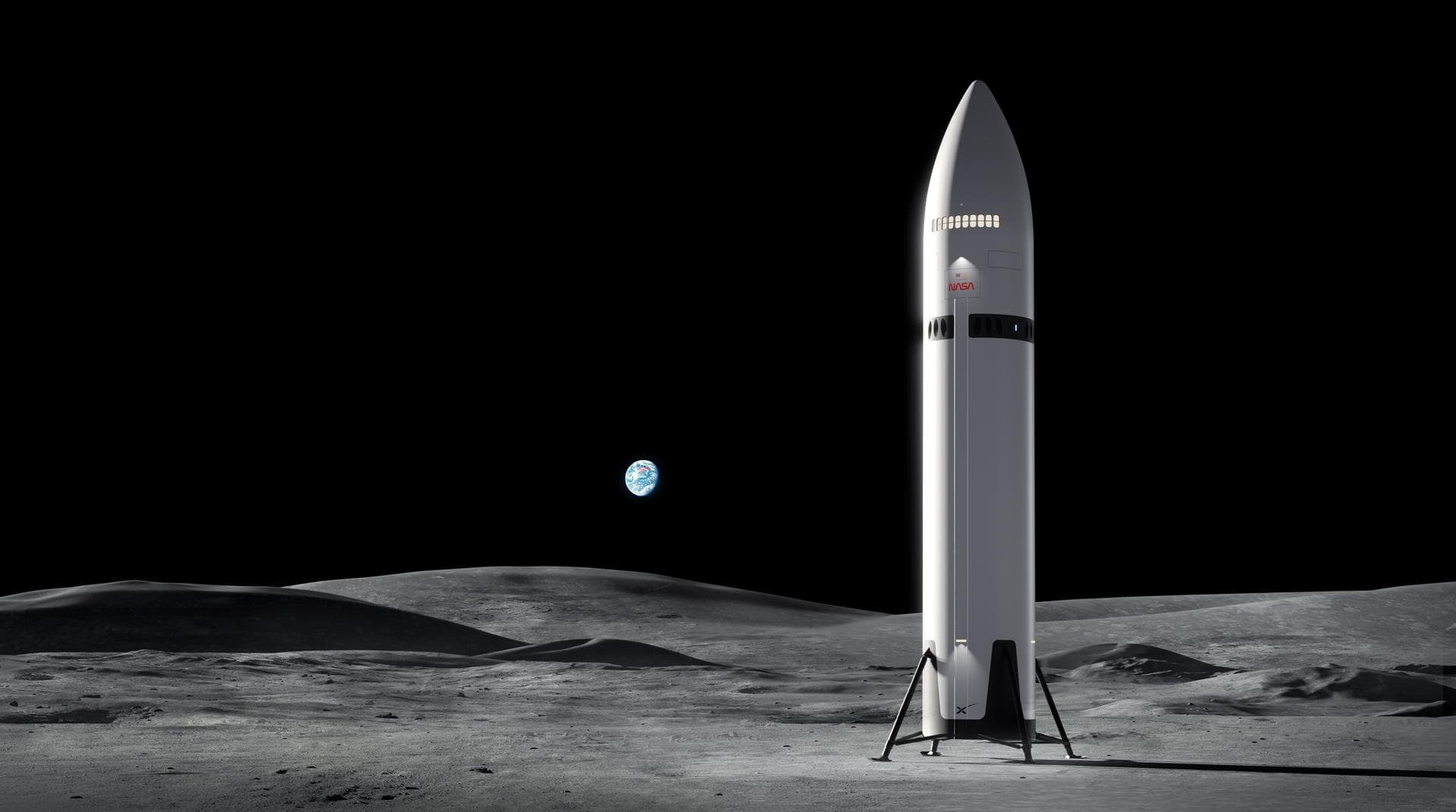
Starship
Starship is SpaceX's super heavy-lift rocket in flight testing, designed for full reuse, orbital refueling, Starlink launches, and lunar missions.
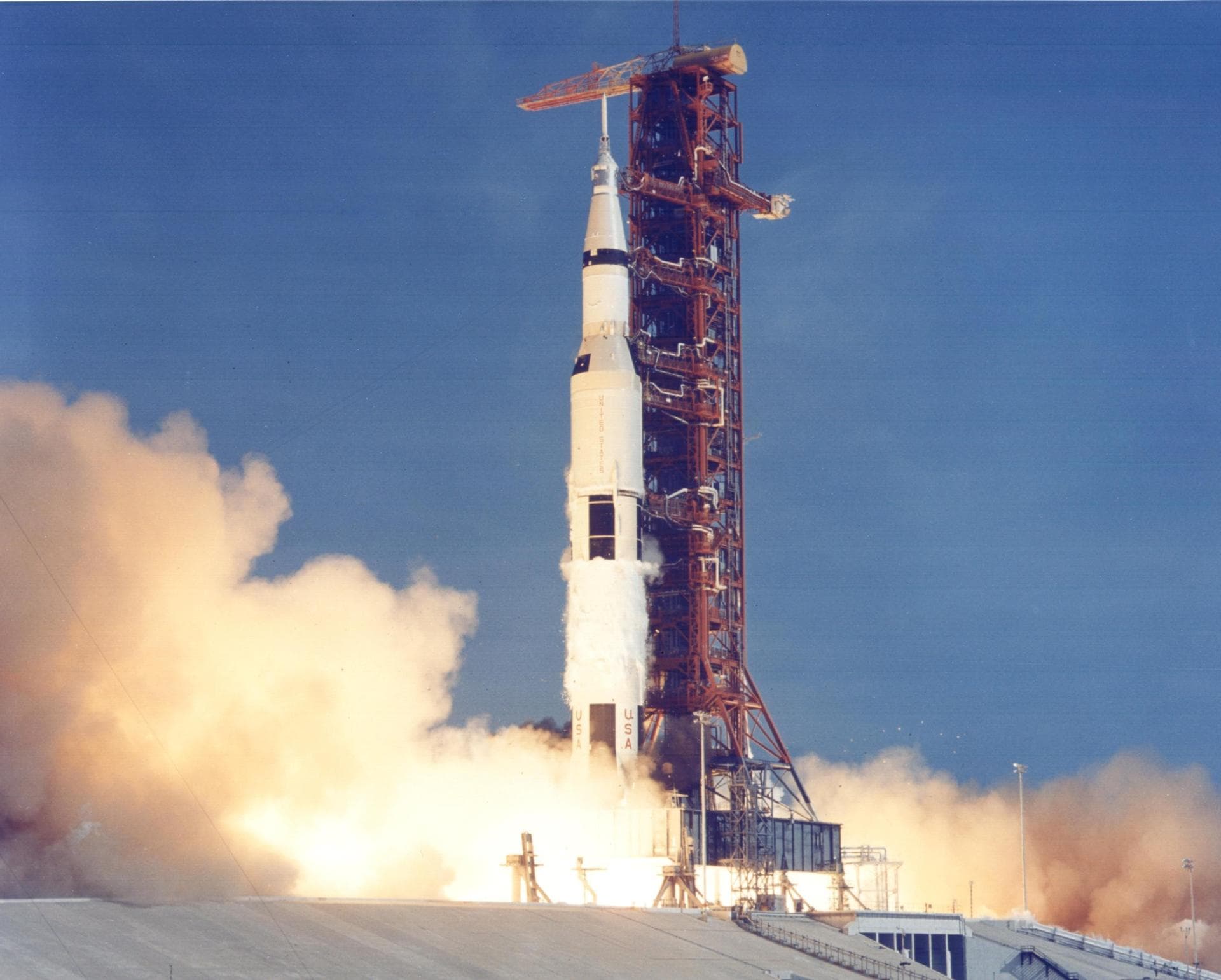
Saturn V
Saturn V was the NASA rocket that launched the Apollo Moon missions and Skylab, flying 13 times from 1967 to 1973 without losing a crew or payload.
Key differences
- Size and power: Starship V3 stands 124.4 m tall against Saturn V's 110.6 m, and its 33 Raptor engines produce about 16 million lbf at liftoff, roughly twice the 7.67 million lbf a Saturn V made on Apollo 17.
- Reusability: every Saturn V was discarded after one flight. Starship is designed so both stages fly again, and SpaceX has caught three Super Heavy boosters with the launch tower and reflown one. Both V3 boosters flown so far survived to the water but were destroyed in hard impacts after return-engine problems.
- Track record: Saturn V flew 13 times between November 1967 and May 1973 and carried six crews to the lunar surface. Starship has flown 13 test flights since April 2023, all on suborbital profiles; SpaceX targeted late August 2026 for the first orbital attempt.
- Proven versus planned payload: Saturn V put about 118,000 kg into Earth orbit and sent Apollo spacecraft of 45,700 to 48,600 kg toward the Moon. Starship's figure of more than 100 tonnes is a design target it has not yet demonstrated.
Side-by-side specifications
| Starship | Saturn V | |
|---|---|---|
| Manufacturer | SpaceX | Boeing, North American, Douglas, IBM (for NASA) |
| Country | United States | United States |
| First integrated flight | April 20, 2023 | - |
| Current version | Version 3 (V3) | - |
| Height | 124.4 m (V3); about 121 m (V1); 123 m (V2) | 110.6 m (363 ft) |
| Diameter | 9 m | 10.1 m |
| Stages | 2 (Super Heavy booster and Starship upper stage) | 3 |
| Engines | 33 booster and 6 ship Raptor engines (V3) | - |
| Propellants | Liquid oxygen and liquid methane | - |
| Payload to LEO | 100+ metric tonnes (V3 design target, not demonstrated) | About 118,000 kg |
| Operational launch site | Starbase, Texas | - |
| Status | Flight testing; 13 integrated suborbital tests as of August 13, 2026 | Retired (1973) |
| First flight | - | November 9, 1967 (Apollo 4) |
| Last flight | - | May 14, 1973 (Skylab 1) |
| Mass | - | 2,822,000 to 2,965,000 kg at ignition |
| Payload to the Moon | - | 45,700 to 48,600 kg |
| Total launches | - | 13 (no failures) |
Figures come from each article's infobox; see the articles for sources and context.
Sources
- Starship vehicle page - SpaceX
- Apollo 17 press kit - NASA
- Apollo by the Numbers, SP-2000-4029 - NASA History Division
- What Was the Saturn V? - NASA
- Starship Flight Test, April 2023 - SpaceX
- SpaceX launches Starship V3 for the first time - Space.com
- Starship Flight 13 test flight report - Spaceflight Now
- SpaceX targets late August for next Starship flight - Space.com