Starship vs SLS
Both rockets exist to send humans beyond Earth orbit, and both fly under the Artemis program banner. The Space Launch System is a government-owned expendable rocket that has flown twice and carried a crew around the Moon; Starship is a commercial vehicle designed for full reuse, still in flight testing, and one of two landers NASA is weighing for the first Artemis landing.
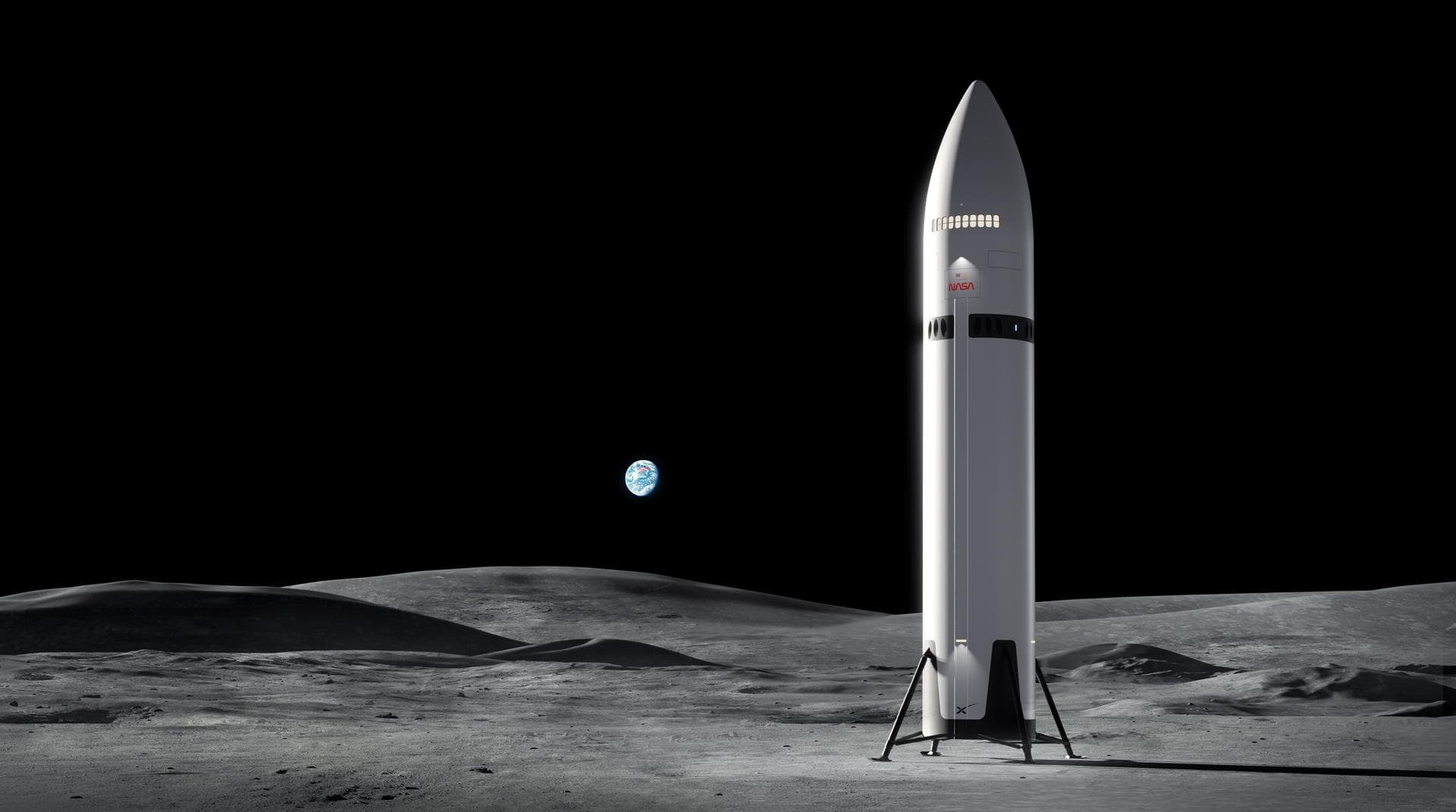
Starship
Starship is SpaceX's super heavy-lift rocket in flight testing, designed for full reuse, orbital refueling, Starlink launches, and lunar missions.
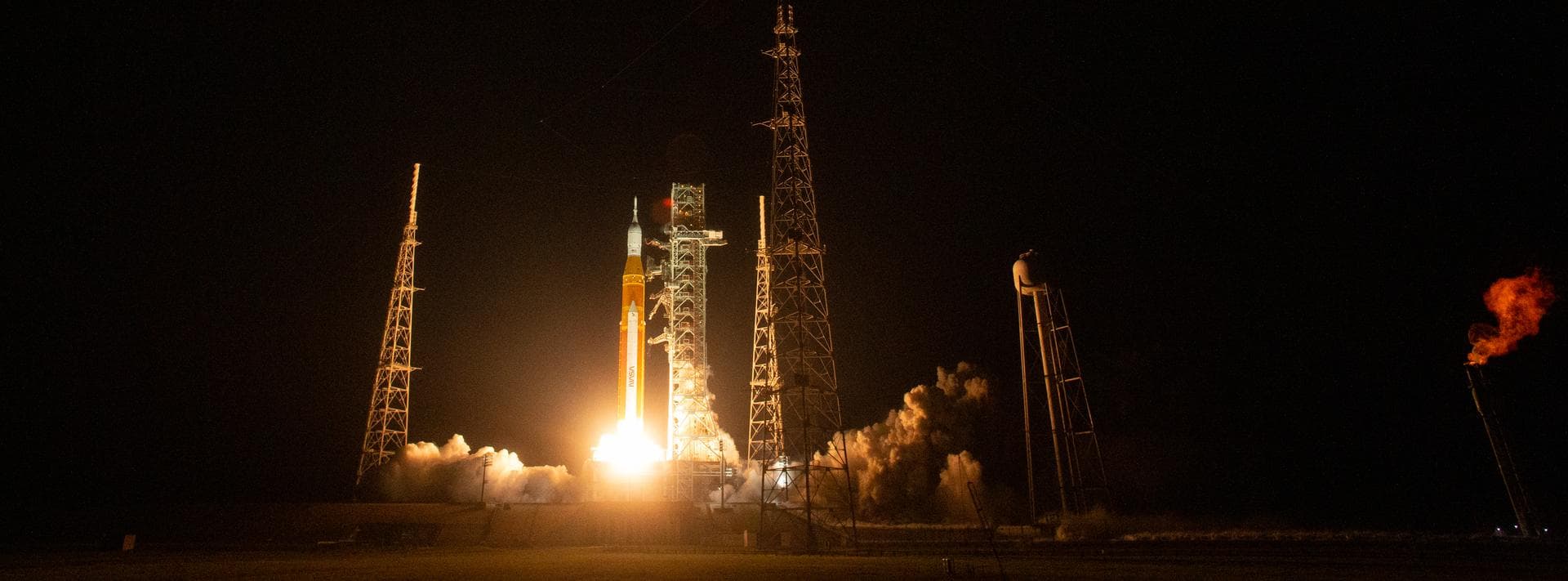
Space Launch System
The Space Launch System is NASA's super-heavy Artemis Moon rocket. It flew uncrewed in 2022 and carried the Artemis II crew around the Moon in April 2026.
Key differences
- Role in Artemis: SLS is the only rocket rated to send Orion and its crew toward the Moon in a single launch. A lander version of Starship is one of two Human Landing Systems under contract, alongside Blue Origin's Blue Moon, and NASA said in 2026 that it will pick between them after Artemis III.
- Flight record: SLS is 2 for 2, with the uncrewed Artemis I in November 2022 and the crewed Artemis II lunar flyby in April 2026. Starship has flown 13 suborbital test flights since 2023; Flight 12 released two modified Starlink spacecraft, and Flight 13 released 20 production Starlink V3 satellites. It has not reached orbit or flown an outside customer.
- Economics: NASA's inspector general puts a single SLS above 2 billion dollars per flight and a full Artemis launch at about 4.1 billion, and none of the hardware comes back. NASA cancelled the Block 1B upgrade and its Exploration Upper Stage in February 2026 on cost and schedule grounds. Starship's cost case rests on reuse it has not yet demonstrated end to end.
- Propulsion heritage: SLS burns hydrogen in four Shuttle-derived RS-25 engines with two five-segment solid boosters; Starship's booster carries 33 new methane-fueled Raptors and no solids.
Side-by-side specifications
| Starship | Space Launch System | |
|---|---|---|
| Manufacturer | SpaceX | Boeing, Northrop Grumman, L3Harris (for NASA) |
| Country | United States | United States |
| First integrated flight | April 20, 2023 | - |
| Current version | Version 3 (V3) | - |
| Height | 124.4 m (V3); about 121 m (V1); 123 m (V2) | 98 m (Block 1) |
| Diameter | 9 m | 8.4 m (core stage) |
| Stages | 2 (Super Heavy booster and Starship upper stage) | 2, plus 2 solid boosters |
| Engines | 33 booster and 6 ship Raptor engines (V3) | - |
| Propellants | Liquid oxygen and liquid methane | - |
| Payload to LEO | 100+ metric tonnes (V3 design target, not demonstrated) | 95,000 kg (Block 1) |
| Operational launch site | Starbase, Texas | - |
| Status | Flight testing; 13 integrated suborbital tests as of August 13, 2026 | Active |
| First flight | - | November 16, 2022 (Artemis I) |
| Mass | - | About 2,610,000 kg |
| Total launches | - | 2 (as of August 2026) |
Figures come from each article's infobox; see the articles for sources and context.
Sources
- SLS fact sheet, December 2025 - NASA
- Artemis II crew returns to Earth - NASA
- How the Artemis III lander test will pave the way for Moon landings - NASA
- NASA revises Artemis plans, cancels SLS upgrades - SpaceNews
- First four Artemis flights will cost 4.1 billion dollars each - SpacePolicyOnline
- Starship's Twelfth Flight Test - SpaceX
- Starship Flight 13 test flight report - Spaceflight Now
- Starship vehicle page - SpaceX