Starlink is a satellite internet constellation built and operated by SpaceX, and by far the largest satellite system ever deployed, with 10,987 satellites in orbit as of August 12, 2026.[1] It sells low-latency broadband across 167 countries, territories, and other markets, and served 12.0 million subscribers at the end of June 2026, double the number a year earlier.[2]
The constellation is now SpaceX's main source of money. Selling internet access worldwide earns far more than launching other operators' payloads: the Connectivity segment, which is almost entirely Starlink, reported revenue of $11.4 billion and operating income of $4.4 billion in 2025.[3] Revenue reached $4.3 billion in the second quarter of 2026 alone.[2]
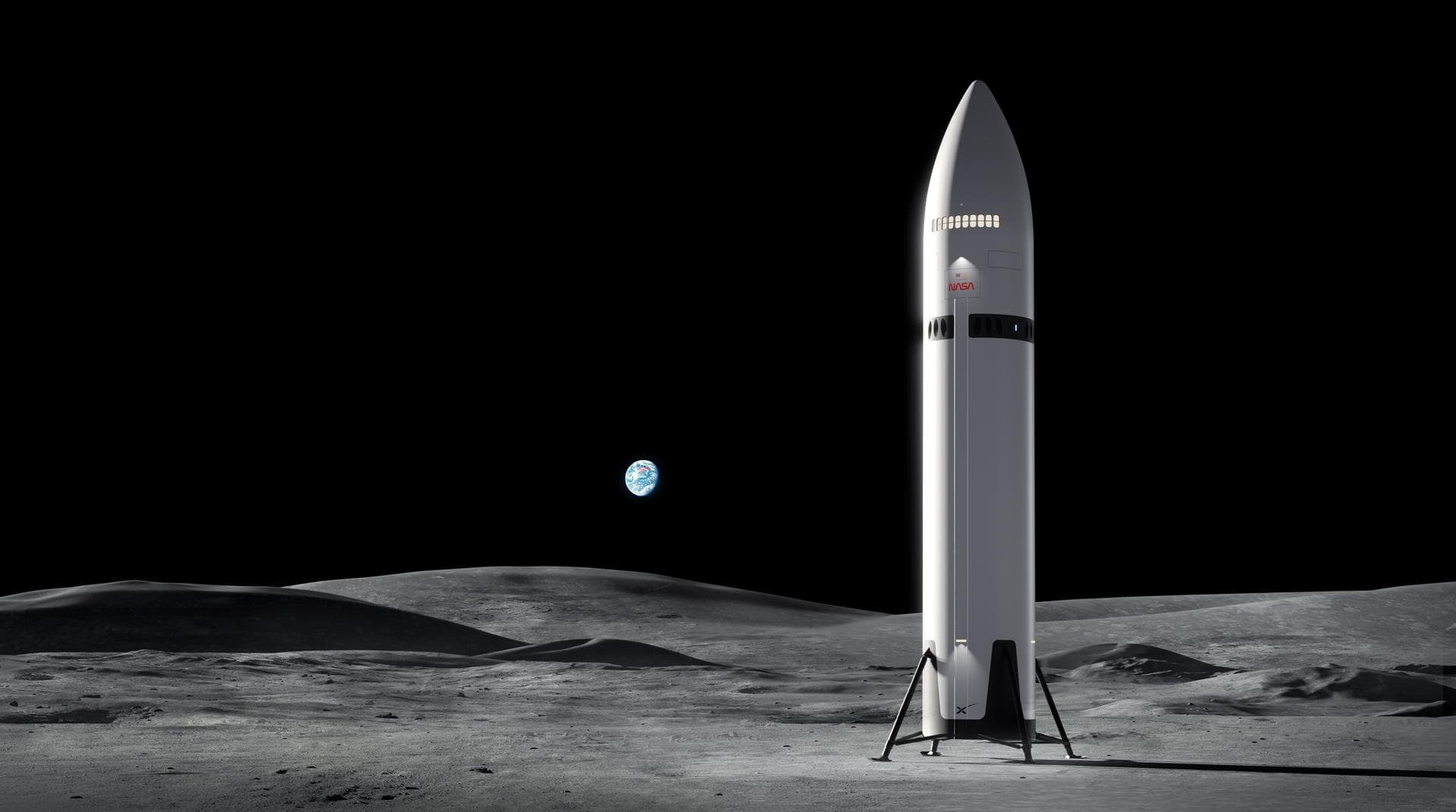
Starlink has also made SpaceX its own biggest customer. Of the 165 Falcon 9 and Falcon Heavy missions flown in 2025, 122 were internal launches for the company's own constellations, and the heavier next generation of Starlink satellites is designed to fly only on Starship, the vehicle behind SpaceX's long-term Mars plans.[3] The constellation's scale has put SpaceX at the center of arguments over orbital traffic, space debris, and the night sky.
Status as of August 2026
SpaceX had launched 12,745 Starlink satellites by August 12, 2026, of which 10,987 remained in orbit and 10,971 were working.[1] Subscribers stood at 12.0 million on June 30, double a year earlier, and Connectivity revenue was $4.3 billion for the quarter, both figures from the company's 10-Q filed August 4.[2] No operational V3 satellite has reached orbit yet: Starship Flight 13 released 20 of them on a suborbital arc on July 24,[9] and Flight 14, the vehicle's first orbital flight, is meant to deliver V3 satellites to operational orbit.[32] That flight has slipped from late August to a mid-September target, and SpaceX has put off the tower catch of the ship it had floated for the mission, probably by a few months.[33] On the regulatory side, the FCC's January 9, 2026 authorization caps the licensed constellation at 15,000 satellites,[7] and SpaceX's $17 billion EchoStar spectrum purchase, approved by the FCC on May 12, is expected to close in November 2027.[3]
How it works
Starlink satellites fly in low Earth orbit, mostly between about 340 and 570 km. The low altitude keeps signal latency in the tens of milliseconds, comparable to ground networks and far better than traditional geostationary internet satellites, at the cost of needing thousands of spacecraft for continuous coverage. Satellites hand connections between each other over laser links and connect users through phased-array antennas; customers use self-aiming dish terminals, and a separate set of satellites can talk directly to ordinary phones.[3][6] As of March 2026 SpaceX reported a median latency of about 25 milliseconds and a median download speed of 225 Mbps during peak hours for residential users.[3]
Each satellite carries electric thrusters for orbit raising, station keeping, and end-of-life disposal. First-generation spacecraft used krypton ion thrusters; the V2 Mini introduced argon Hall thrusters, the first of their kind flown in space, producing 170 millinewtons at 4.2 kilowatts with a specific impulse of 2,500 seconds, roughly 2.4 times the thrust and 1.5 times the efficiency of the krypton units.[5] SpaceX designs the spacecraft to demise fully on reentry and says it deorbits them propulsively within weeks of the end of a mission rather than waiting for drag to do the work; a satellite that fails and cannot maneuver decays on its own from these altitudes within about five years.[4]
Ground segment and laser links
Starlink is a bent-pipe network with an orbital shortcut. A user terminal talks to a satellite overhead in Ku-band, the satellite relays the traffic in Ka-band to a gateway ground station, and the gateway hands it over a private backhaul network to a Starlink point of presence, which is where the traffic joins the public internet. Satellites fitted with optical inter-satellite links can instead route traffic through orbit to a gateway far away, which is what allows service in places with no nearby ground station: one measurement study traced a connection from Reunion Island to a point of presence in Germany about 9,000 km away and found lower latency than the local terrestrial options. The same study documented the network's 15-second scheduling interval, whose boundaries show up to users as latency shifts and short drops in throughput.[6]
Laser links are the part of the architecture that scales hardest. SpaceX reported more than 23,000 inter-satellite lasers across the constellation as of March 2026, forming a mesh that lets traffic move between any two points without touching terrestrial backhaul in between.[3] The January 2026 FCC authorization added E-band and W-band to the Ku-, Ka-, and V-band frequencies Starlink already uses, spectrum aimed mostly at higher-capacity gateway links.[7]
Deployment history
Starlink's first two prototype satellites flew in February 2018, and the first 60-satellite operational batch launched in May 2019 on a Falcon 9. Since then Starlink has consumed the majority of SpaceX's launch capacity: 33 of the 40 Falcon missions flown in the first quarter of 2026 were internal.[3] The rocket's reusability is what makes the constellation economical, with individual boosters flying dozens of Starlink missions; in July 2026 booster B1067 flew for a record 36th time, carrying 29 Starlink satellites.[12]
| Generation | Introduced | Notable changes |
|---|---|---|
| v0.9 / v1.0 | 2019-2020 | Initial operational design; VisorSat added mid-2020 |
| v1.5 | 2021 | Inter-satellite laser links |
| V2 Mini | 2023 | Larger, ~4x capacity, argon Hall thrusters, dielectric mirror film |
| V1 Mobile (direct to cell) | 2024 | Dedicated satellite-to-mobile spacecraft |
| V2 Mini Optimized | 2025 | Higher capacity per launch |
| V3 | 2026 (first flight test) | Starship-launched, 1 Tbps downlink per satellite |
SpaceX's FCC licenses split the network into a first-generation system and a much larger Gen2 system, and the division shows in the fleet's age profile. Of the satellites in orbit on August 8, 2026, 3,234 belonged to Gen1 and 7,705 to Gen2, and it is the Gen1 spacecraft, launched between 2019 and 2022, that are now being retired in bulk.[1]
| Constellation status, August 8, 2026 | Count |
|---|---|
| Launched to date | 12,692 |
| Still in orbit | 10,939 |
| Working | 10,923 |
| In an operational shell | 9,209 |
| No longer in orbit | 1,753 |
| Of those, deliberately deorbited after reaching operational orbit | 1,404 |
| Of those, lost to launch failure | 20 |
Figures from Jonathan McDowell's Starlink catalogue.[1]
The V3 satellites are too large for Falcon 9 and will launch only on Starship, which SpaceX says can carry up to 60 of them at a time, a roughly twenty-fold increase in capacity delivered per launch.[3] Starship's Version 3 debut on May 22, 2026 released 20 mass simulators and two modified Starlink spacecraft from its upgraded dispenser.[11] Flight 13, on July 24, released 20 production V3 satellites on the vehicle's suborbital arc, and SpaceX established radio and laser contact with all 20 before they reentered with the rest of the flight's hardware.[9][10] None reached orbit, so the constellation total is unchanged by the test.[1] SpaceX has said operational V3 delivery begins in the second half of 2026, with Flight 14 planned as the first attempt.[3][10]
Services and adoption
Residential broadband remains Starlink's core product, joined by Roam plans for travel and vehicles, Local Priority and Global Priority tiers for businesses, and managed contracts for aviation, maritime, land mobility, fixed sites, and government customers. Named enterprise users include United Airlines, Carnival, Maersk, and John Deere, along with cruise operators Royal Caribbean, MSC Cruises, and Norwegian Cruise Line and rail operators Brightline and Italo Treno.[3]
| Metric | 2023 | 2024 | 2025 | June 30, 2026 |
|---|---|---|---|---|
| Subscribers (millions) | 2.3 | 4.4 | 8.9 | 12.0 |
| Average revenue per subscriber, per month | $99 | $91 | $81 | $66 |
Subscriber counts are service lines rather than people, so a household with both a residential and a roam plan counts twice, and managed enterprise and government contracts are excluded.[2][3] Revenue per subscriber has fallen every year as the customer base shifted toward lower-priced international plans, but total subscribers grew fast enough that Connectivity revenue still rose 49.8 percent in 2025 and 65.8 percent year over year in the second quarter of 2026.[2][3]
Direct to cell
Starlink's satellite-to-mobile service uses separate spacecraft that work as LTE base stations in orbit, transmitting on partner carriers' terrestrial spectrum in the 1.6 to 2.7 GHz range so that ordinary unmodified phones can connect.[13] Deployment of these satellites began in January 2024, and the first commercial messaging service went live in the United States with T-Mobile and in New Zealand with One NZ in early 2025.[3][13] By the end of March 2026 the dedicated constellation had grown to about 650 satellites, delivering messaging, over-the-top voice, and light data to roughly 7.4 million monthly unique devices across about 30 countries, through partnerships with about 30 mobile network operators.[3] McDowell counts 674 direct-to-cell spacecraft launched into two shells, 640 of them still in orbit.[1]
The next step depends on spectrum SpaceX does not yet control outright. In September 2025 the company agreed to buy EchoStar's AWS-4 and H-block licenses for about $17 billion in cash and stock, adding EchoStar's unpaired AWS-3 licenses in a November 2025 amendment; the deal also lets EchoStar's Boost Mobile subscribers use the next-generation service.[14] The FCC approved the transaction on May 12, 2026, and SpaceX expects it to close in November 2027, after which international regulators would still have to clear use of the same frequencies market by market.[3] The V2 Mobile satellites designed to use that spectrum for broadband data and IoT are planned to begin launching on Starship in 2027.[3]
Government and military use
Governments buy Starlink as a normal commercial service, and SpaceX also sells Starshield, a separate secure network built for United States government and national security customers using the same engineering base.[3] Starshield is licensed and tracked apart from Starlink; McDowell counts 245 Starshield satellites launched and 241 in orbit as of August 8, 2026.[28]
The most contested use is Ukraine, where Starlink became the backbone of front-line communications after Russia's 2022 invasion and made a commercial network a matter of national defense policy. In September 2022 Elon Musk declined a Ukrainian request for coverage to support an attack on Russian ships at Sevastopol; a biography of Musk described him instructing engineers to disable coverage near the Crimean coast, while Musk said the regions in question had never been activated. Air Force Secretary Frank Kendall responded that relying on commercial systems for operations requires assurance they will be available, and Pentagon officials began pressing for contract language that guarantees combat use.[15] In early February 2026 SpaceX and Ukraine's defense ministry moved the other way, blocking Starlink terminals geolocated on Ukrainian territory unless they appear on whitelists refreshed every 24 hours, and automatically cutting off any terminal moving faster than 90 km/h, in order to deny the service to Russian units and drone operators using smuggled hardware.[16]
Running so much of the world's satellite broadband through one operator also concentrates the failures. On July 24, 2025 a failure of internal software services running the core network took Starlink down worldwide for about two and a half hours, drawing more than 61,000 outage reports; Starlink vice president of engineering Michael Nicolls apologized and Musk said SpaceX would fix the root cause.[17]
Regulation and spectrum
Starlink operates under FCC licenses that cap the constellation's size, set its altitudes, and assign its frequencies. On January 9, 2026 the FCC authorized an additional 7,500 Gen2 satellites, raising the licensed total to 15,000 worldwide, opened new orbital shells between 340 and 485 km, added E-band and W-band operations, and permitted direct-to-cell connectivity outside the United States.[7]
SpaceX filed in January 2026 to lower roughly 4,400 satellites from about 550 km to about 480 km over the course of the year. Michael Nicolls argued the change improves safety because atmospheric density falls as solar minimum approaches, stretching how long a dead satellite lingers: at the lower altitude, he said, ballistic decay time at solar minimum drops by more than 80 percent, from over four years to a few months.[8] The move also puts more of the fleet below 500 km, where traffic and debris density are lower.[8]
How can you see Starlink satellites?
Newly launched Starlink batches are the easiest catch. For the first several days after a launch, while the satellites orbit low (near 300 km) and close together, they appear as a "train" of dozens of evenly spaced dots crossing the sky in a single line.[18] The viewing window is the hour or two after sunset or before sunrise, when the ground is dark but the satellites are still sunlit; they move steadily and do not blink, which distinguishes them from aircraft.[18] Free pass-prediction trackers give times for any location.[18]
The show is temporary by design. As each batch raises itself to operational altitude over the following weeks, the satellites spread out and dim to roughly the limit of naked-eye visibility, helped by the darkening measures described below.[18]
Astronomy and the night sky
Astronomers documented from the first launches that Starlink satellites streak through telescope images. SpaceX responded with a darkened design: dielectric mirror film that reflects sunlight away from the ground, a space-qualified black paint the company says cuts the specular peak by a factor of five against the darkest available alternative, solar arrays that can be off-pointed near the terminator, and the earlier VisorSat sunshade on Gen1 satellites. SpaceX offers the mirror film and paint to other operators at cost and has a coordination agreement with the National Science Foundation.[4]
Measurements show the mitigations work without closing the gap. Anthony Mallama and colleagues at the IAU Centre for the Protection of the Dark and Quiet Sky from Satellite Constellation Interference measured V2 Mini satellites in brightness mitigation mode at a mean apparent magnitude of 7.06, about twelve times fainter than unmitigated spacecraft despite being larger.[20] The direct-to-cell satellites are the problem case: the same group measured them at a mean of 5.16, or 6.47 adjusted to a uniform 1,000 km distance.[21] The Vera C. Rubin Observatory asks operators to stay fainter than magnitude 7 for satellites below 550 km, and estimates that with 40,000 satellites in low orbit about 10 percent of its survey images would contain at least one trail, with most twilight images streaked.[19]
Radio observatories face a separate problem, because the interference is not in the satellites' transmissions but leaking from their electronics. Using LOFAR, Federico Di Vruno and colleagues detected unintended emission between 110 and 188 MHz from 47 of 68 Starlink satellites observed in a single hour, inside a range partly protected for radio astronomy.[22] A follow-up led by Cees Bassa at ASTRON found that V2 Mini satellites emit up to 32 times more of this unintended radiation than the first generation, and measured it as roughly 10 million times brighter than the faintest sources LOFAR observes.[23]
Orbital safety and reentries
Starlink is the largest single driver of orbital traffic management. SpaceX's semiannual report to the FCC recorded 207,152 collision-avoidance maneuvers between December 2025 and May 2026, up from 148,696 in the previous six months, which works out to close to one maneuver per satellite per week.[24] The company runs an autonomous avoidance system that NASA's Conjunction Assessment and Risk Analysis program judged trustworthy enough to rely on for its own spacecraft, and it publishes position and velocity predictions for every satellite it flies.[4] It also maneuvers at a collision probability of about three in ten million, far below the industry norm of one in ten thousand, which is part of why the maneuver count is so high.[24]
Retirement is now a continuous process rather than an occasional event. SpaceX deorbited 260 satellites between December 2025 and May 2026, 176 of them first-generation and 84 second-generation, a rate the company has exceeded before: roughly 472 came down in the previous December-to-May window.[25] Cumulatively, 1,753 Starlink satellites have left orbit, 1,404 of them deliberately deorbited after reaching an operational shell.[1]
Those reentries are frequent enough to be studied as an atmospheric process in their own right. A 2024 study led by Jose Ferreira in Geophysical Research Letters calculated that a 250 kg satellite generates about 30 kg of aluminum oxide nanoparticles as it burns up, that reentries raised atmospheric aluminum 29.5 percent above natural levels in 2022, and that fully deployed megaconstellations would release around 360 metric tons of aluminum oxides a year, with the particles taking up to 30 years to settle from the mesosphere into the ozone layer.[26] Modeling by Christopher Maloney and colleagues at NOAA's Chemical Sciences Laboratory projected that at 60,000 satellites in low orbit, annual burnup would deposit about 10,000 metric tons of alumina, building a 20 to 40 gigagram stratospheric burden poleward of 30 degrees latitude, warming parts of the mesosphere and stratosphere by as much as 1.5 K and slowing the Southern Hemisphere polar vortex by around 10 percent.[27] Neither result is a measurement of harm already done, and the chemistry of aluminum aerosols in the stratosphere is poorly constrained; both are reasons the reentry rate is being watched.[27]
Competition
No rival constellation is close to Starlink's scale, but several are building. Amazon Leo, formerly Project Kuiper, had 398 satellites launched and 392 in orbit as of August 8, 2026; China's state-backed Xingwang, also called Guowang, had 225 launched and 220 in orbit; and the Shanghai-backed Qianfan constellation had 239 launched and all 239 still up.[28] Each is therefore still under 400 satellites, against Starlink's 10,939.[1][28] SpaceX told investors the network made up roughly 75 percent of all active maneuverable satellites in orbit at the end of March 2026.[3] The European Union's IRIS2 moved into construction on August 7, 2026 under an implementation agreement with the SpaceRISE consortium, with first launches brought forward to 2029.[29]
Strategic significance
Starlink changed what a launch company can be. It made SpaceX its own biggest customer, turned launch cadence into a competitive moat, and demonstrated consumer-scale revenue from space, a model competitors are now chasing. Its role in Ukraine also made satellite internet a matter of geopolitics, raising questions about private control of critical infrastructure that governments are still working through.
The same engineering base is now being pointed at a different market. In August 2026 SpaceX announced an NVIDIA partnership for the AI1 payload in its proposed Starmind orbital-computing program.[30] A separate January 2026 FCC application sought authority for a generic orbital data center system of up to one million satellites.[31] The filing predates the Starmind name, does not mention AI1, and remained pending on August 12. Both concepts rely on SpaceX's experience with satellite production, laser links, and constellation operations.[3][31]
References
- Starlink Statistics - Jonathan McDowell, Jonathan's Space Pages. Figures cited are the summary table as of 2026 August 8, except the infobox, the lead, and the status section, which use the table as of 2026 August 12.
- Form 10-Q for the quarterly period ended June 30, 2026 - Space Exploration Technologies Corp., U.S. Securities and Exchange Commission, filed August 4, 2026.
- Form S-1 registration statement - Space Exploration Technologies Corp., U.S. Securities and Exchange Commission, filed May 20, 2026.
- Second Generation Starlink Satellites - SpaceX.
- SpaceX unveils first batch of larger upgraded Starlink satellites - Spaceflight Now, February 2023.
- A Multifaceted Look at Starlink Performance - Nitinder Mohan and others, RIPE Labs, July 2024.
- FCC authorization of additional Gen2 Starlink satellites, DOC-417881A1 - Federal Communications Commission, January 9, 2026.
- SpaceX to lower orbits of some Starlink satellites - SpaceNews, January 2026.
- SpaceX conducts 13th Starship test flight - SpaceNews, July 2026.
- SpaceX's Starship megarocket makes the 'softest splashdown' ever after launching next-gen Starlink satellites in Flight 13 test - Space.com, July 2026.
- What's next for SpaceX's Starship V3 megarocket after its historic debut flight? - Space.com, May 2026.
- SpaceX launches Falcon 9 rocket on record-breaking 36th flight - Spaceflight Now, July 2026.
- Starlink Direct to Cell service now available - SpaceX, February 2025.
- EchoStar announces spectrum sale and commercial agreement with SpaceX - EchoStar Corporation, September 2025.
- Elon Musk's refusal to provide Starlink support for Ukraine attack in Crimea raises questions for Pentagon - PBS NewsHour, September 2023.
- How does the cutoff of Starlink terminals affect Russia's moves in Ukraine? - Al Jazeera, February 2026.
- Elon Musk 'sorry' after Starlink satellite internet suffers global outage - Al Jazeera, July 2025.
- Starlink satellite train: how to see and track it in the night sky - Space.com.
- Impacts from artificial satellites and debris - Vera C. Rubin Observatory.
- Starlink Generation 2 Mini Satellites: Photometric Characterization - Anthony Mallama and others, arXiv preprint, 2023.
- Characterization of Starlink Direct-to-Cell Satellites in Brightness Mitigation Mode - Anthony Mallama, Richard E. Cole, Jay Respler and Scott Harrington, arXiv preprint, February 2025.
- Unintended electromagnetic radiation from Starlink satellites detected with LOFAR between 110 and 188 MHz - Federico Di Vruno and others, Astronomy and Astrophysics, July 2023, summarized in Leakage radiation from Starlink satellites interferes with radio telescopes - Max Planck Society.
- Bright unintended electromagnetic radiation from second-generation Starlink satellites - Cees Bassa and others, Astronomy and Astrophysics, 2024, summarized in Second-gen Starlink satellites leak 30 times more radio interference - Phys.org.
- Every SpaceX Starlink satellite has to dodge a collision almost weekly, and experts fear the worst - Space.com, 2026.
- Don't lose sleep over reports of 260 Starlink satellites deorbiting - Engadget, July 2026.
- Satellite megaconstellations may jeopardize recovery of ozone hole - American Geophysical Union, on Jose Ferreira and others, Geophysical Research Letters, June 2024.
- Within 15 years, plummeting satellites could release enough aluminum to alter winds, temps in the stratosphere - NOAA Chemical Sciences Laboratory, on Christopher Maloney and others, Journal of Geophysical Research: Atmospheres, April 2025.
- Megaconstellation statistics for Starshield, Kuiper and Amazon Leo, Xingwang and Qianfan - Jonathan McDowell, Jonathan's Space Pages, as of 2026 August 8.
- The European Union is accelerating and reinforcing IRIS2 - European Commission, August 2026.
- Elon pledges to give Nvidia a virtual monopoly over the stars - The Register.
- SpaceX files plans for million-satellite orbital data center constellation - SpaceNews.
- SpaceX to begin Starship orbital flights - SpaceNews, August 4, 2026.
- SpaceX scales back plans for next Starship launch - SpaceNews, August 21, 2026.