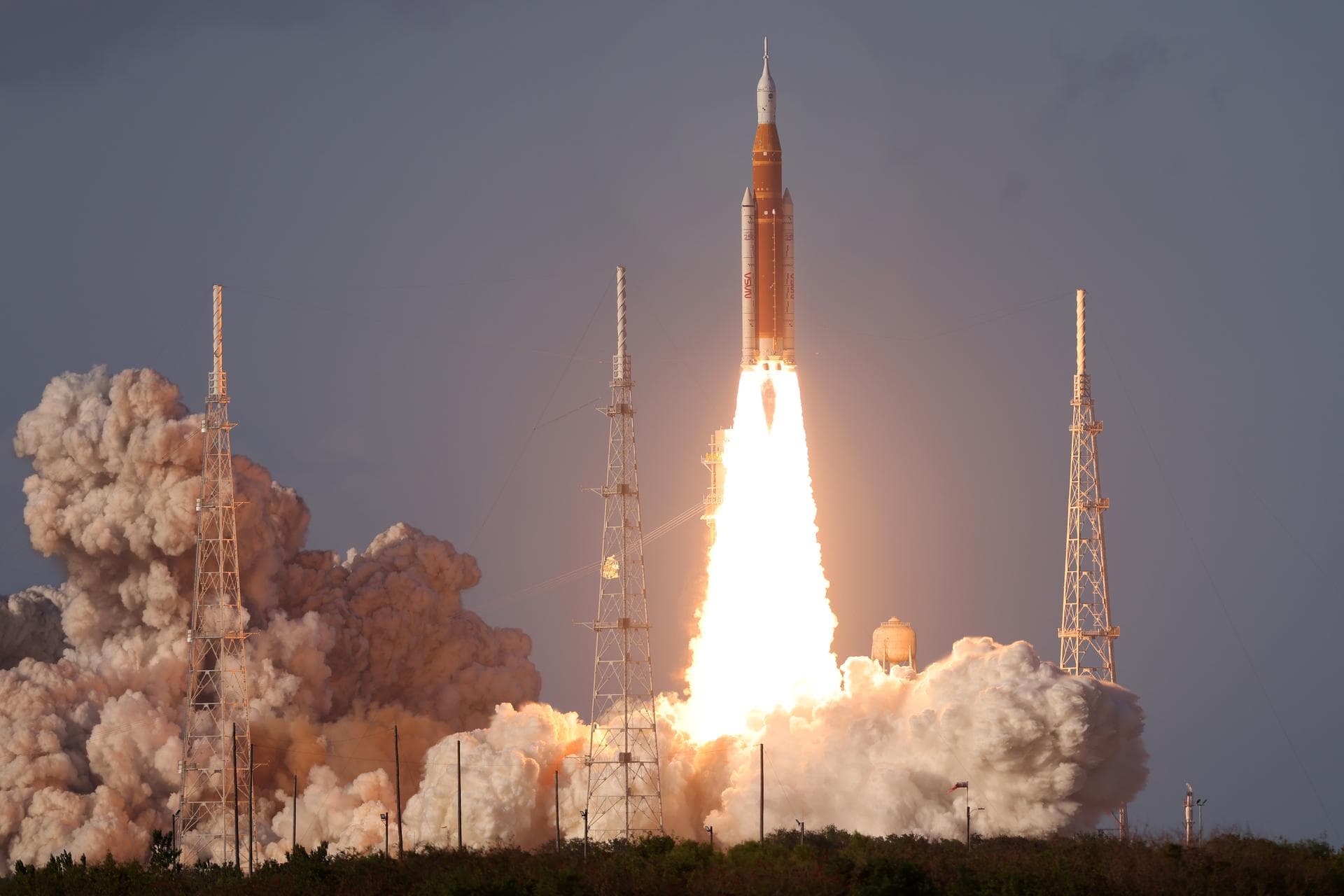
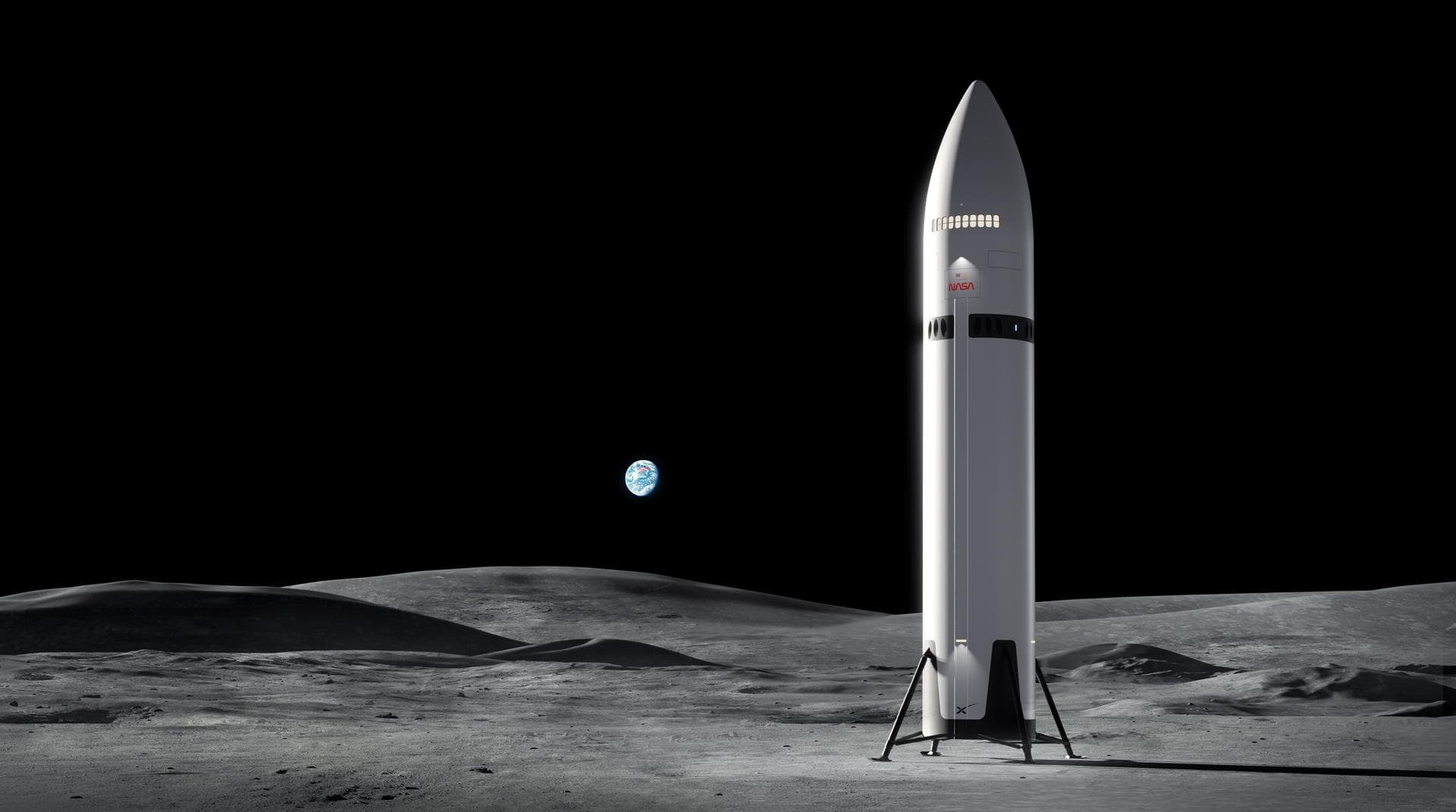
Mars colonization is the proposed establishment of permanent human settlements on Mars, as distinct from visiting it. No crewed Mars mission of any kind is scheduled as of August 2026. The planet offers a 24.6-hour day, water ice in the ground, an atmosphere minable for oxygen and fuel, and land area comparable to Earth's continents, yet is lethal by any Earth standard: an unbreathable near-vacuum, an average temperature around -63 C,[41] unshielded radiation, and dust laced with toxic perchlorates.
SpaceX is building its Starship rocket explicitly to settle the planet but in February 2026 pushed its Mars ambitions back several years to prioritize lunar work, while NASA treats Mars as the long-range goal of a Moon-first program.[1][3][7] The agency did add a Mars deadline of sorts in May 2026, ordering a 60-day study of a next-generation spacecraft able to fly crews and cargo there and back without refueling by 2036.[26] The distance between rhetoric and manifest makes colonization less a plan than a live engineering and policy debate.
The case for and against
Advocates of settling Mars offer three main arguments. Settlement would make humanity less vulnerable to planetary catastrophes, natural or self-inflicted; a second world would be an unmatched scientific base, especially for the question of whether Mars ever hosted life; and the attempt itself would force technologies, in life support, energy, and manufacturing, with uses on Earth. Elon Musk has framed SpaceX's purpose as making life multiplanetary since the company's founding, and gave the same reasoning when he moved its near-term focus to the Moon: "the overriding priority is securing the future of civilization."[3][10]
Critics respond that every Mars hazard is harder than its terrestrial analogue: Antarctica and the deep ocean are far more habitable than Mars and host no cities. They question spending hundreds of billions of dollars on settlement while robotic explorers return more science per dollar, note that no one has demonstrated that humans can gestate and raise children in low gravity at all, and argue that contaminating Mars with Earth microbes could destroy the evidence of native life before it is found. The disagreement is ultimately about purpose, which is why it rarely converges.
Neither side has settled how large a self-sustaining settlement would need to be. Jean-Marc Salotti of Bordeaux INP modeled the problem in Scientific Reports in 2020 by comparing the working time a colony has against the working time its survival tasks demand, and put the minimum at about 110 people, a figure he described as a rough estimate resting on many assumptions.[33] Musk's stated target is a city of a million.[10]
Radiation
Radiation is the best-quantified problem facing Mars crews. The Radiation Assessment Detector, which traveled to Mars inside the spacecraft carrying the Curiosity rover, measured a dose equivalent rate of 1.84 millisieverts per day during the eight-month cruise.[5][12] On the ground it measured 0.64 millisieverts per day, averaged over about 300 days near solar maximum, with the thin atmosphere and the bulk of the planet shielding part of the sky.[13] A reference mission of 180 days out, 500 days on the surface and 180 days back therefore totals about 1 sievert inside ordinary spacecraft shielding, split roughly evenly across the three phases.[12]
That number runs into a hard rule. NASA-STD-3001 caps an astronaut's total career effective dose at 600 millisieverts, a single figure for all ages and sexes derived from a 3 percent mean risk of cancer death, with a separate limit of 250 millisieverts of effective dose from any one solar particle event.[14] ESA's career limit is 1,000 millisieverts.[15] One round trip on the reference profile would consume a NASA career allowance and more, before any question of a settler who does not come back.
Shielding helps less than intuition suggests. NASA's own radiation brief states that shielding is not effective against galactic cosmic rays, because the heavy nuclei in them produce showers of secondary particles inside the shield and inside tissue; the agency's proposed requirement for missions beyond low Earth orbit asks only for a 15 percent reduction against free space, keeping effective dose below 1.3 millisieverts per day in transit and 0.8 on a planetary surface.[14] Solar particle events behave differently and respond well to modest shielding, which is why storm shelters built from water, propellant, or stowage appear in most crewed designs.[14] On the surface, meters of regolith or ice overhead are the practical answer.
Timing matters more than it looks. Cosmic ray intensity falls when the Sun is active, because the strengthened solar wind sweeps particles out of the inner solar system, so the safest departures fall near solar maximum, exactly when solar particle events are most likely.[14] A study led by Chao Zhang of the University of Science and Technology of China, published in Space Weather on March 9, 2026, put numbers on the tradeoff using dose data from ESA's Trace Gas Orbiter and NASA's CRaTER instrument: leaving near solar maximum cuts cosmic ray exposure by up to 55 percent on a fast transfer and up to 45 percent on a fuel-efficient one, and a crew on the surface takes doses up to 60 percent below those in transit.[15][16] The authors conclude that staying inside dose limits restricts which trajectories and launch windows are usable at all, which is a constraint on colonization schedules and not only on individual missions.[16]
Gravity, health, and reproduction
Gravity is the least-quantified problem facing Mars settlers. Astronauts on the International Space Station lose bone and muscle in microgravity despite daily exercise, along with fluid shifts, vision changes, and cardiovascular and immune effects that take months to reverse.[6] Whether 38 percent gravity prevents any of that is unknown, because no human has lived in partial gravity for long; the longest exposure on record is roughly three days, on the Apollo lunar surface.
A 2021 review by Harry Jones of NASA Ames, presented to the International Conference on Environmental Systems, put the state of knowledge bluntly in its title: the partial gravity of the Moon and Mars appears insufficient to maintain human health. Jones found that direct evidence of long-term partial-gravity effects on humans does not exist, that indirect evidence suggests exposure below 0.4 g will not maintain musculoskeletal and cardiopulmonary conditioning over the long term, and that the benefit of partial gravity is likely to be roughly proportional to its level.[38] Mars sits at 0.38 g, just under that threshold. Jones also noted that in weightlessness calcium is lost from weight-bearing bone at about 1 percent per month and that vigorous exercise does not stop it.[38]
Reproduction is a larger blank. No mammal has completed a reproductive cycle off Earth. In 2023 a team led by Teruhiko Wakayama of the University of Yamanashi, working with JAXA, thawed and cultured frozen mouse embryos aboard the station for four days and reported in iScience that they developed normally into blastocysts, the first mammalian embryo development in space.[42] The researchers were explicit about the limits: confirming normality would require transplanting those blastocysts into mice and seeing whether they produce healthy offspring, and the experiment covered four days of a process that takes weeks, in microgravity rather than partial gravity.[42] Gestation, birth, and childhood development under 0.38 g remain untested at any scale.
Dust, perchlorates, and storms
Martian dust is a chronic hazard rather than an acute one. Grains average about 3 micrometers across, small enough to evade the lung's clearance mechanisms, lodge in tissue, and pass into the bloodstream.[17][18] A review led by Justin Wang, with co-authors at the University of Colorado Boulder and the University of Southern California, published in GeoHealth in March 2025, catalogued what those grains carry: silicate minerals, which cause the incurable lung scarring of silicosis; nanophase iron oxides; gypsum; trace beryllium and arsenic; and perchlorate salts.[17][18] The Phoenix lander first detected perchlorate on Mars in 2008, measuring 0.4 to 0.6 percent by mass in soil at its northern landing site.[19] Perchlorate blocks iodide uptake by the thyroid, and the review links chronic exposure to thyroid disease and severe anemia; the countermeasures it proposes are mundane, including iodine supplementation, filtration, and keeping dust out of habitats at all.[17][18]
Weather compounds the problem. Surface temperatures run from about 20 C down to -153 C.[41] Regional dust storms are routine and planet-encircling storms occur roughly every three to four Martian years.[20] The 2018 global storm pushed atmospheric opacity to the highest values ever recorded from the surface and ended the solar-powered Opportunity rover, which never responded again.[20] A settlement running on photovoltaics would need weeks of stored energy or a source that does not depend on sunlight at all.
Distance closes the trap. Transits run 6 to 9 months with chemical propulsion, there is no rescue or resupply between 26-month windows, and radio signals take up to 22 minutes each way, so nothing resembling real-time help from Earth exists.[32] A NASA life support study of exploration habitats states the operational consequence directly: the round trip to Mars will last multiple years, and once departed the crew will have no opportunity for resupply.[39]
Life support and food
Mars colonization requires closing life support loops that no flown system closes. Each crew member consumes roughly 3,035 kilocalories of food and at least 2.5 liters of water per day under NASA's human standards, and produces a matching stream of waste that has to go somewhere useful.[40] The station's Environmental Control and Life Support System is the best-tested attempt, and in June 2023 NASA announced it had reached 98 percent water recovery, up from 93 to 94 percent, after adding a Brine Processor Assembly that extracts water from the residue the urine processor leaves behind.[21] Jill Williamson, who manages the station's water subsystems, framed the point in exploration terms: the inability to resupply means crews must reclaim everything they need.[21]
Air is less closed than water. The station's own subsystem diagram shows carbon dioxide vented overboard after removal and hydrogen vented from oxygen generation, so the air loop, unlike the water loop, does not close.[40] Food is not recycled at all. Crews eat resupplied rations, and the Veggie and Advanced Plant Habitat chambers grow lettuce and similar crops as fresh supplements and as data, not as a food supply. NASA's work on deep-space crops asks which plants deliver enough carbohydrate and protein per watt of light and liter of water, whether seed stock stays viable across years, and how a closed growth chamber stays free of pathogens; Rob Mueller of Kennedy Space Center summarized the state of it as "Growing plants on Mars is not a trivial matter."[22]
Living off the land
Mars colonization at any scale requires in-situ resource utilization (ISRU): using local materials instead of shipping everything at tens of thousands of dollars per kilogram. The concept has moved from paper to hardware exactly once. MOXIE, a toaster-sized electrolysis unit aboard the Perseverance rover, produced 122 grams of oxygen from the carbon dioxide atmosphere across 16 runs between 2021 and 2023, peaking at 12 grams per hour at about 98 percent purity, a proof that the most important consumable can be made on site.[4] The raw material is everywhere: the Martian atmosphere is about 95 percent carbon dioxide, at under 1 percent of Earth's surface pressure.[41]
The gap between that and a working plant is the story. A unit sized to fuel a crewed ascent vehicle would have to make 2 to 3 kilograms of oxygen an hour, hundreds of times MOXIE's peak rate, and run for something like 14 months before the crew launches in order to bank roughly 31 tonnes.[23]
The larger prize is propellant. The Sabatier reaction can combine atmospheric carbon dioxide with hydrogen from mined water ice to yield methane and oxygen, the propellants Starship burns (see how rockets work), which is why return trips in most architectures begin with an ice mine and a power plant rather than a launch pad. Site selection therefore follows the ice. The Subsurface Water Ice Mapping project, led by the Planetary Science Institute and managed by NASA's Jet Propulsion Laboratory, has merged data from Mars Reconnaissance Orbiter, Mars Odyssey, and Mars Global Surveyor into maps of buried ice reaching from the equator to 60 degrees north, aimed at the low and mid latitudes where sunlight and temperature still permit long human operations.[24]
Power is the other precondition. In December 2024 NASA named fission its primary choice for generating power on the Martian surface, the first of seven key decisions it identified for human Mars missions, on the grounds that a reactor is unaffected by day and night cycles or by dust storms.[25] Food production, closed-loop water and air recycling at high reliability, and surface reactors at that scale remain laboratory and prototype problems; the station's life support, the best flown, still depends on regular resupply.[6][21]
Crew psychology and analog missions
A Mars crew would be more isolated than any humans in history, and NASA's Human Research Program treats the consequences as formal mission risks rather than soft factors. Its evidence on teamwork identifies the one-way communication delay of more than 22 minutes as a direct threat to coordination between crew and mission control, expects task cohesion to matter less and social cohesion more as isolation lengthens, and anticipates that crews will absorb decisions that ground teams make today.[32]
The evidence base is mostly analog. Mars500, run by Russia's Institute for Biomedical Problems with ESA participation, sealed six volunteers, three Russian, two European and one Chinese, inside a Moscow facility for 520 days from June 2010 to November 4, 2011, with a 20-minute communication delay and a simulated Marswalk phase, and studied stress, hormone regulation, immunity, sleep, and mood.[31] The Hawaii Space Exploration Analog and Simulation ran a series of missions of 4, 8, and 12 months on Mauna Loa on similar questions. NASA's current series is CHAPEA, the Crew Health and Performance Exploration Analog, in which crews live inside Mars Dune Alpha, a 3D-printed habitat of about 1,700 square feet at Johnson Space Center. The first crew completed 378 days on July 6, 2024. The second, commanded by Ross Elder with Ellen Ellis, Matthew Montgomery, and James Spicer, entered on October 19, 2025 for another 378 days, due out on October 31, 2026, on a schedule of simulated Marswalks, robotic operations, habitat maintenance, exercise, and crop growing under 22-minute delays and deliberate equipment failures.[30]
Analogs have obvious limits. Participants know they can walk out, and no chamber reproduces radiation, partial gravity, or the real cost of a mistake. What they do produce is behavioral and physiological data over durations that match a Mars mission, which is why the agencies keep running them.
SpaceX's plans and timelines
SpaceX's architecture, first detailed by Musk in 2016, centers on Starship: a fully reusable two-stage vehicle refueled in Earth orbit by tanker flights, sending 100-plus tonne payloads to Mars each window, with early cargo ships delivering equipment and propellant plants ahead of crews. The refueling arithmetic is the hard part. A Mars-bound Starship needs roughly 1,200 tonnes of propellant, about 933 tonnes of liquid oxygen and 267 of liquid methane, and a tanker carries on the order of 100 tonnes, so each departing ship implies about a dozen tanker launches.[10] Musk has sketched eventual fleets of ships and a self-sufficient city of a million people, figures best read as aspirations rather than schedules.[10]
The schedule has moved repeatedly. Musk's 2017 presentation at the International Astronautical Congress put two uncrewed cargo landings in 2022 and crewed ships in 2024; in May 2025 he gave 50-50 odds of launching uncrewed Starships, carrying Optimus robots, in the late-2026 window.[2][10] Then on February 8, 2026 he announced a strategic shift: "SpaceX has already shifted focus to building a self-growing city on the Moon, as we can potentially achieve that in less than 10 years, whereas Mars would take 20-plus years," adding that the company "will also strive to build a Mars city and begin doing so in about five to seven years."[3] His stated reason was iteration speed, since lunar launches are possible about every 10 days with a two-day transit while Mars opens every 26 months with a six-month one.[3][1] The change dropped the late-2026 Mars window and leaves the 2028-2029 alignment as the earliest plausible uncrewed attempt, with no mission announced.[1][3]
The comparison behind that choice uses Musk's own figures.[1][3]
| Moon | Mars | |
|---|---|---|
| Launch opportunities | About every 10 days | Every 26 months |
| One-way transit | About 2 days | About 6 months |
| Musk's timeline to a self-growing city | Less than 10 years | 20-plus years |
Independent assessments are unsentimental about what remains undemonstrated. Orbital propellant transfer at scale has not flown: an intertank cryogenic transfer succeeded on Flight 3 in March 2024, and a full ship-to-ship demonstration has been planned for 2026.[10] The heaviest object ever soft-landed on Mars is the roughly one-tonne Perseverance, while a Starship landing would be some two orders of magnitude heavier. Thirteen integrated Starship test flights had flown through July 24, 2026, none of them orbital and none ending in a recovered ship; Flight 14, targeted for late August 2026, is planned as the first orbital mission and the first attempt to catch the upper stage.[11] In Aerospace America in June 2026, Robert Zubrin offered to bet 1,000 dollars against any Starship reaching Mars from a launch the following year, Scott Hubbard questioned whether a 52-meter vehicle can be landed reliably on its tail, William Notardonato flagged unknown cryogenic losses during transfer, and Casey Dreier of the Planetary Society warned that "a lot of people take it as a given that it will work, and there's really no guarantee."[10]
NASA's Moon-to-Mars approach
NASA's strategy treats the Artemis program as the proving ground for Mars: long-duration habitation, ISRU, surface power, and new suits and rovers exercised at the Moon, three days from home, before committing crews to multi-year missions. The agency maintains a Moon to Mars architecture that it updates through an annual Architecture Concept Review, with the 2025 update the most recent, and it uses that process to work through the key Mars decisions one at a time.[7][25]
The lunar half of the plan changed sharply in 2026. Artemis II carried four astronauts around the Moon in April. In March NASA paused the Gateway lunar-orbit station in its current form and shifted near-term planning toward a three-phase Moon Base at the lunar south pole.[29] NASA has not published a complete, funded construction schedule, and the stated goal of landings about every six months remains a plan. Under the architecture in place in August, Artemis III will test rendezvous and docking with commercial lander hardware in Earth orbit in 2027, and Artemis IV is to attempt the first crewed south pole landing in 2028.[28] A version of Starship is one of NASA's contracted Artemis lander designs, tying the agency's schedule and SpaceX's Mars learning curve together.
Mars-directed work continues alongside it, mostly as technology. NASA has committed to fission power for the Martian surface, and in March 2026 announced SR-1 Freedom, a nuclear electric propulsion demonstrator targeted to launch toward Mars before the end of 2028 and to deliver a payload of Ingenuity-class helicopters there.[25][27] On May 22, 2026 administrator Jared Isaacman directed the agency to complete a study within 60 days "to guide investment in a next-generation integrated spacecraft program," weighing nuclear thermal, nuclear electric, and chemical propulsion, "to enable unrefueled roundtrip crewed and cargo missions to Mars by 2036."[26] That is a study directive and a target, not a funded mission, and NASA has not published a crewed Mars mission date.
China and other national programs
No space agency, in the United States or elsewhere, has a funded crewed Mars program. China has the most explicit stated ambition: in June 2021 Wang Xiaojun, head of the China Academy of Launch Vehicle Technology, presented a three-step roadmap to the Global Space Exploration Conference that placed robotic sample return and site survey first, crewed launches in 2033, 2035, 2037, and 2041, and large-scale development after that, with nuclear propulsion named as an important option.[36] Nothing since has moved that from roadmap to program. China's actual Mars work is robotic: CNSA's Tianwen-3 sample return entered spacecraft construction in 2026 for a launch on two Long March 5 rockets in 2028 and a return of at least 500 grams of Martian material in 2031, with biosignature detection as its primary goal.[37]
Planetary protection
International guidelines maintained by COSPAR, rooted in the Outer Space Treaty's requirement to avoid harmful contamination, govern how clean Mars-bound hardware must be. The current text is the 2026 version of the COSPAR Policy on Planetary Protection, endorsed by the panel on October 6, 2025, approved by the COSPAR Bureau on November 7, 2025, and published in January 2026; it is explicitly a voluntary, non-legally binding standard rather than law.[9] Mars landers fall under Category IV, subdivided into IVa for landers without life detection instruments, IVb for those carrying them, and IVc for missions reaching special regions where liquid water might let Earth microbes grow.[9] The policy also sets a period of biological exploration for Mars of 50 years from launch, during which contamination sensitivities are treated as controlling.[8][9]
Humans cannot be sterilized, and the policy says so. Its section on crewed missions states that planetary protection goals should not be relaxed to accommodate a human mission, that safeguarding Earth from back contamination is the highest priority in Mars exploration, and that for a landed mission conducting surface operations "it will not be possible for all human-associated processes and mission operations to be conducted within entirely closed systems."[9] The implementation guidelines that follow require continued monitoring of the microbes a crew carries, a quarantine capability during and after the mission in case of contact with Martian life, robotic evaluation of any uncharacterized site before crew access, a designated crew member responsible for planetary protection, and a rule that guidelines for later missions not be relaxed without scientific review and consensus.[9]
Scientists disagree about how much this matters in practice, some arguing that native life, if it exists, is deep underground and effectively out of reach of surface contamination, others that the search for a second genesis deserves protection until it is finished. A settlement multiplies the release rather than containing it, and the current guidelines are written for crewed missions rather than for permanent habitation.[9]
How the scholarship reads the settlement case
Peer-reviewed work on Mars settlement tends to be more skeptical than the public debate. Mikko Puumala, Oskari Sivula, and Kirsi Lehto of the University of Turku surveyed the arguments in Space Policy in 2023 and sorted the constraints on a permanent settlement into cost, survival, habitation, water, in-situ resources for food, oxygen, fuel and energy, and dependence on Earth, concluding that none is a hard physical barrier but that together they make a permanent settlement difficult in the near to medium term.[34] Writing up the same analysis for a general audience, they argued that a large settlement would contaminate the science it is meant to serve, that pandemic preparedness and asteroid deflection are far cheaper insurance against extinction than a Martian colony, that interplanetary operations are too expensive to pay for themselves, and that public inspiration fades quickly, leaving adventure as the strongest remaining motive and, they argue, the weakest justification for the expense.[35]
The recurring technical objection is dependence on Earth, which the Turku group lists as one of its constraints and which Salotti's model turns into a headcount.[33][34] A settlement that needs Earth for spare parts, seeds, medicine, and electronics is not insurance against events on Earth, which is the argument advocates most often make for it. Closing that gap means making semiconductors, pharmaceuticals, and machine tools on Mars, from a supply chain that on Earth spans dozens of countries.
Realistic near-term milestones
Between today's robotic rovers and any Mars city lie testable intermediate steps, each unglamorous compared with settlement imagery and each a prerequisite for it.
| Milestone | Status in August 2026 |
|---|---|
| Uncrewed Starship landing on Mars | No mission announced. SpaceX dropped the late-2026 window in February 2026; 2028-2029 is the earliest plausible attempt[1][3] |
| Orbital propellant transfer between two Starships | Not flown. An intertank cryogenic transfer succeeded on Flight 3 in March 2024; a ship-to-ship demonstration has been planned for 2026[10] |
| Starship orbital flight and ship recovery | Not achieved through Flight 13 on July 24, 2026. Flight 14, targeted for late August 2026, is planned as the first orbital mission and first ship catch[11] |
| Mars sample return | No US retrieval mission is funded after the fiscal 2026 appropriation. China's Tianwen-3 is in spacecraft construction for a 2028 launch and 2031 return[37] |
| Surface power and deep-space propulsion | NASA selected fission for Mars surface power in December 2024; the SR-1 Freedom nuclear electric demonstrator is targeted at Mars before the end of 2028[25][27] |
| Full-scale oxygen production | MOXIE ended in 2023 at 12 grams per hour; a crewed ascent vehicle needs 2-3 kilograms per hour for about 14 months[4][23] |
| Long-duration crewed operations beyond low Earth orbit | Artemis III is to test lander docking in Earth orbit in 2027, Artemis IV to land at the lunar south pole in 2028[28] |
| Year-long isolation analogs | CHAPEA's second 378-day mission runs to October 31, 2026[30] |
| Ice prospecting for a landing site | Orbital mapping only. SWIM maps buried ice from the equator to 60 degrees north; no dedicated prospecting mission has flown[24] |
Whether the first crews arrive in the 2030s, the 2040s, or later will be set less by rocket performance than by the slow accumulation of these proofs.
References
- Elon Musk says SpaceX will prioritize establishing a city on the moon instead of building a Mars colony - Scientific American, February 9, 2026.
- Musk says 50-50 chance of sending uncrewed Starship to Mars by late 2026 - Al Jazeera, May 30, 2025.
- Musk says SpaceX focus is on the moon rather than Mars - SpaceNews, February 9, 2026.
- NASA's Oxygen-Generating Experiment MOXIE Completes Mars Mission - NASA Jet Propulsion Laboratory, September 6, 2023.
- Measurements of Energetic Particle Radiation in Transit to Mars on the Mars Science Laboratory - Zeitlin et al., Science 340(6136), May 31, 2013.
- The Human Body in Space - NASA.
- Moon to Mars Architecture - NASA.
- Planetary Protection - NASA Office of Safety and Mission Assurance.
- COSPAR Policy on Planetary Protection - COSPAR, Space Research Today 224, January 2026, pages 17-39.
- A Closer Look at SpaceX's Mars Plan - Jon Kelvey, Aerospace America, June 11, 2026.
- SpaceX to begin Starship orbital flights - SpaceNews, August 4, 2026.
- Radiation Exposure Comparisons with Mars Trip Calculation - NASA Jet Propulsion Laboratory.
- Mars' Surface Radiation Environment Measured with the Mars Science Laboratory's Curiosity Rover - Hassler et al., Science 343(6169), 2014, via NASA Technical Reports Server.
- Design for Ionizing Radiation Protection, OCHMO-TB-020 Rev E - NASA Office of the Chief Health and Medical Officer, December 27, 2022.
- The radiation paradox: why solar maximum is the safest time to travel to Mars - European Space Agency, March 9, 2026.
- The Constraint of Crewed Mars Missions Based on Current Radiation Dose Measurements - Zhang et al., Space Weather, March 9, 2026.
- Potential Health Impacts, Treatments, and Countermeasures of Martian Dust on Future Human Space Exploration - Wang et al., GeoHealth 9(2), March 2025.
- Martian dust could pose health risks to future astronauts - ScienceDaily, March 31, 2025.
- Detection of perchlorate and the soluble chemistry of martian soil at the Phoenix lander site - Hecht et al., Science 325(5936), July 2009.
- The Fact and Fiction of Martian Dust Storms - NASA.
- NASA Achieves Water Recovery Milestone on International Space Station - NASA, June 20, 2023.
- NASA Plant Researchers Explore Question of Deep-Space Food Crops - NASA, February 17, 2016.
- Making Oxygen on Mars - Payal Dhar, IEEE Spectrum, September 8, 2022.
- NASA Is Locating Ice on Mars With This New Map - NASA Jet Propulsion Laboratory.
- NASA Outlines Latest Moon to Mars Plans in 2024 Architecture Update - NASA, December 13, 2024.
- A Message From Administrator Jared Isaacman - NASA, May 22, 2026.
- NASA Unveils Initiatives to Achieve America's National Space Policy - NASA, March 24, 2026.
- NASA Marches Toward Artemis III Mission in 2027, Names Crew Members - NASA, June 9, 2026.
- NASA outlines ambitious $20 billion plan for moon base - Spaceflight Now, March 25, 2026.
- CHAPEA Crew Begins Stay Inside NASA's Mars Habitat for Second Mission - NASA, October 2025.
- Mars500: study overview - European Space Agency.
- Risk of inadequate teamwork - NASA Human Research Program.
- Minimum Number of Settlers for Survival on Another Planet - Jean-Marc Salotti, Scientific Reports 10, June 2020.
- Moving to Mars: The Feasibility and Desirability of Mars Settlements - Puumala, Sivula and Lehto, Space Policy 66, 101590, 2023.
- Mars Can Wait. Questions Surround Settlements on Other Worlds - Scientific American, December 1, 2023.
- China plans to send its first crewed mission to Mars in 2033 and build a base there - CNBC, June 24, 2021, reporting remarks by Wang Xiaojun at the Global Space Exploration Conference.
- China's Tianwen-3 Mars sample return mission moves into spacecraft construction phase - SpaceNews.
- The Partial Gravity of the Moon and Mars Appears Insufficient to Maintain Human Health - Harry W. Jones, NASA Ames Research Center, ICES-2021-142, 50th International Conference on Environmental Systems, July 2021.
- Regenerative Life Support Systems for Exploration Habitats - Howard et al., NASA Marshall Space Flight Center, ICES-2022-196, 51st International Conference on Environmental Systems, July 2022.
- Environmental Control and Life Support System (ECLSS): Human-Centered Approach, OCHMO-TB-002 Rev A - NASA Office of the Chief Health and Medical Officer, April 20, 2023.
- Mars Facts - NASA Science.
- Mouse embryos grown in space for first time: Japan researchers - Phys.org, October 29, 2023, reporting Wakayama et al. in iScience.