Long March (Chinese: Chang Zheng, abbreviated CZ) is China's state family of launch vehicles, built by the China Aerospace Science and Technology Corporation (CASC) and flown since April 24, 1970, when a Long March 1 carried the Dongfanghong-1 satellite to orbit from Jiuquan and made China the fifth nation able to launch a satellite on its own rocket.[1] The family passed its 600th flight in October 2025, reached 664 by August 17, 2026, has placed nearly 1,400 spacecraft in orbit, and accounts for more than 86 percent of all Chinese space launches.[2][3][4]
Long March rockets carry almost everything China's government flies. Every crewed Shenzhou mission has launched on a Long March 2F,[5] every Chang'e lunar spacecraft has left Earth on a Long March,[6][7] and a Long March 5 dispatched the Tianwen-1 orbiter and rover to Mars in 2020.[8] The family spans two generations that fly side by side: hypergolic 2, 3, and 4 series rockets descended from 1970s designs, and kerosene- and hydrogen-fueled models introduced since 2015 that now handle the heaviest and most frequent missions.[9] Of China's record 92 orbital launch attempts in 2025, 69 were Long March flights.[9][10] The next member, the Long March 10, is already in flight testing for the crewed lunar program, and the first stage of its 10B variant was caught in a net at sea in July 2026, China's first recovery of an orbital-class booster.[14]
Status as of August 2026
August 2026 brought the family a failure and a countdown. On August 10, a Long March 7A broke apart about 85 seconds after liftoff from Wenchang, destroying the Zhongxing-4B communications satellite in China's fourth launch failure of 2026 and the 7A's second since its 2020 debut, which also ended in failure; no cause had been announced in the days after the accident.[11] The rest of the schedule pressed on: a Long March 2C flight from Taiyuan on August 17 was the family's 664th mission,[4] and Chang'e 7, China's lunar south pole mission, rolled out at Wenchang on August 19 atop a Long March 5, which uses the same YF-100 kerosene engines as the failed 7A, for a liftoff scheduled for August 24.[11][12][13] The program's biggest recent first came on July 10, when the debut Long March 10B reached orbit and set its first stage down into a net on a recovery ship, the first orbital-class booster recovered by any Chinese rocket; CASC says it intends to refly the stage before the end of the year.[14][15]
Origins and early history
The Long March name comes from the Communist Red Army's 1934-35 retreat; according to an account published by China Daily, a designer settled on it after reading Mao Zedong's poem "The Long March" and its portrait of persistence.[16] The rocket itself grew out of the satellite project Chinese scientists began in 1958, which after a decade of interruptions put Dongfanghong-1 into orbit on April 24, 1970.[1]
The first generation that followed burned storable hypergolic propellants, nitrogen tetroxide and hydrazine-derivative fuels that ignite on contact and can sit loaded in a rocket for days. The Long March 2 series carried satellites and later crews, the Long March 3 series added a cryogenic third stage for geostationary missions from 1984, and the Long March 4 series followed in 1988.[17] These families, repeatedly stretched and upgraded, still fly today.
Long March entered the commercial market when a Long March 3 launched AsiaSat 1 from Xichang on April 7, 1990, the first international commercial satellite orbited by a Chinese rocket.[18] The business ended within a decade. On February 15, 1996, the first Long March 3B veered off course 22 seconds after liftoff with the US-built Intelsat 708 aboard and crashed into a hillside village near the Xichang launch center; official reports counted six dead, while other accounts put the toll near 100. Investigators traced the failure to the rocket's inertial measurement unit.[19] US reviews of the accident inquiries concluded that American contractors had improperly shared technical findings with Chinese engineers, and Congress responded in 1998 by returning commercial satellites to the munitions export list, which effectively ended launches of US-built satellites on Long March rockets.[19][20]
Shut out of the Western market, the family grew on domestic demand, slowly at first and then quickly. Its first 100 launches took 37 years; the most recent 100 took one year and ten months.[3] The 600th flight, a Long March 8A carrying internet satellites, lifted off from Hainan on October 16, 2025.[2]
The new generation
China's newer Long March rockets were built around a single engine. Development of a 120-ton-thrust staged-combustion engine burning kerosene and liquid oxygen, the YF-100, began around 2000, promising more thrust and far less toxicity than the hypergolic engines it would replace.[21] The engine first flew on the small Long March 6 in September 2015,[22] then powered the debut of the Long March 7 from the new coastal Wenchang site in June 2016,[23] and the heavy-lift Long March 5 that November.[7] The Long March 8 followed in December 2020 and the 3.8-meter Long March 12, which introduced the uprated YF-100K, in November 2024.[28][29] Within the fleet's most recent 100 missions, new-generation rockets accounted for 40 percent,[2] and reliance on the older hypergolic series has declined as the kerosene rockets fly more often and carry far more mass.[9]
The Long March 5 carries the generation's most important payloads, and an early failure nearly derailed them. Its second flight, in July 2017, failed when a turbopump on one of the two hydrogen-fueled YF-77 core engines broke down, grounding the rocket for almost two and a half years while the engine was redesigned; the return-to-flight success of December 27, 2019 cleared the way for the Chang'e 5 sample return, the Tianwen-1 Mars mission, and China's space station.[7] The station-building variant, the Long March 5B, launched the Tiangong modules, completing the outpost with Mengtian in October 2022.[24][25] Its large core stage reaches orbit and has fallen back uncontrolled, drawing public criticism from NASA's administrator in May 2021 after one reentry.[26]
The generation has also left problems in orbit. Upper stages of the Long March 6A broke apart after successful deliveries in November 2022 and again in August 2024, when a stage that had just released the first batch of Qianfan broadband satellites shattered into more than 700 tracked pieces of space debris near 800 kilometers altitude.[27]
Constellation work now drives the newest members. The Long March 8A, which debuted in February 2025 with a hydrogen-fueled second stage and a wider fairing, and the Long March 12 both feed the Guowang and Qianfan broadband megaconstellations from Hainan's pads.[28][29] A reusable version of the Long March 12, the 12A, made its debut in late 2025; the rocket reached orbit, but the booster was lost during its landing attempt.[9][14]
Rockets in service
The table lists the principal types flying in 2026, with payload figures for the reference orbits their operators quote.
| Variant | First flight | Propellants | Payload | Role and launch site |
|---|---|---|---|---|
| Long March 2F | November 1999 | Hypergolic | 8.1 t to LEO | Crewed Shenzhou flights from Jiuquan; China's only crew-rated rocket[30][5] |
| Long March 3B/E | February 1996 (3B); enhanced 2007 | Hypergolic, cryogenic third stage | 5.5 t to GTO | Geostationary workhorse for Beidou and communications satellites from Xichang[6][31] |
| Long March 5 / 5B | November 2016 / May 2020 | Kerolox boosters, hydrolox core | 14 t to GTO (5); 25 t to LEO (5B) | Lunar and planetary probes, station modules, heaviest payloads, from Wenchang[21][7][32] |
| Long March 6 / 6A | September 2015 / March 2022 | Kerolox; 6A adds solid boosters | 1 t to SSO (6); 4.5 t to LEO (6A) | Small satellites and constellation batches from Taiyuan[21][22] |
| Long March 7 / 7A | June 2016 / March 2020 | Kerolox; 7A adds cryogenic third stage | 13.5 t to LEO (7) | Tianzhou cargo to Tiangong; geostationary missions on the 7A; Wenchang[21][23][11] |
| Long March 8 / 8A | December 2020 / February 2025 | Kerolox, hydrolox second stage | 5 t (8) or 7 t (8A) to 700 km SSO | Constellation launches from Wenchang and the Hainan commercial site[28] |
| Long March 11 | September 2015 | Solid | 700 kg to LEO | Quick-response launches from land pads and sea platforms[33][34] |
| Long March 12 | November 2024 | Kerolox | 12 t to LEO; 6 t to SSO | Constellation launches from the Hainan commercial spaceport; first 3.8 m Chinese rocket[29] |
Beyond the table, the hypergolic Long March 2C, 2D, and 4B still fly routinely; a 2C carried the family's 664th mission in August 2026, and a 4B closed out its 2025 campaign.[4][9] The Long March 2D and 3B are the most-flown members, each past 100 flights, and the 3B was the first Chinese rocket of any kind to reach that mark, in December 2024.[3][6]
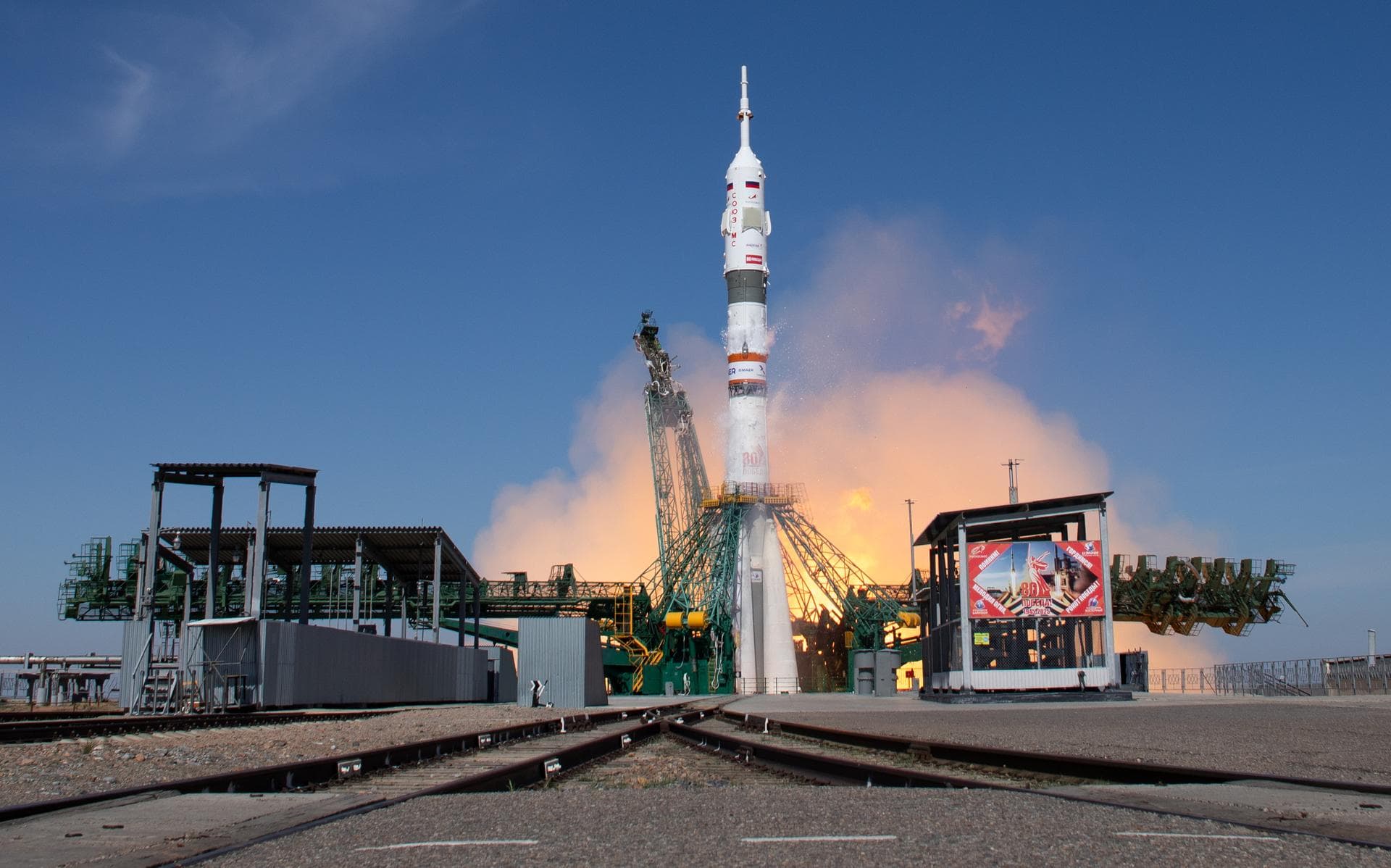
The crew launcher stands slightly apart from the rest. The Long March 2F, nicknamed Shenjian ("divine arrow"), carries an escape tower and has flown every Shenzhou mission with a 100 percent success rate since 1999, including Shenzhou 5, which made Yang Liwei China's first astronaut in orbit on October 15, 2003.[5][30][39] The pairing of one dedicated rocket with a same-named spacecraft echoes Russia's Soyuz program, where Soyuz capsules likewise ride Soyuz rockets.
Crewed lunar rockets in development
The Long March 10 is the vehicle China is counting on to land astronauts on the Moon before 2030. The full lunar version stands 92.5 meters tall and bundles three 5-meter first-stage cores, each powered by seven throttleable YF-100K engines; two launches, one with the Mengzhou crew spacecraft and one with the Lanyue lander, meet in lunar orbit for each landing mission.[35] A single-core test article flew a low-altitude profile from Wenchang on February 11, 2026, while the Mengzhou capsule it carried performed China's first maximum dynamic pressure abort test.[36][14]
The 10B, a two-stage single-core cargo variant with a 16-ton reusable-mode payload, delivered the family's reusability breakthrough. On its July 10, 2026 debut from the Hainan commercial site it placed a satellite in orbit and then descended to the recovery ship Linghang Zhe, where hooks on the booster caught a tensioned net six minutes after staging. The net does away with the landing legs used by SpaceX's Falcon 9 and Blue Origin's New Glenn, and CASC called it the first net recovery of an orbital rocket stage anywhere.[14][15] The catch made China the second country, after the United States, to recover an orbital-class booster, and CASC plans to fly the stage again before the end of 2026.[14] The crew-rated 10A, which shares the 10B's first stage, is expected to carry an uncrewed Mengzhou on its first orbital flight, a mission officials have pointed to for late 2026.[14][35]
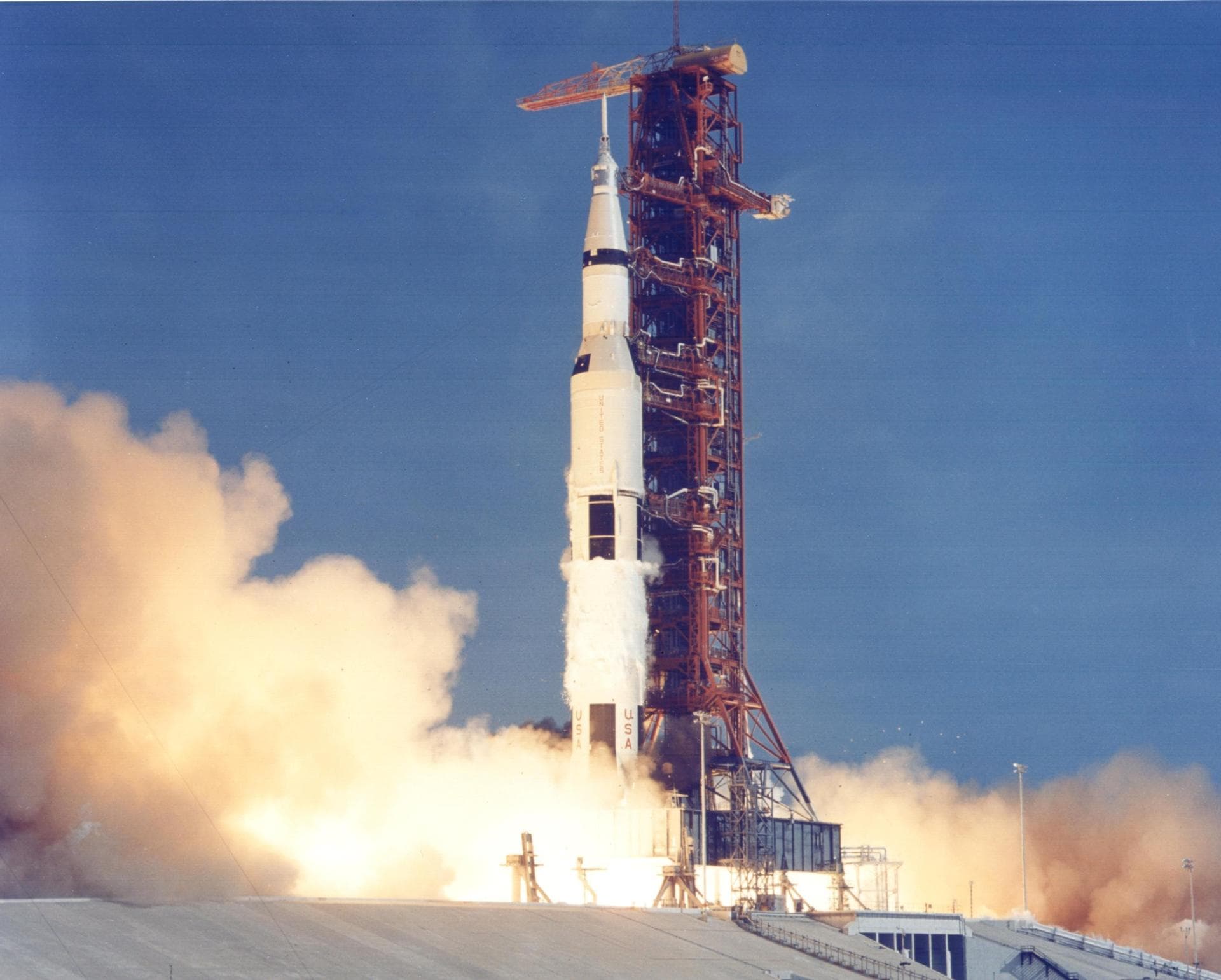
The Long March 9 is the family's super-heavy project and so far exists only as a design. Displayed in its latest form at the November 2024 Zhuhai airshow, it is rated for 100 tons to low Earth orbit and 50 tons toward the Moon, approaching the capacity of the Apollo program's Saturn V. CALT plans to develop it first as a heavy-lift model and ultimately as a two-stage, fully reusable vehicle in the mold of SpaceX's Starship, with the International Lunar Research Station of the 2030s among its intended payloads; no flight hardware has launched.[37]
The state program no longer has reusable rockets to itself. On August 19, 2026, LandSpace's Zhuque-3 landed its booster on legs in Gansu province, the first orbital-class recovery by a Chinese commercial company and the country's second overall, five weeks after the 10B's net catch.[38]
Launch sites
Long March rockets fly from four government spaceports, a commercial site, and the sea. Jiuquan, in the Gobi Desert, hosted the 1970 debut and remains the launch site for every crewed mission;[1][39] it staged 33 launches in 2025, the most of any Chinese site.[9] Taiyuan, in Shanxi province, serves polar and sun-synchronous orbits and is home to the Long March 6 family.[22][4] Xichang, in mountainous Sichuan, hosts the Long March 3 series' geostationary missions, including all 100 of the Long March 3B's flights through 2024, and its inland location means spent stages fall on land, the geography behind the 1996 disaster.[6][19]
Wenchang, on Hainan island, opened with the Long March 7's debut in June 2016 and changed the family's operating logic: its lower latitude allows heavier payloads, and its ocean drop zones let spent stages fall into open water instead of populated areas.[23] The adjacent Hainan commercial spaceport launched its first rocket, a Long March 12, on November 30, 2024, hosted the 600th Long March flight the following October, and is adding two more pads.[29][2][9] The solid-fueled Long March 11 has also launched from sea platforms since June 5, 2019, when it lifted seven satellites from a position in the Yellow Sea.[33]
Records and reliability
The Long March family's records are effectively the records of Chinese spaceflight. Its 664 flights through August 2026 have carried about 1,400 spacecraft, more than 86 percent of everything China has launched.[2][4] Beyond the 2F's crewed flights, CNSA's lunar and planetary exploration has flown on nothing else either: the Long March 3A series launched the Chang'e 1 and 2 orbiters from Xichang,[40][41] a Long March 3B sent the Chang'e 3 and 4 landers on their way,[6] and the Long March 5 carried the Chang'e 5 and Chang'e 6 sample returns,[32][42] Tianwen-1,[8] and, on its 5B variant, the Tiangong station's modules.[24][25]
Reliability has been a quiet strength with recent dents. When a Long March 3B third stage failed in January 2026 and lost the Shijian-32 satellite, it ended what appeared to be a run of roughly 300 launches without an outright family failure, reaching back to April 2020.[43] The August 2026 Long March 7A explosion followed seven months later, giving the family two of China's four launch failures for the year.[11] Between those events sits the volume that defines the fleet: 69 Long March launches in 2025 alone, a pace hard to square with the family's beginnings, when the first 100 flights took 37 years.[10][3]
References
- China's long march into space - China National Space Administration.
- China's latest launch mission marks 600th flight of Long March rockets - Xinhua, October 16, 2025.
- Mission marks 600th launch for Long March fleet - China Daily Hong Kong, October 2025.
- China launches new satellite - Guangming Online, August 18, 2026.
- Shenzhou-19 and Long March-2F: Higher transport capacity, better rocket reliability - CGTN, October 30, 2024.
- Long March 3B rocket blasts off for 100th time - China Daily, December 4, 2024.
- Successful Long March 5 launch paves way for new Chinese space missions - Spaceflight Now, December 27, 2019.
- Tianwen-1 launches for Mars, marking dawn of Chinese interplanetary exploration - SpaceNews, July 23, 2020.
- China caps record year for orbital launches with Tianhui-7 and Shijian-29 technology test missions - SpaceNews, December 31, 2025.
- Nation's space program records stellar year of firsts - China Daily, January 9, 2026.
- Chinese Long March 7A rocket explodes shortly after liftoff - SpaceNews, August 10, 2026.
- China prepares to launch Chang'e-7 lunar probe - Xinhua, August 19, 2026.
- China's Chang'e-7 lunar ice-hunting mission set for Sunday launch - SpaceNews, August 2026.
- China becomes second country to recover orbital booster with Long March 10B - SpaceNews, July 10, 2026.
- China's Long March 10B rocket successfully launches, and lands, in a global spaceflight milestone - Scientific American, July 2026.
- Long March: More than a tough journey - China Daily, September 4, 2016.
- Chinese Space Launch Vehicles - Historic Spacecraft.
- AsiaSat's First Hero - AsiaSat.
- Report of the Select Committee on U.S. National Security and Military/Commercial Concerns with the People's Republic of China, Chapter 6 - US House of Representatives, 1999, via govinfo.gov.
- The Myth of "ITAR-Free" - CSIS Aerospace Security Project.
- Long March 6 launch to put new engine to the test - China National Space Administration.
- CZ-6 (Chang Zheng-6) - Gunter's Space Page.
- China's new Long March 7 rocket successful on first flight - Spaceflight Now, June 25, 2016.
- Final module docks at China's Tiangong space station - SpaceNews, October 31, 2022.
- New science lab for China's space station launches on Long March 5B rocket - Spaceflight Now, July 24, 2022.
- NASA Administrator Statement on Chinese Rocket Debris - NASA, May 9, 2021.
- Chinese rocket stage breaks up into cloud of more than 700 pieces of space debris - SpaceNews, August 9, 2024.
- First launch of Long March 8A sends second group of Guowang megaconstellation satellites into orbit - SpaceNews, February 11, 2025.
- China launches first Long March 12 from new commercial spaceport in boost for country's lunar plans - SpaceNews, November 30, 2024.
- Long March 2F - China Manned Space Agency.
- CZ-3B/G2 (Chang Zheng-3B/G2) - Gunter's Space Page.
- CZ-5 (Chang Zheng-5) - Gunter's Space Page.
- China gains new flexible launch capabilities with first sea launch - SpaceNews, June 5, 2019.
- CZ-11 (Chang Zheng-11) - Gunter's Space Page.
- China targets 2026 for first Long March 10 launch, new lunar crew spacecraft flight - SpaceNews, October 30, 2025.
- China successfully completes low-altitude Long March-10 test, marking major breakthrough in China's manned lunar exploration program - Global Times, February 2026.
- China unveils fully reusable Starship-like rocket concept - SpaceNews, November 2024.
- LandSpace becomes first commercial Chinese company to land an orbital-class booster - Spaceflight Now, August 19, 2026.
- Shenzhou V - China Manned Space Agency.
- Chang'e-1 - eoPortal, European Space Agency.
- Chang'e-2 - eoPortal, European Space Agency.
- Chang'e-6: Collecting the first lunar farside samples - The Planetary Society.
- China hit by dual launch failures as Long March 3B and Ceres-2 debut mission fail - SpaceNews, January 2026.