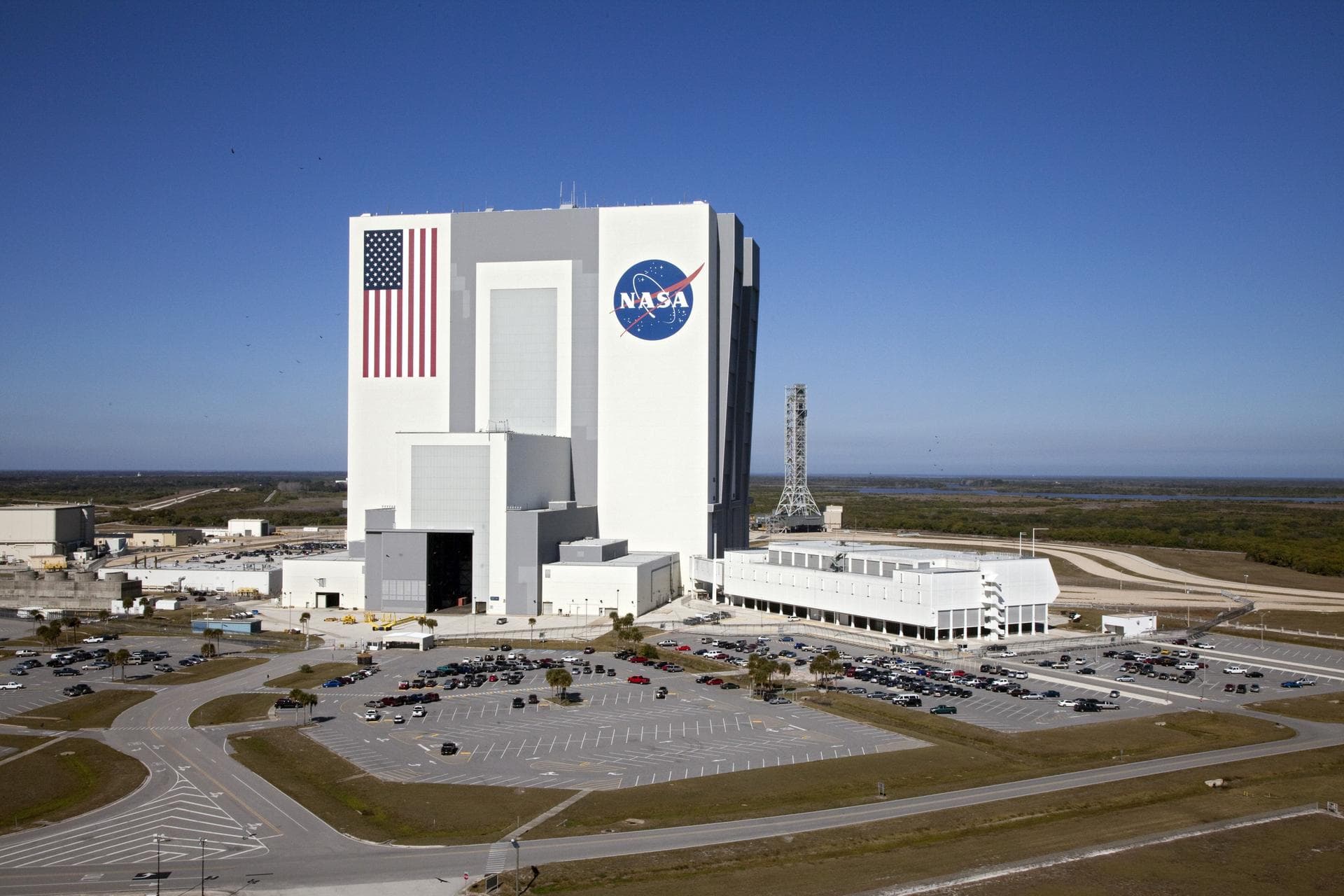
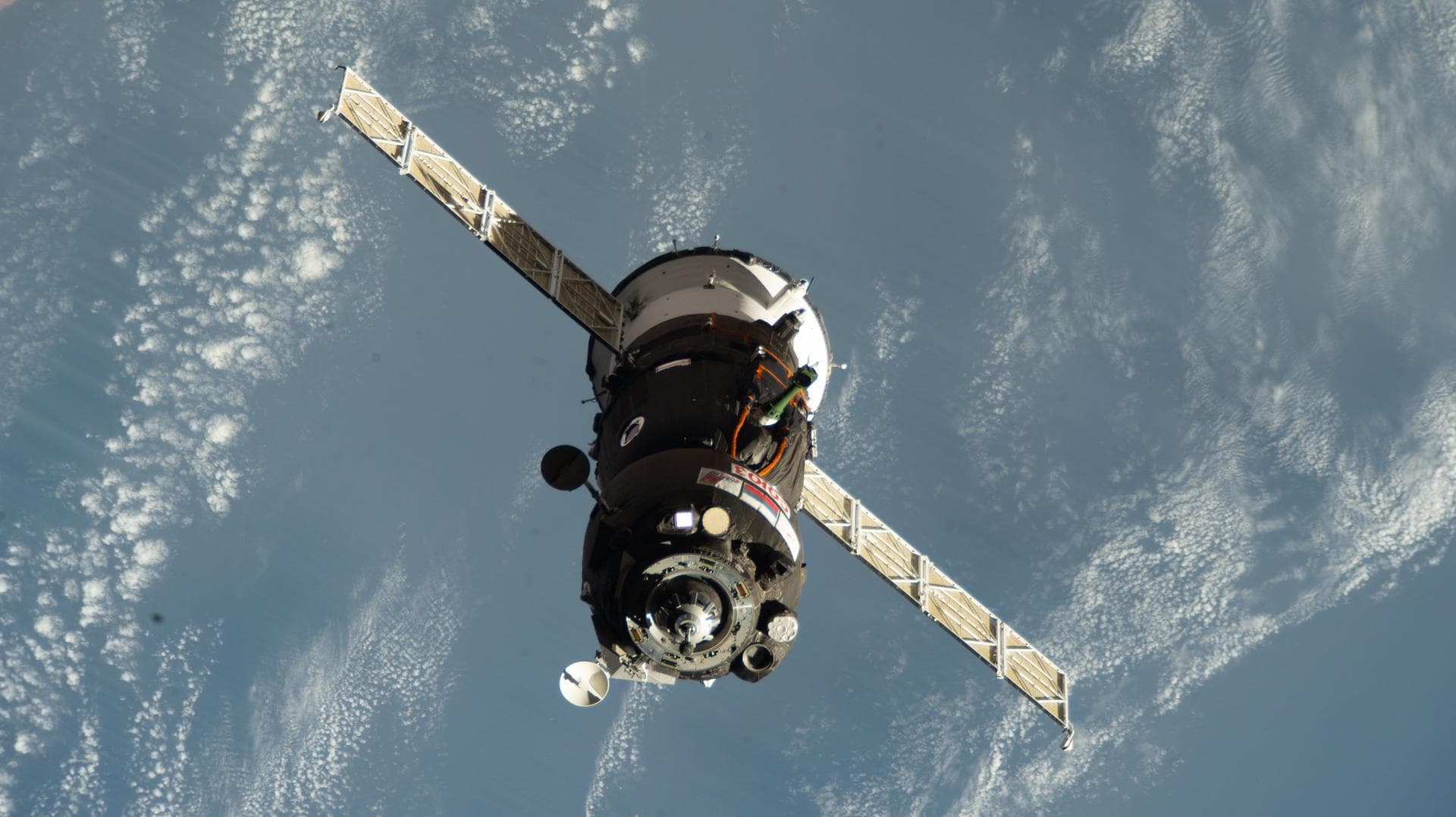
Baikonur Cosmodrome is the world's first spaceport. The first artificial satellite, Sputnik 1, left one of its pads on October 4, 1957, and the first human in space, Yuri Gagarin, launched from the same pad on April 12, 1961.[1][2][3][16] The Soviet Union founded the site on June 2, 1955 as a secret ballistic missile test range on the steppe of southern Kazakhstan, and the Russian presidential website still describes the 6,717-square-kilometer complex as the largest space launch facility in the world.[1][4]
Every Soviet and Russian crewed spaceflight, from Vostok 1 through the current Soyuz MS missions, has launched from Baikonur.[3][5][6] Since the Soviet Union dissolved, the cosmodrome and the city serving it have stood on Kazakh territory. Russia has leased the complex since 1994, pays Kazakhstan about $115 million a year, and holds the lease through 2050 under an extension the two countries' presidents agreed in January 2004.[2][7]
Baikonur's workload is a fraction of what it once was. Roscosmos now flies most Russian missions from Plesetsk and Vostochny inside Russia, and only one of Baikonur's Soviet-era pad complexes still launches crews.[8][9] The cosmodrome nevertheless remains the only site for Soyuz crew flights to the International Space Station, for Progress cargo ships, and for the last Proton rockets, and its Site 45 hosted the first test flight of the new Soyuz-5 launcher on April 30, 2026.[9][10][11]
Status as of August 2026
Baikonur has hosted five of Russia's 11 orbital launch attempts so far in 2026: a Proton-M carrying the Elektro-L5 weather satellite on February 12, the Progress MS-33 and MS-34 cargo missions in March and April, the first Soyuz-5 test flight on April 30, and the crewed Soyuz MS-29 launch on July 14.[9] MS-29 delivered cosmonauts Pyotr Dubrov and Anna Kikina and NASA astronaut Anil Menon to the International Space Station, and the Soyuz MS-28 crew landed in Kazakhstan on July 26 after 241 days in orbit.[12][13] NASA administrator Jared Isaacman and Roscosmos director general Dmitry Bakanov met at the cosmodrome for the MS-29 launch and agreed to keep the station and its crew seat exchange running through 2030.[14] Progress MS-35 is scheduled to fly from Site 31 on September 9, with two more Progress missions planned for November and December.[9]
Origins as a missile test range
The cosmodrome began as a weapons site, not a spaceport. A Soviet government decree of February 12, 1955 authorized a scientific research and test range for the R-7, the world's first intercontinental ballistic missile, and on June 2, 1955 the Ministry of Defense general staff approved the structure of Scientific Research Test Range No. 5, or NIIP-5. That June date is now treated as Baikonur's official birthday.[4][15] The site commission settled on empty steppe near the Tyuratam junction of the Moscow-Tashkent railway, on the right bank of the Syr Darya river, largely because the R-7's radio guidance system needed ground stations spread across hundreds of kilometers of unobstructed terrain. A short rail spur into the steppe made construction feasible; almost nothing else recommended the place, where summer temperatures reach 50 degrees Celsius and winters drop to minus 25.[4]
Army construction crews started the first permanent building of the future city on May 5, 1955, and excavation of the flame duct for the first launch pad began that September.[2][16] The R-7 flew from that pad, later known as Site 1, for the first time on May 15, 1957. The missile failed on its first three attempts and completed a full-range flight on August 21, 1957.[2][17] Six weeks later, on October 4, a modified R-7 from the same pad carried Sputnik 1 into orbit.[3][16]
The name itself began as a deception. When Soviet sports officials registered Gagarin's 1961 flight as a world record, they identified the launch site as a cosmodrome near Baikonur, a small mining settlement hundreds of kilometers to the northeast, to conceal the range's true location at Tyuratam. The decoy name stuck to the real cosmodrome, and in the 1990s Kazakhstan attached it to the launch city as well.[18][19]
The range's deadliest accident came in its missile-testing years and stayed secret for three decades. On October 24, 1960, during preparations for the first test flight of the R-16 intercontinental ballistic missile at Site 41, the missile's second-stage engine ignited on the pad and tore open the fueled first stage below it. Official documents recorded 74 people killed at the pad, and deaths from injuries later raised the toll to 92, among them Marshal Mitrofan Nedelin, commander of the Strategic Rocket Forces. Soviet newspapers reported that Nedelin had died in an airplane crash; the truth was not published in the Soviet press until 1989.[20]
Soviet spaceflight era
Gagarin's flight turned the missile range into the center of the Space Race. Vostok 1 lifted off from Site 1 at 9:07 a.m. Moscow time on April 12, 1961, and the pad has been called Gagarin's Start ever since.[5][16] The Soviet firsts that followed also began at the cosmodrome: Valentina Tereshkova became the first woman in space in June 1963, and Alexei Leonov made the first spacewalk after a March 1965 launch.[1][3] The early probes to the Moon, Venus, and Mars flew from the cosmodrome, as did Salyut 1, the first space station, in 1971 and the modules of the Mir station beginning in 1986.[1][2]
Baikonur also hosted the Soviet Union's attempt to reach the Moon with cosmonauts. Two pads at Site 110 were built for the giant N1 rocket, which failed on all four launch attempts between February 1969 and November 1972. The second attempt, on July 3, 1969, fell back onto its pad seconds after liftoff and destroyed it; debris landed as far as 10 kilometers away.[21][22]
The refurbished Site 110 later served the Energia-Buran program, the Soviet answer to the American Space Shuttle. The Energia heavy-lift rocket made its debut in 1987 from the nearby Site 250 test stand, and on November 15, 1988 a second Energia lifted the uncrewed Buran orbiter from Site 110. Buran circled Earth twice in 206 minutes and landed automatically on the cosmodrome's Yubileiny runway, then never flew again as funding collapsed with the Soviet Union. The orbiter itself was destroyed on May 12, 2002, when the roof of its hangar at Site 112 caved in.[23][24][25]
The lease and the city of Baikonur
The Soviet collapse in 1991 left the cosmodrome on the territory of newly independent Kazakhstan. In 1994 the Kazakh government leased the whole Baikonur complex, cosmodrome and city together, to Russia for 20 years, and on January 9, 2004 presidents Vladimir Putin and Nursultan Nazarbayev agreed to extend the lease to 2050.[2] Russia pays about $115 million a year.[7] Kazakh officials said in May 2025 that no early termination of the lease, and no transfer of the city to Kazakh control, was under consideration.[7]
The city of Baikonur predates the pads. It began on May 5, 1955 as a military settlement beside Tyuratam, carried the names Zarya, Leninskiy, Leninsk, and Zvezdograd over four decades, and reportedly approached 100,000 residents at its peak in the mid-1980s. It was renamed Baikonur in the mid-1990s and has been run by a Russian civilian administration since 1995.[19] Under the lease, Russia administers the city as if it were a Russian municipality on Kazakh soil.[6][19]
The leased footprint is shrinking. Russia handed Site 1, Gagarin's Start, to the Kazakh side on June 1, 2025 and has given Kazakhstan a list of 234 facilities it no longer needs, 53 of which had been accepted by May 2025. Kazakhstan plans to turn the old pad into a museum complex, and the two countries intend to seek UNESCO World Heritage listing for it.[16][26]
Launch sites
Baikonur's launch facilities are scattered across the steppe in numbered sites, most of them built for missiles or rockets that no longer fly. The table lists the complexes that defined the cosmodrome and their standing in August 2026.
| Site | Built for | Role and status in August 2026 |
|---|---|---|
| Site 1 (Gagarin's Start) | R-7 missile tests | Launched Sputnik 1 and Vostok 1; 518 launches by mid-2019; retired after the Soyuz MS-15 launch on September 25, 2019; transferred to Kazakhstan in 2025 for a museum[16][26] |
| Site 31 | R-7 combat training pad | Baikonur's only active Soyuz-2 pad; all crew and Progress launches since 2019[27][28] |
| Sites 81 and 200 | Proton | Twin dual-pad complexes, the only place Proton has ever launched; flying the rocket's final missions[29][30] |
| Site 45 | Zenit | Left pad converted for Soyuz-5 under the Russian-Kazakh Baiterek program; first Soyuz-5 flight April 30, 2026[10][31] |
| Site 110 | N1 Moon rocket | One pad destroyed in the 1969 N1 explosion; rebuilt for Energia and used for the 1988 Buran launch; unused since[21][23][25] |
Site 1 served from the first R-7 test in May 1957 to the final Soyuz-FG flight, which carried Soyuz MS-15 on September 25, 2019; the Soyuz MS-13 launch in July 2019 was the 518th mission to leave the pad. Site 1 was never converted for the newer Soyuz-2, after a plan with roughly $87 million in Emirati funding fell through, so its retirement followed the Soyuz-FG's.[16]
Site 31 was founded at the end of 1958 as a second R-7 complex and fired its first missile in early 1961. Upgraded in 2007-2008, it took over all crew and cargo launches when Site 1 closed.[27] Its dependence on a single pad carries risk: the service platform was damaged during the Soyuz MS-28 launch on November 27, 2025, and Progress and crew flights only resumed after repairs finished in March 2026.[27][28]
Sites 81 and 200, each built with a pair of pads, have supported the Proton heavy-lift rocket since its first flights in 1965. Baikonur has always been the only place Protons launch, so the rocket's retirement will close both complexes.[29][32] Site 45 was built for the Zenit rocket, which first flew from its left pad on April 13, 1985; the right pad was destroyed in a launch explosion on October 4, 1990 and never rebuilt. The surviving pad passed to Kazakh control and was rebuilt for the Soyuz-5.[31]
Current operations
Crewed spaceflight is the reason Baikonur still matters to the ISS partnership. Soyuz MS spacecraft launch on Soyuz-2.1a rockets from Site 31, usually carrying two cosmonauts and one NASA astronaut under a seat-exchange arrangement in which Roscosmos cosmonauts fly on American Commercial Crew Program missions in return.[12][14] The cosmodrome's ISS role goes back to the station's beginning: a Proton launched Zarya, the station's first module, from Baikonur on November 20, 1998, and the first resident crew left aboard a Soyuz on October 31, 2000.[33][34] Crews still follow preflight rituals at Baikonur traced to Gagarin, down to a stop at the left rear wheel of the bus on the way to the pad.[35]
The site's crew-escape record was tested on October 11, 2018, when a booster failure forced the Soyuz MS-10 launch to abort in flight. The capsule made a steep ballistic landing and both crew members emerged unharmed.[36] Returning crews do not land at the cosmodrome itself; Soyuz descent modules come down on the open Kazakh steppe, as Soyuz MS-28's did on July 26, 2026.[13]
Proton operations are winding down. A Kazakh vice-minister said in December 2024 that 10 Proton-M rockets remained, that they were supposed to fly by the end of 2026, and that Russia had proposed extending the deadline because the pace made it unlikely to be met.[30] The rocket has flown once since the start of 2025: the February 12, 2026 launch of the Elektro-L5 weather satellite, the last Proton to use the Blok DM-03 upper stage.[8][9][32]
Soyuz-5 is the site's first new rocket program in decades. Russia and Kazakhstan set up the joint Baiterek venture in 2004 to bring newer rockets with less toxic propellants to Baikonur, and after years of shifting plans it settled on the Soyuz-5 flying from the converted Site 45.[10][31] The first test flight on April 30, 2026 put a mass simulator on its planned suborbital trajectory, and Roscosmos announced that a second flight would follow in 2027.[10][11][39]
Decline and future
Baikonur's share of Russian launch activity has been falling for decades. Jonathan McDowell's catalogue of 2025 launches lists six Baikonur missions among Russia's 17 orbital attempts, every one of them a Soyuz-2 flying from Site 31, against nine launches from Plesetsk and two from Vostochny.[8] Russia built the Vostochny Cosmodrome in its Far East expressly to reduce dependence on the leased Kazakh site.[37] The slide began with the Soviet collapse, when many programs shut down and the city's population dropped sharply.[2][19]
The near-term future is more settled than the distant one. The July 2026 agreement between NASA and Roscosmos keeps Soyuz crew rotations flying from Site 31 through 2030.[14] Reporting on Russia's follow-on space station in December 2025 said the redesigned project would keep the station in the ISS's 51.6-degree orbit, with crews launching on proven Soyuz spacecraft from Baikonur and a science module riding a Proton-M in 2029, which would mean Proton flights well past the end-of-2026 deadline Kazakh officials described in 2024.[30][38] Those remain plans rather than commitments, and Russia's station schedule has moved before.
Kazakhstan is planning around a smaller Russian presence rather than an exit. It has taken back Gagarin's Start and a long list of other facilities for museum development and reuse, denied that an early end to the lease is under discussion, and tied its own spacefaring ambitions to the Baiterek program and the Soyuz-5 pad at Site 45.[7][10][26]
References
- Baikonur Cosmodrome - President of Russia, official directory.
- Baikonur Complex - President of Russia, June 2, 2005.
- 65 Years Ago: Sputnik Ushers in the Space Age - NASA, October 2022.
- Origin of the Baikonur Cosmodrome - Anatoly Zak, RussianSpaceWeb.
- The flight of Vostok 1 - European Space Agency.
- Baikonur Cosmodrome, Kazakhstan (PIA16292) - NASA Jet Propulsion Laboratory.
- Kazakhstan Denies Russia Plans Early Exit From Baikonur Spaceport - The Moscow Times, May 15, 2025.
- Space Activities in 2025 - Jonathan McDowell, February 2026.
- Space exploration in 2026 - Anatoly Zak, RussianSpaceWeb.
- Russia launches new Soyuz-5 rocket from Kazakhstan cosmodrome in first test flight - Euronews, May 1, 2026.
- Soyuz-5 flies its first test mission - Anatoly Zak, RussianSpaceWeb.
- Soyuz Docks to Station, Hatches Open Soon for Crew Greeting - NASA, July 14, 2026.
- Expedition 74 Trio Returns to Earth Inside Soyuz - NASA, July 26, 2026.
- Russia Agrees to ISS Operations, Seat-Swaps, Through 2030 - SpacePolicyOnline, July 16, 2026.
- Challenge to Apollo: The Soviet Union and the Space Race, 1945-1974 (NASA SP-2000-4408) - Asif A. Siddiqi, NASA History Office, 2000.
- Gagarin's pad (Site 1) in Baikonur - Anatoly Zak, RussianSpaceWeb.
- R-7 intercontinental ballistic missile - Anatoly Zak, RussianSpaceWeb.
- From Tyuratam Missile Range to Baikonur Cosmodrome - Mike Gruntman, Acta Astronautica, volume 155, 2019.
- Town of Baikonur - Anatoly Zak, RussianSpaceWeb.
- The Nedelin disaster - Anatoly Zak, RussianSpaceWeb.
- N1 heavy launch vehicle - Anatoly Zak, RussianSpaceWeb.
- Second launch attempt of the N1 rocket, vehicle No. 5L - Anatoly Zak, RussianSpaceWeb.
- Buran reusable orbiter - Anatoly Zak, RussianSpaceWeb.
- 1988 launch of Soviet Buran shuttle - European Space Agency, January 2021.
- Energia-Buran launch facilities in Baikonur - Anatoly Zak, RussianSpaceWeb.
- Kazakhstan to regain legendary Soviet space launch site, 'Gagarin's start' - Euronews, May 9, 2025.
- Site 31 in Baikonur - Anatoly Zak, RussianSpaceWeb.
- Russia Completes Repairs to Site 31, Next Cargo Launch on March 22 - SpacePolicyOnline, March 2026.
- Proton launch facilities in Baikonur - Anatoly Zak, RussianSpaceWeb.
- Kazakhstan to launch up to 10 Russian toxic rockets by 2026 from Baikonur - Kursiv Media, December 19, 2024.
- Zenit launch complex at Site 45 in Baikonur - Anatoly Zak, RussianSpaceWeb.
- Roscosmos Launches Last Proton With DM-03 Booster - Aviation Week, February 2026.
- Zarya Module - NASA.
- Space Station 20th: Expedition 1 Crew Launches to the International Space Station - NASA, October 2020.
- Gagarin's traditions - European Space Agency.
- Statement on Soyuz MS-10 Launch Abort - NASA, October 11, 2018.
- Vostochny: Russian Launch Center in Siberia - Space.com.
- Russia Scales Back Ambitions for Its Next Space Station - Ilya Ferapontov, Scientific American, December 29, 2025.
- Second launch of Soyuz-5 carrier rocket set for 2027 - TASS (Russian state news agency; cited for the schedule announcement as the agency's own claim), May 2026.