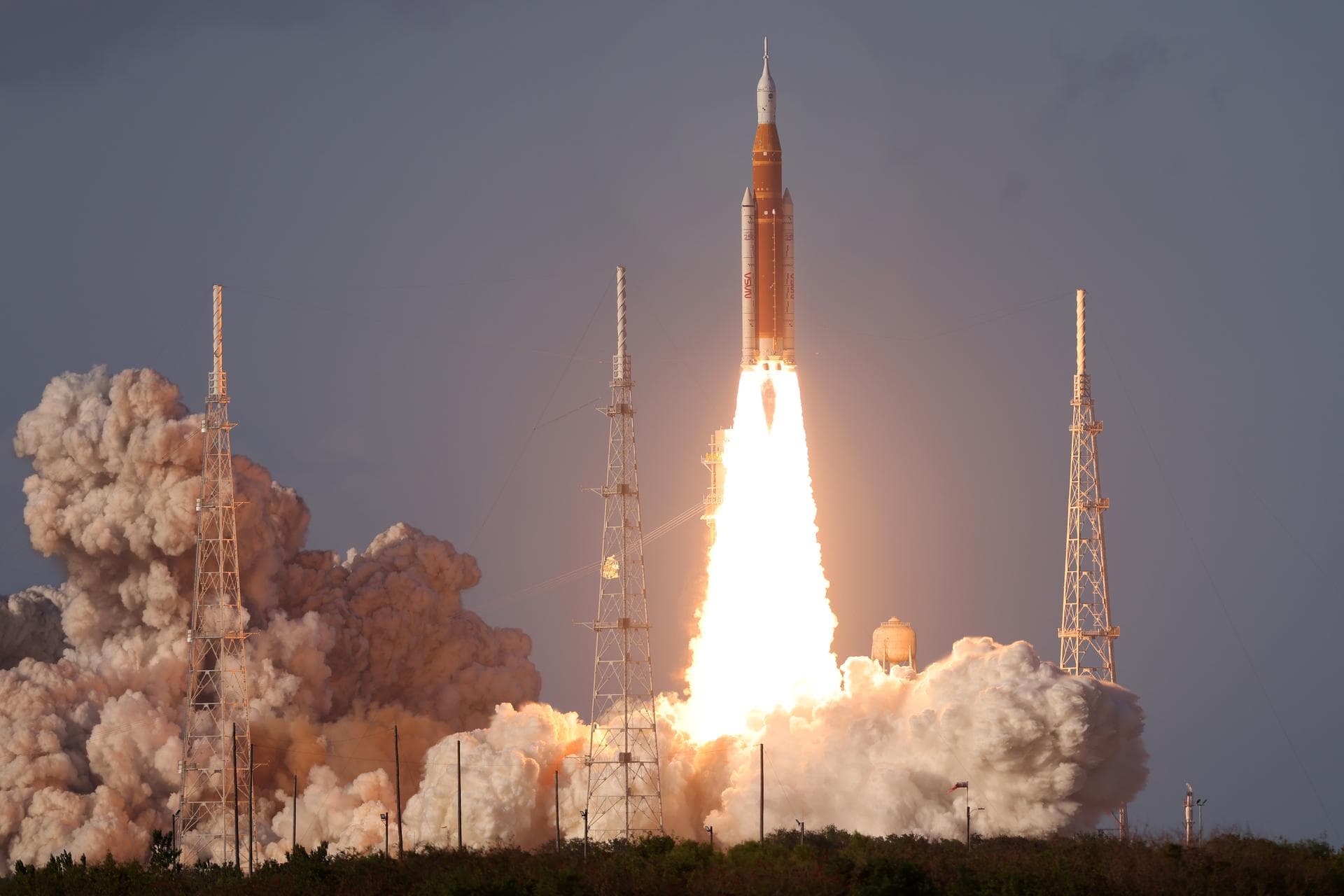
Orion is NASA's crew spacecraft for missions beyond low Earth orbit, built to carry four astronauts to the Moon and sustain them for up to 21 days of free flight.[1] The spacecraft pairs a crew module built by Lockheed Martin[4] with the European Service Module, built by Airbus for the European Space Agency,[10] under a launch abort tower; the full stack stands 67 feet (20.4 m) tall and weighs about 78,000 pounds (35,380 kg) at liftoff.[1] Orion launches on the Space Launch System for Artemis program missions and has flown three times: an uncrewed Earth-orbit test on a Delta IV Heavy in 2014,[8] the uncrewed Artemis I lunar mission in 2022,[13] and the crewed Artemis II lunar flyby in April 2026.[2]
Artemis II was Orion's proving flight with people aboard. The spacecraft carried astronauts Reid Wiseman, Victor Glover, Christina Koch, and Jeremy Hansen 695,081 miles around the Moon and back in just over nine days, reaching 252,756 miles from Earth, farther than any crew before them and past the record the Apollo program's Apollo 13 crew had held since 1970.[2][19]
Status as of August 2026
As of August 22, 2026, Orion has completed its first crewed flight and NASA is assembling the next spacecraft. Initial Artemis II inspections, reported on April 20, found the heat shield performed as expected at nearly 35 times the speed of sound, with the char loss seen on Artemis I significantly reduced in both quantity and size; the capsule splashed down 2.9 miles from its target point, and the shield is moving to Marshall Space Flight Center for sample extraction and internal x-ray scans.[21] The Artemis III crew and service modules were joined on July 30 inside the Neil Armstrong Operations and Checkout Building at Kennedy Space Center, ahead of first power-up and integrated testing, and more than 250 components from the Artemis II capsule are being reused for Artemis IV and Artemis V.[28] The fourth European Service Module shipped from Bremen in November 2025 for the Artemis IV landing mission.[11] NASA targets Artemis III in 2027 and Artemis IV in early 2028.[21][24]
Development history
Orion began as the crew exploration vehicle of the Constellation program. NASA selected Lockheed Martin as prime contractor on August 31, 2006, to design, develop, and build a spacecraft that would carry four crew members on lunar missions and up to six to the International Space Station, with the design, development, test, and evaluation work valued at about $3.9 billion.[4]
The Obama administration targeted Constellation for cancellation in the budget it sent Congress in February 2010, but Orion outlived the program that created it.[32] The NASA Authorization Act of 2010 directed the agency to continue developing a multipurpose crew vehicle alongside a new heavy-lift rocket, and on May 24, 2011, NASA announced that the Multi-Purpose Crew Vehicle would be based on the existing Orion design, carrying four astronauts on 21-day missions and landing in the Pacific Ocean.[5][6] The same policy shift handed space station crew transport to commercial vehicles, the role now filled by Crew Dragon, and reserved Orion for deep space.[6]
Orion's first flight came before its rocket was ready. Exploration Flight Test-1 launched on a Delta IV Heavy on December 5, 2014, flew two orbits to a peak altitude of 3,600 miles, and splashed down 4 hours and 24 minutes later, having flown higher and faster than any spacecraft designed for humans in more than 40 years.[7][8] The launch abort system completed its own in-flight demonstration, Ascent Abort-2, on July 2, 2019, when a test booster carried a capsule mock-up to 31,000 feet at Mach 1.15 and the abort motor pulled it clear of the rocket.[9]
Europe joined the program through the service module. ESA supplies the European Service Module, which Airbus assembles in Bremen, Germany, from contributions by more than 20 companies in 10 European countries; the design evolved from ESA's Automated Transfer Vehicle, the cargo craft that flew five resupply missions to the International Space Station.[10][11]
Design
Orion consists of four elements at launch: the launch abort system, the crew module, the European Service Module, and a spacecraft adapter that mates the stack to the rocket.[1] The crew module and service module together are 26 feet (7.9 m) tall, and the spacecraft carries 19,000 pounds (8,618 kg) of usable propellant.[1]
| Parameter | Crew module | European Service Module |
|---|---|---|
| Height | 11 ft (3.35 m) | 15.7 ft (4.79 m) |
| Diameter | 16.5 ft (5 m) | 16.5 ft (5 m) |
| Mass at liftoff | 22,900 lbs (10,387 kg) | 34,400 lbs (15,604 kg) |
| Volume | 690.6 cu ft pressurized; 330 cu ft habitable | Unpressurized |
| Propulsion | 12 reaction control thrusters, 160 lbs thrust each | Main engine (6,000 lbs thrust), 8 auxiliary engines (110 lbs each), 24 reaction control thrusters (50 lbs each) |
| Power | Supplied by the service module | 4 solar array wings, 15,000 cells, 62 ft span, 11 kW |
| Other | Avcoat heat shield; 220 lbs lunar return payload; nominal landed mass 20,500 lbs | Water, oxygen, and nitrogen tanks; usable propellant 19,000 lbs |
Specifications from NASA's January 2026 fact sheet and ESA program pages.[1][10]
Crew module
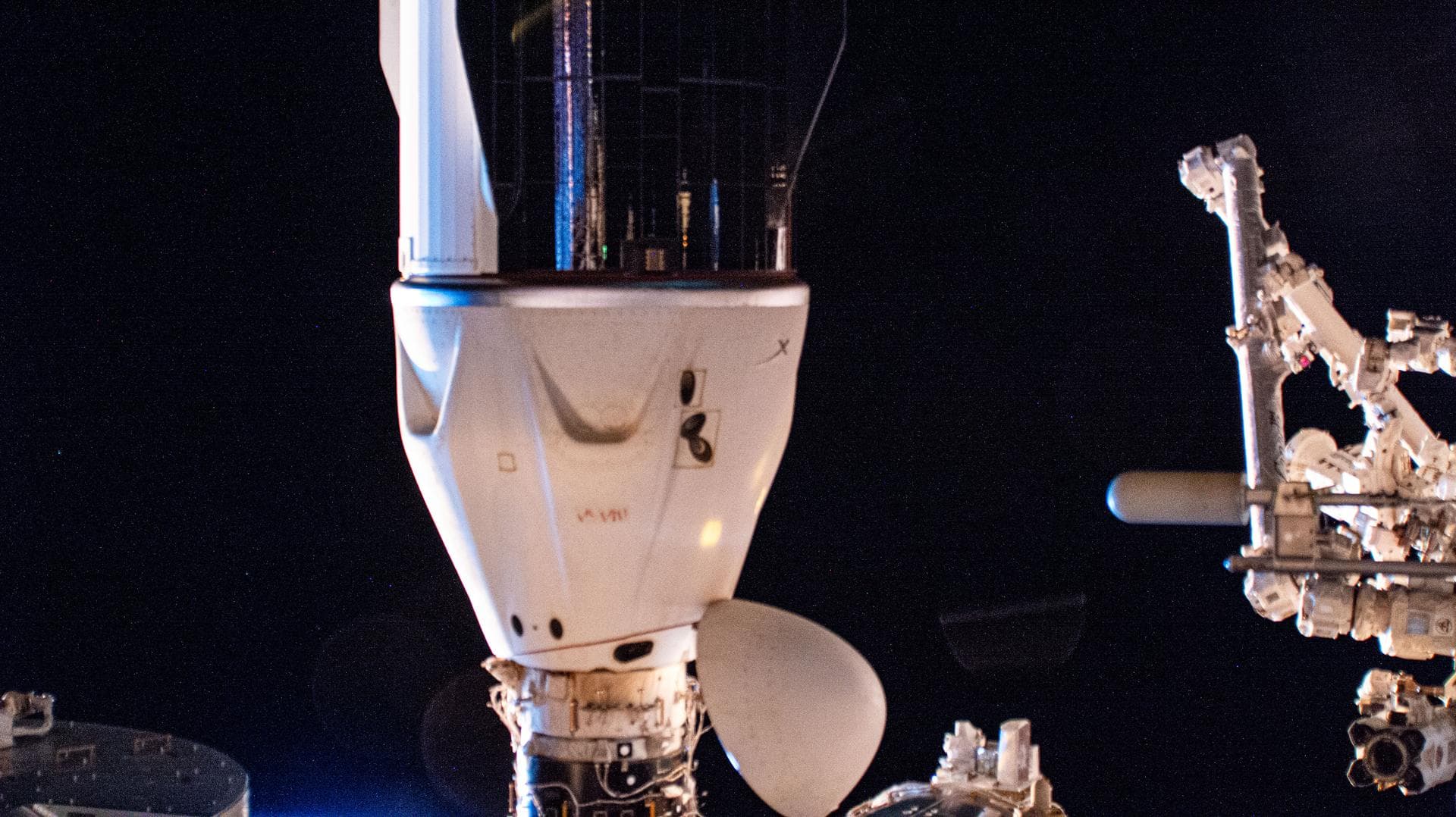
The crew module is the pressurized capsule where the astronauts live and work, with 690.6 cubic feet of pressurized volume and 330 cubic feet of habitable space for a crew of four.[1] Lockheed Martin builds it around an Avcoat ablative heat shield 16.5 feet across, the structure that absorbs reentry temperatures near 5,000 degrees Fahrenheit on a lunar return.[17][21] Twelve reaction control thrusters steer the capsule after it separates from the service module for entry.[1] The module weighs 22,900 pounds at liftoff and about 20,500 pounds at splashdown, and it can bring back 220 pounds of lunar payload.[1] Orion has not yet docked with another spacecraft in flight; NASA plans the first dockings on Artemis III, with Orion as the approaching vehicle at each one.[25]
European Service Module
The European Service Module sits below the crew module and provides propulsion, electrical power, thermal control, and the crew's water, oxygen, and nitrogen.[10] Its four solar array wings span 62 feet and generate 11 kilowatts from 15,000 solar cells, and its tanks hold more than 8,000 liters of propellant along with water and air, threaded through 11 kilometers of wiring.[1][11]
The module carries 33 engines of three types. The main engine, delivering 6,000 pounds of thrust, is a repurposed Space Shuttle Orbital Maneuvering System engine on the early modules; the one that powered Artemis II had already flown six shuttle missions between 2000 and 2002.[1][12] Eight auxiliary engines of 110 pounds thrust each back it up, and 24 reaction control thrusters grouped in six pods handle attitude.[1][12] The first module performed above expectations on Artemis I.[12]
Launch abort system
The launch abort system is a 50-foot tower that weighs 17,000 pounds at liftoff and covers the crew module during ascent.[1] Its abort motor produces 400,000 pounds of thrust to pull the capsule away from a failing rocket, an attitude control motor of 7,000 pounds thrust steers the escaping capsule, and a 40,000-pound-thrust jettison motor discards the tower once it is no longer needed.[1] The full abort sequence was demonstrated in flight on Ascent Abort-2 in 2019.[9]
Flight history
| Mission | Dates | Launch vehicle | Profile and outcome |
|---|---|---|---|
| Exploration Flight Test-1 | December 5, 2014 | Delta IV Heavy | Uncrewed. Two orbits to 3,600 miles altitude, reentry at about 20,000 mph, splashdown after 4 hours 24 minutes. Success.[7][8] |
| Artemis I | November 16 to December 11, 2022 | SLS | Uncrewed. 25.5 days in distant retrograde lunar orbit, farthest flight of a spacecraft built for humans. Success, with unexpected heat shield char loss found afterward.[13][16] |
| Artemis II | April 1 to April 10, 2026 | SLS | Crewed. Four astronauts on a lunar free-return flyby lasting 9 days, 1 hour, 32 minutes. Success.[2][3] |
Exploration Flight Test-1
Exploration Flight Test-1 was Orion's uncrewed shakedown in Earth orbit. The capsule launched from Cape Canaveral at 7:05 a.m. EST on December 5, 2014, atop a Delta IV Heavy, circled Earth twice, and used its second orbit's high apogee of 3,600 miles to dive back into the atmosphere at about 20,000 mph, subjecting the heat shield to roughly 4,000 degrees Fahrenheit.[7][8] The capsule splashed down about 600 miles southwest of San Diego and was recovered by the amphibious ship USS Anchorage, closing out a 4-hour, 24-minute flight that validated the heat shield, avionics, and recovery systems.[7]
Artemis I
Artemis I sent an uncrewed Orion around the Moon on the first flight of SLS. Launched on November 16, 2022, the spacecraft entered a distant retrograde orbit roughly 40,000 miles beyond the Moon, passed about 80 miles above the lunar surface on its closest approaches, and on flight day 13 reached 268,563 miles from Earth, the farthest any spacecraft built for humans has flown.[13] Over 25.5 days Orion traveled more than 1.4 million miles, then reentered at about 25,000 mph and splashed down in the Pacific on December 11, 2022.[13][14] Post-flight inspections found more cracking and loss of charred heat shield material than predicted.[16]
Artemis II
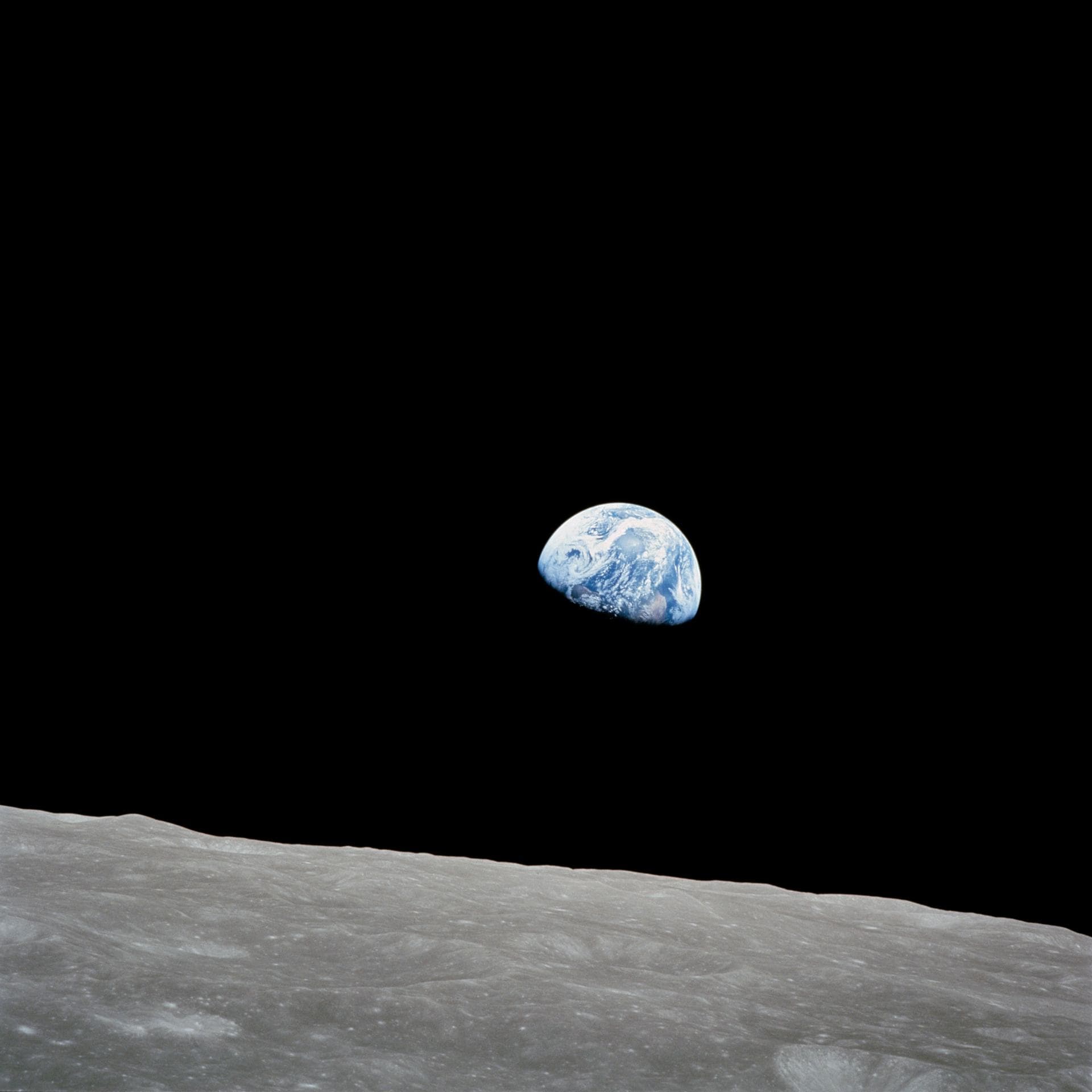
Artemis II was Orion's first crewed flight and the first time people flew beyond low Earth orbit since Apollo 17 in December 1972.[2][3] NASA astronauts Reid Wiseman (commander), Victor Glover (pilot), and Christina Koch, with Canadian Space Agency astronaut Jeremy Hansen, launched from Kennedy Space Center's pad 39B at 6:35 p.m. EDT on April 1, 2026.[2] Orion flew a free-return trajectory around the far side of the Moon, passing 4,067 miles above the lunar surface at its closest.[2][3] On April 6 the crew surpassed the distance record Apollo 13 set in 1970, and at the trajectory's farthest point they were 252,756 miles from Earth.[19][2]
The mission wrung out the spacecraft with people aboard. The crew exercised the life support system, flew Orion manually, rehearsed emergency procedures, evaluated the Orion spacesuits, and ran science investigations including a tissue-chip study of deep space radiation and microgravity effects.[2] They returned more than 7,000 images of the Moon and Earth, and an experimental optical communications terminal downlinked 484 gigabytes of data at rates peaking at 260 megabits per second.[2][20] The flight was not free of trouble: the crew reported a blinking fault light before the April 1 apogee raise burn, which mission control resolved, and the toilet malfunctioned after the proximity operations demonstration before crew and ground teams restored it to normal operation.[18]
Reentry drew the closest scrutiny because of the Artemis I heat shield findings.[17] Orion hit the atmosphere about 75 miles above the Pacific at 24,000 mph, its entry velocity within one mile per hour of prediction, and splashed down at 5:07 p.m. PDT on April 10, 2026, off San Diego, 2.9 miles from the targeted point, after 695,081 miles and 9 days, 1 hour, 32 minutes of flight.[2][3][17][21]
Heat shield
Orion's heat shield problem ran from the Artemis I splashdown in December 2022 to the Artemis II inspections in April 2026. The 16.5-foot shield is built from Avcoat, an ablative material designed to char and erode as it carries away the heat of a lunar return.[17] On Artemis I the char did not simply erode: pieces cracked and broke away in flight, with more than 100 affected locations found on the recovered shield.[16][17]
NASA's Office of Inspector General reported in May 2024 that the char loss, together with erosion in separation bolts embedded in the shield and a power distribution anomaly, posed significant risks to Artemis II crew safety, and pressed the agency to establish the root cause before committing a crew.[15] NASA announced its conclusion on December 5, 2024: during Artemis I's skip entry, the period of lower heating between the two atmospheric passes let gases generated inside the Avcoat build up faster than the material's permeability could vent them, and the internal pressure cracked the char.[16] Testing also indicated the Artemis I cabin would have kept a crew safe despite the damage.[16]
Rather than rebuild the Artemis II shield, NASA flew it as manufactured and changed the trajectory instead, shortening the skip's climb-back phase so heating stayed in a range that let the gases vent.[16][17] The approach worked. Post-flight inspections found no unusual conditions, with char loss significantly reduced in quantity and size and performance consistent with the arc jet ground testing done after Artemis I.[21] The shield was set to move to Marshall Space Flight Center over the summer of 2026 for sample extraction and internal x-ray scans.[21]
Later missions get a redesigned shield. The Artemis III crew module carries a heat shield of 186 individually inspected Avcoat blocks, upgraded for uniformity and consistent permeability, with the more permeable blocks produced at NASA's Michoud Assembly Facility.[16][27]
Future missions and costs
Artemis III, targeted for 2027, keeps Orion in low Earth orbit for roughly two weeks while it performs the program's first dockings, joining separately with lander test articles from Blue Origin and SpaceX.[24][25] NASA named the crew in June 2026: Randy Bresnik as commander, ESA astronaut Luca Parmitano as pilot, and Frank Rubio and Andre Douglas as mission specialists.[24] Because the mission's SLS flies a non-propulsive spacer in place of an upper stage, the European Service Module finishes circularizing Orion's initial orbit.[26] The crew and service modules were joined on July 30, 2026, and integrated testing follows first power-up.[28]
Artemis IV, targeted for early 2028, is planned as the first crewed lunar landing of the Artemis program.[22][30] Its European Service Module, the fourth, shipped from Bremen to Kennedy Space Center in November 2025, and more than 250 components recovered from the Artemis II capsule will be reused on the Artemis IV and Artemis V spacecraft, available more than six months ahead of building them new.[11][28] The mission's destination changed with the program around it: ESM-4 was originally described as supporting a crew visit to the Gateway lunar station, but NASA paused Gateway in its existing form in March 2026 and reoriented the campaign toward a proposed Moon Base, so Orion's follow-on flights now support surface missions rather than a lunar-orbit station.[11][23][22] The administration's fiscal year 2027 budget request keeps SLS and Orion flying through Artemis V while funding commercial systems meant to replace them afterward.[31]
Orion's costs draw recurring criticism. The NASA Inspector General estimated in 2021 that each of the first four Artemis launches would cost about $4.1 billion in production and operations, of which roughly $1 billion was the Orion spacecraft and $300 million the European Service Module.[29] The Government Accountability Office reported a lifecycle cost estimate for the Orion program of about $14.8 billion in its July 2026 project assessments.[30]
References
- Orion By the Numbers fact sheet - NASA, January 2026.
- NASA Welcomes Record-Setting Artemis II Moonfarers Back to Earth - NASA, April 10, 2026.
- Artemis II - NASA, accessed August 22, 2026.
- NASA Selects Lockheed Martin To Be Orion Crew Exploration Vehicle Prime Contractor - SpaceNews, August 31, 2006.
- National Aeronautics and Space Administration Authorization Act of 2010 - U.S. Congress, October 11, 2010.
- NASA Announces Key Decision For Next Deep Space Transportation System - NASA, May 24, 2011.
- 5 Years Ago: Orion Flies its First Mission - NASA, December 2019.
- Exploration Flight Test-1 - NASA, accessed August 22, 2026.
- NASA's Ascent Abort-2 Flight Test Successfully Completed - NASA, July 2, 2019.
- European Service Module - European Space Agency, accessed August 22, 2026.
- European Service Module-4 is ready to sail - European Space Agency, November 10, 2025.
- Europe's engines powering Artemis II - ESA Orion blog, March 30, 2026.
- Artemis I Reference - NASA, accessed August 22, 2026.
- Splashdown! NASA's Orion Returns to Earth After Historic Moon Mission - NASA, December 11, 2022.
- NASA's Readiness for the Artemis II Crewed Mission to Lunar Orbit (IG-24-011) - NASA Office of Inspector General, May 1, 2024.
- NASA Identifies Cause of Artemis I Orion Heat Shield Char Loss - NASA, December 5, 2024.
- NASA confident Artemis II heat shield will protect crew during re-entry - Spaceflight Now, April 10, 2026.
- Artemis II Flight Update: Crew and Ground Teams Successfully Troubleshoot Orion's Toilet - NASA, April 2, 2026.
- NASA's Artemis II Crew Eclipses Record for Farthest Human Spaceflight - NASA, April 6, 2026.
- NASA Laser Terminal Enhances Views During Artemis II Mission - NASA, April 28, 2026.
- NASA on Track for Future Missions with Initial Artemis II Assessments - NASA, April 20, 2026.
- NASA Strengthens Artemis: Adds Mission, Refines Overall Architecture - NASA, March 3, 2026.
- NASA Unveils Initiatives to Achieve America's National Space Policy - NASA, March 24, 2026.
- NASA Marches Toward Artemis III Mission in 2027, Names Crew Members - NASA, June 9, 2026.
- How NASA's Artemis III Lander Test Will Pave Way for Moon Landings - NASA, July 15, 2026.
- NASA Outlines Preliminary Artemis III Mission Plans - NASA, May 13, 2026.
- NASA's Artemis III Flight Hardware Stacks Up at Kennedy - NASA, July 13, 2026.
- NASA Joins Artemis III Orion Modules; Rocket Hardware Update - NASA, August 5, 2026.
- NASA's Management of the Artemis Missions (IG-22-003) - NASA Office of Inspector General, November 15, 2021.
- NASA: Assessments of Major Projects - U.S. Government Accountability Office, July 23, 2026.
- Trump FY2027 Budget Supports Moon Missions, But Cuts Everything Else - SpacePolicyOnline, April 3, 2026.
- NASA Unveils New Spaceship for Deep Space Exploration - Space.com, May 24, 2011.